Is Chicago a good place to live? For a lot of people, yes. Chicago gives you walkable neighborhoods, Lake Michigan, great food, a strong job market, and homes that cost less than in New York or San Francisco. It also comes with long winters, tough parking, high property taxes, and a few surprises you should plan for before you buy.
I moved to Chicago from Europe in 1998, and I've been helping people buy and sell homes here for more than 24 years. Some days I love this city so much that I can't picture living anywhere else. Other days I'm stuck behind road construction, hitting my third pothole of the morning.
Here are the real pros and cons of living in Chicago, plus the local tricks that make the hard parts easier. You can also watch the video version on my YouTube channel.
What I Love About Chicago | What Still Drives Me Crazy |
|---|---|
Neighborhoods with very different personalities | Potholes, construction, and traffic |
You can get by with one car, or none | Street parking, dibs, and expensive meters |
Clean streets, thanks to our alleys | Winter that can last into April |
Lake Michigan and Chicago summers | Higher costs than people expect, especially condo assessments |
Food, museums, theater, and sports | Lead water lines in many older homes |
Jobs and two major airports | Property taxes and a 10.5% sales tax |
Two people can move to Chicago and have completely different lives here, and it comes down to the neighborhood they pick. Chicago has 77 community areas and many more named neighborhoods. You could live in a high-rise in Streeterville with lake views, a doorman, and downtown right outside your door. Or you could live in Lincoln Square on a quiet tree-lined street, in a vintage home with a backyard, a few blocks from coffee shops, restaurants, and a little town square.
Those are just two. Lincoln Park, Lakeview, Andersonville, Ravenswood, Logan Square, Wicker Park, Bucktown, and the West Loop all feel different from each other. Even inside one neighborhood, one block can feel very different from the next.
The homes have just as much variety. You'll find graystones, brick two-flats, vintage courtyard buildings, bungalows, Victorians, new construction, and old factories turned into lofts. Some of these homes still have their original woodwork and fireplaces from more than 100 years ago. If you're still deciding where to look, my post on the Chicago neighborhoods relocators get wrong is a good place to start.
The architecture is beautiful, but what changes your everyday life is what you can walk to. In a lot of Chicago neighborhoods, you walk out the door to your morning coffee, the grocery store, dinner with friends, a neighborhood bar, or a bookstore. If you're coming from a place where you drive everywhere, you won't realize how big of a deal that is until you live it.
This can also save you real money. Many of my clients who moved here from other cities or the suburbs got rid of at least one car. When you add up the payment or lease, insurance, gas, maintenance, and parking, one car can easily cost close to $1,000 a month. That's about $12,000 a year you could put toward your mortgage instead.
You can do that here because there are so many ways to get around. You have CTA trains and buses, Metra, and Divvy bikes, and the Red Line and Blue Line run all night. You'll still spend something on getting around, but it's a fraction of what a second car costs.
Close to downtown on a map doesn't always mean an easy commute. I've had buyers look at two homes about the same distance from downtown, and the commute from one of them was 20 minutes faster. One home was a short walk to the train, and from the other, they had to take a bus to get to the train.
Twenty minutes every morning, five days a week, adds up to more than an hour and a half. So think about how you'll get to work every day, not just where you'll sleep. Once you know your commute, pay attention to which train car stops closest to your exit or transfer. It sounds small, but it saves a couple of minutes every day.
All of that is great if you don't drive. If you do, it's a different story.
I've lived here since 1998, and I still don't understand why we can't fix these roads. Every spring you're swerving around potholes that look like they could swallow your tire, and once pothole season ends, construction season starts. There's a running joke that Chicago has two seasons, winter and construction, and some days it really feels that way.
Parking is the bigger headache. If your home has a garage or an assigned spot, you're in good shape. If it doesn't, try finding street parking in parts of Lakeview or downtown on a Friday night. You can drive around for 15 to 20 minutes, and even a residential parking permit doesn't guarantee you a spot.
After a big snowstorm, it gets even more Chicago. People shovel out a parking spot, drive off, and leave a lawn chair, a bucket, or an old ironing board in the street to save it. When I first moved here, I couldn't believe it. It's a public street, but dibs is a Chicago tradition, people feel very strongly about it, and most people won't touch that spot.
Back in 2008, Chicago leased its parking meters to private investors for 75 years. In September 2026, the City Council approved the sale of the rest of that lease to another investment firm for about $2.5 billion. That tells you how much money is in our parking meters.
If you park on the street, even as a visitor, download the ParkChicago app so you can pay and add time from your phone. For garages, SpotHero and ParkWhiz can save you money, because garage parking here is expensive. If you're buying a condo, don't assume parking comes with it just because the listing mentions it. Ask whether the space is deeded, rented separately, or included in the price before you fall in love with the place.
You deal with all of that, and then you turn onto a quiet residential street and almost forget you're in one of the biggest cities in America. I've traveled all over the world, and Chicago is one of the cleanest big cities I've been to. Not every street is spotless, of course, but walk through downtown or many of our neighborhoods and you'll notice how clean they are.
A big reason is our alleys. In so many neighborhoods, garbage gets picked up behind the buildings, so trash stays out of sight. People here also take pride in their blocks. You'll see neighbors sweeping their sidewalks, planting flowers, and fixing up their little front gardens, and I love that.
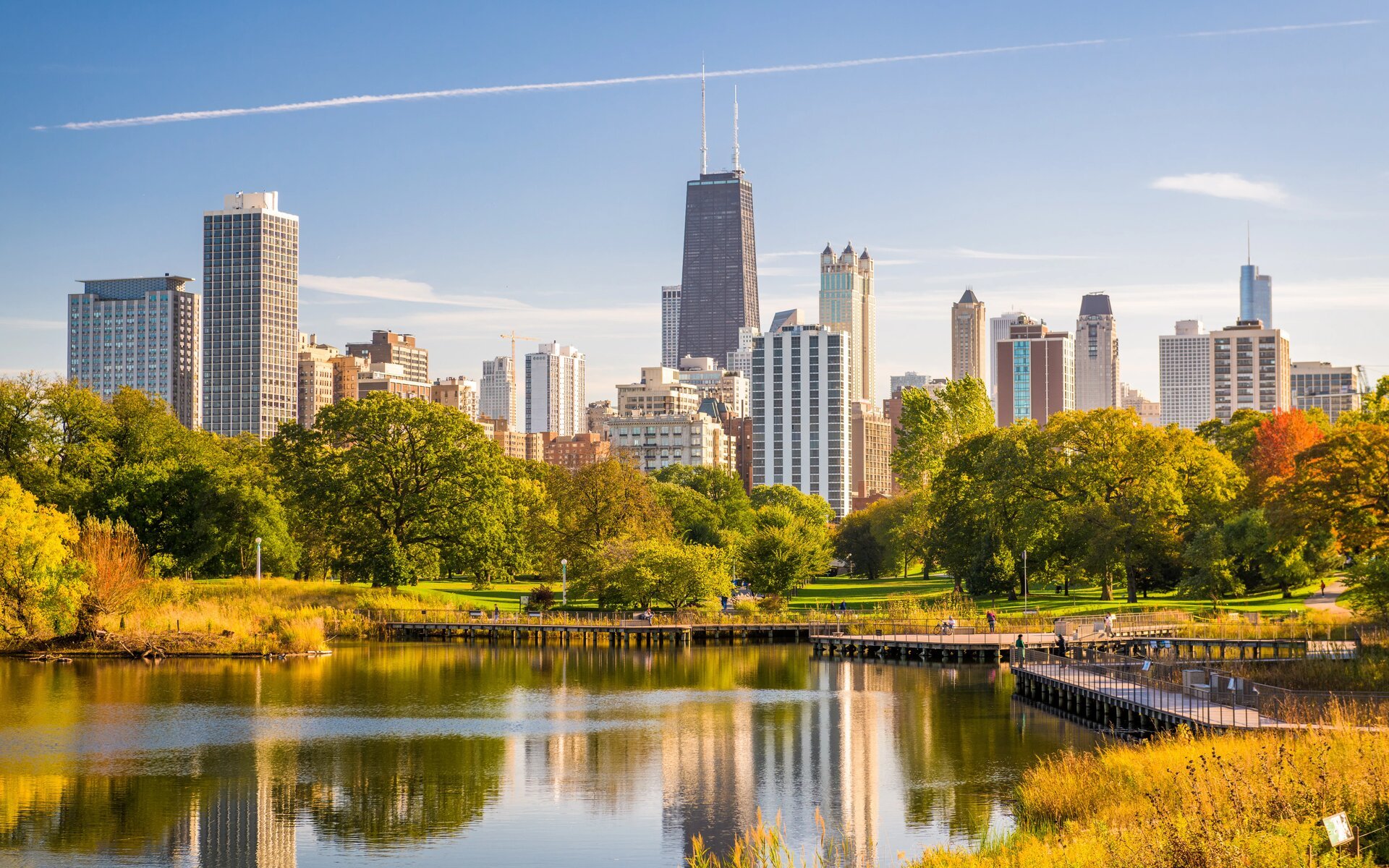
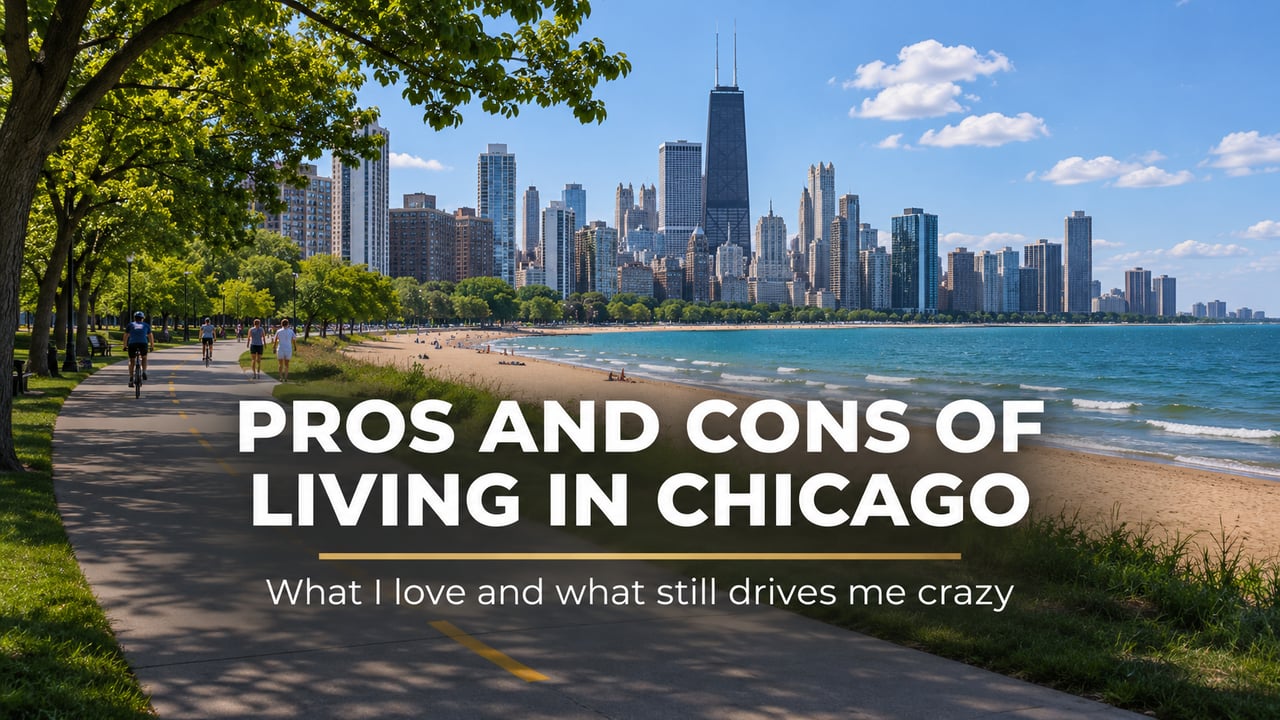
Chicago summers are the reason so many of us put up with the winters. Honestly, I think Chicago is one of the best places in the world to spend the summer. A big reason for that is Lake Michigan. If you've never seen it, it looks and feels like an ocean, with beaches, harbors, and parks along the shore.
The Lakefront Trail runs about 18 miles. On a summer morning you'll see people running, biking, walking their dogs, swimming, and playing volleyball with the skyline right behind them. In some neighborhoods you can walk to the beach from your home. When the weather is nice, I sometimes take my laptop and work from one of our beaches.
Beyond the lake, Chicago has hundreds of parks, from the famous ones to small neighborhood parks, plus forest preserves where you can walk for miles and sometimes even see a deer. Coming from Europe, I didn't expect that much nature this close to the city. Summer also brings street festivals, block parties, farmers markets, and outdoor concerts, and many of them are free. The Grant Park Music Festival has been part of Chicago summers for generations.
If you love food, you'll love living here. I don't just mean deep dish and Chicago hot dogs. Devon Avenue is known for Indian and South Asian food, Argyle Street for Vietnamese, and you'll find Mexican, Chinese, French, Greek, and Italian restaurants all over the city. Some of my favorite spots are little neighborhood places you'd never find unless someone told you about them.
Chicago is also one of the biggest cultural cities in the country. Start downtown at Millennium Park, where standing under the Bean with the skyline reflected behind you feels very different from seeing it in pictures. The Art Institute of Chicago is one of the oldest and largest art museums in the country, and you can spend a whole day there without seeing everything.
Museum Campus sits right on the lake, with the Field Museum, where you can see Sue the T. rex, plus Shedd Aquarium and the Adler Planetarium. The walk between them, with the lake on one side and the skyline on the other, is one of my favorite views in the city.
Farther south, the Museum of Science and Industry has a real German submarine from World War II. On the North Side, Lincoln Park Zoo is free every day.
Get a Chicago Public Library card. Adult Chicago residents with a card can reserve free or discounted digital museum passes to participating museums and attractions. Some museums also offer free days for Illinois residents, which makes it easy to see the city without spending a fortune every weekend.
At night, there's theater everywhere you turn. You have big Broadway shows downtown and well-known theaters like Steppenwolf and the Goodman. Second City is where comedians like Tina Fey and Bill Murray got their start, and the Green Mill in Uptown has been serving jazz since the Al Capone days. Every summer, Lollapalooza takes over Grant Park.
Chicago is also a huge sports town, and people stay loyal even in bad years. We have two baseball teams, the Cubs and the White Sox, and which side of town you live on can decide which one you root for. The Sox won the World Series in 2005, and when the Cubs won in 2016 after waiting 108 years, millions of people came out for the parade. You also have the Bears at Soldier Field, the Bulls with their six championships in the 1990s, and the Blackhawks, who won three Stanley Cups in six seasons.
If you've never been to a game at Wrigley Field, put it on your list. It opened in 1914 and sits right inside a neighborhood in Lakeview, with fans watching from the rooftops across the street. If you're thinking about buying nearby, read my post on living near Wrigley Field.
If you're moving here for work, Chicago has a lot more going on than people think. Google has its Midwest headquarters here, and so do companies like McDonald's, United Airlines, Hyatt, and Morningstar. In March 2026, Site Selection magazine named the Chicago area the top U.S. metro for corporate relocations and expansions for the 13th year in a row.
Chicago is also a big finance city, home to CME Group, the Federal Reserve Bank of Chicago, and many trading firms in the Loop. Healthcare is huge too, with Northwestern Medicine, Rush, and UChicago Medicine, along with universities like the University of Chicago and Northwestern and a growing tech scene. With O'Hare and Midway, it's easy to fly almost anywhere, which is a big reason so many companies want to be here. If you're relocating for a job, my post on the best neighborhoods for professionals relocating to Chicago can help you narrow your search.
Yes, Chicago gets cold, and sometimes really cold. After living here this long, the cold isn't even the hardest part for me, because winters have been milder over the last ten years. The hard part is how long winter lasts.
December is actually nice, with holiday lights, Christmas markets, ice skating, and a city that looks gorgeous with a little snow. January is winter. By February I'm getting tired of it, and by March I'm done. Chicago also likes to tease us with one warm day when everyone is outside in shorts, and a few days later it's snowing again, sometimes even in April.
Say it's your first December here. The sky is clear, there's no snow anywhere, and you park on a big street near your place. At 3 a.m. the overnight parking ban kicks in, and the next morning your car is gone.
From December 1 to April 1, parking is banned from 3 a.m. to 7 a.m. on about 107 miles of major streets, whether or not there's snow on the ground. Read the signs, even when it's a hassle.
If you're buying a home with a garage off the alley, think about winter. Some alleys are pretty narrow, and pulling a big SUV into a garage over snow and ice takes practice. If you work downtown, learn the Pedway, a network of underground walkways that connects parts of downtown. Not every building is connected, but on a freezing, windy day, walking underground makes a huge difference.
Otherwise, layer up and buy a good warm hat and a good pair of gloves. Then, after months of gray skies, you get that first beautiful spring day. The patios open, tulips bloom all over downtown, and the whole city is in a better mood. When summer comes, you remember exactly why you live here.
Winter isn't what surprises people the most. The cost is. Chicago is more affordable than New York, San Francisco, or Boston in a lot of ways, but please don't move here thinking it's cheap, especially in the most popular neighborhoods.
Two neighborhoods right next to each other can have very different home prices. Even within Lincoln Park, you'll find everything from smaller condos around $300,000 to multimillion-dollar single-family homes and condos. Go a little farther north to Edgewater, and you'll usually get much more for your money while staying close to the lake.
That's why I tell my relocation buyers not to get attached to one neighborhood too early. The home you want, at a price you're comfortable with, could be a few neighborhoods away.
You also have plenty of choice in the type of home. You can buy a vintage condo with original woodwork, a newer condo with an elevator and garage parking, a townhouse, a loft, or a single-family home with a backyard. If you're buying a condo, the monthly assessment is where I see buyers get surprised the most.
Picture finding a condo you love with a great price, a lake view, and a doorman. You run the mortgage numbers and they work. Then you see the assessment, and that great price doesn't look so good anymore. In some full-amenity buildings with a doorman, pool, and elevators, the assessment for a two-bedroom can run about $1,200 a month or more.
Look past the monthly number too. Check the building's finances, its reserves, and whether any big repairs or special assessments could be coming. My posts on buying a Chicago high-rise condo and condo special assessments walk through what to check.
You can find a home you love in a neighborhood you love and still wonder what it will feel like if you don't know anyone. I remember that feeling well. When I moved here from Europe in 1998, I was basically starting over. I spoke English, but it wasn't my first language, and I didn't have the connections I had back home.
Chicago surprised me. People talk to you here, and you get to know your neighbors. You go to the same coffee shop and the same grocery store, and after a while people know you. Making friends as an adult isn't easy anywhere, but Chicago has neighborhood groups, sports leagues, running clubs, gyms, community events, and volunteer groups like your local chamber of commerce.
A lot of people assume you have to move to the suburbs once you have kids. I raised both of my daughters right here in the city. They went to Burley Elementary in Lakeview and then Northside College Prep.
Schools do take some homework. Chicago Public Schools has some excellent schools, and it also has challenges. For neighborhood elementary schools, your exact address can decide which school your child attends. For selective enrollment high schools, living nearby doesn't get you in.
If schools matter to you, research them before you pick your home, and use the CPS school locator to confirm a home is inside the boundary for the school you want. My post on Chicago neighborhoods with the best-rated schools has more detail.
You can't write an honest post about living in Chicago without talking about crime, and I'm sure you've seen the headlines. Crime is a real concern, but I don't think it's fair to judge a whole city by a headline. Chicago is huge, and what happens in some areas isn't what you'll find everywhere. One of the first things people who move here tell me is how comfortable they felt walking around compared with what they expected.
As a real estate broker, I won't tell you which neighborhoods are safe or unsafe, because everyone's comfort level is different. What I can do is point you to the City of Chicago's official crime data.
Look up the addresses you're considering, then go there. Walk around during the day, in the evening, and on a weekend if you can, and see how it feels to you. My post on how to check crime on any Chicago block shows you how to use the data.
Chicagoans also have a lot of opinions about City Hall. At any dinner party you'll hear about taxes, city spending, and public services. I'm not here to tell you how to vote, but local decisions do affect everyday life here, so it's worth paying attention.
This one matters if you're buying an older home. Chicago has more lead water service lines than any other city in the country, and the city still has about 393,000 of them to replace. The service line is the pipe that connects a home to the city's water main, and replacing them all is going to take years, likely decades.
I'm not telling you this to scare you. I'm telling you so you know to ask about it.
Before you buy an older home, find out what kind of water line it has and whether it has been replaced. If it hasn't, look into testing the water and your options for dealing with lead. The city has offered water testing, and there are filters made to reduce lead. Check this before you buy, not after, because it's part of owning one of those beautiful old Chicago homes.
The thing that frustrates me most about living in Chicago is property taxes, and they can change what you can afford when you buy here. I own a couple of properties here too, so believe me, I get it. Our property taxes can be expensive, and the bills can jump from one year to the next.
Here's what catches buyers. You buy a home, and the taxes on the listing looked fine. A year later the bill comes, and it's a lot higher.
One common reason is that the seller had exemptions you don't qualify for, like the senior exemption or the senior freeze. The assessed value can also change, and so can the tax rate. Don't assume the bill on the listing is what you'll pay.
If you qualify for the Homeowner Exemption, apply for it through the Cook County Assessor. Don't assume it happens automatically. My post on Chicago property taxes for home buyers explains how the bill works.
Property taxes aren't the only ones. Chicago's combined sales tax rose to 10.5% on August 1, 2026, one of the highest of any big city in the country. There's also a tax on checkout bags, and some entertainment and parking get taxed extra. Add property taxes, condo assessments, and insurance, and it adds up fast, so look at your total monthly cost when you figure out what you can afford.
It really depends on the life you want. If warm weather all year, low property taxes, easy parking, and a big house with a huge yard at a modest price are at the top of your list, Chicago will be a hard fit. I wouldn't be doing you a favor if I told you otherwise.
If you love big city energy, beautiful neighborhoods, great restaurants, culture, parks, and walking to so many places, Chicago has so much to offer. For me, it's the everyday things. I love a walk through a tree-lined neighborhood on a fall afternoon, my favorite coffee shop, and dinner with friends without driving across town. I also love going down to the lake just because it's a beautiful day.
I raised my family here and built my career here, and I still love living here. My biggest advice is to put most of your energy into picking the right Chicago neighborhood, because that's what makes the biggest difference. For more on planning your move, read 20 things to know before moving to Chicago and is Chicago right for you?
When you choose an agent for a move to a new city, look for numbers you can check. Here are mine:
Most of my out-of-state buyers visit Chicago at least once before they buy, so I plan focused, efficient tours that make the most of their time. One family and I toured 22 properties in one weekend. Along with what's on the market, I send my buyers private and coming-soon listings, and you'll work with me directly from your first Zoom call to closing.
For many people, yes. Chicago offers walkable neighborhoods, Lake Michigan, great food and culture, a strong job market, and homes that cost less than in New York or San Francisco. The trade-offs are long winters, tough parking, and high property taxes, so plan for those before you move.
In many neighborhoods, yes. CTA trains and buses, Metra, and Divvy bikes cover much of the city, and the Red Line and Blue Line run all night. One car can cost close to $1,000 a month, so many people who move here keep one car or none.
From December 1 to April 1, parking is banned from 3 a.m. to 7 a.m. on about 107 miles of major Chicago streets. The ban applies whether or not there's snow, and cars parked there can be towed. Read the signs before you park.
Chicago is less expensive than New York or San Francisco, but it isn't cheap, especially in its most popular neighborhoods. Property taxes, condo assessments, and a 10.5% sales tax add up. Nearby neighborhoods like Edgewater can give you more for your money than Lincoln Park while keeping you close to the lake.
Not always. The seller may have exemptions you don't qualify for, like a senior exemption or senior freeze, and the assessed value or tax rate can change. If you qualify for the Homeowner Exemption, apply for it through the Cook County Assessor.
Chicago is a very large city, and what you see in a headline doesn't describe every area. Look up the addresses you're considering in the City of Chicago's official crime data. Then visit during the day, in the evening, and on a weekend to see how the area feels to you.
I'm Dee Savic, a Chicago Realtor® with Baird & Warner. I've lived in Chicago since 1998 and have more than 24 years of experience, more than 300 closed transactions, and more than 190 five-star reviews. You can reach me directly at 773.719.0989.
Start with my free Chicago Relocation Guide and my free Chicago Homebuyers Course, which walks you through the whole buying process here. If you want to see the numbers, watch my video on the cost of living in Chicago.
When you're ready, schedule a complimentary and confidential buyer consultation here. It runs about an hour, and we'll talk through your timeline, your budget, and the neighborhoods that fit your life. You can also call or text me directly at 773.719.0989.
Home prices, the $1,000 monthly car estimate, and condo assessment examples come from my own experience with clients. The parking meter sale, corporate relocation ranking, overnight parking ban, sales tax rate, and lead service line figures come from public reporting and official sources as of November 2026. Accurate at the time of research, deemed reliable but not guaranteed.
Dee Savic is a Chicago Realtor® with Baird & Warner, working out of 4553 N. Lincoln Ave. She moved to Chicago from Europe in 1998 and helps buyers, sellers, and relocation clients across the city, including Lakeview, Lincoln Park, Lincoln Square, Ravenswood, North Center, Roscoe Village, Andersonville, Edgewater, Uptown, Bucktown, Wicker Park, Logan Square, the Gold Coast, and Streeterville.
Dee Savic
Realtor® | Baird & Warner
4553 N. Lincoln Ave, Chicago, IL 60625
773.719.0989
[email protected]
deesavic.com
Seller's Advice
How much Chicago homeowners have gained, and what it can mean for your next move
Buying
Neighborhoods, getting around without a car, parking and dibs, winter, the real cost, schools, lead pipes, and property taxes, from a local since 1998
Seller Advice
What 12 months of MLS sales show for Logan Square condo and house sellers

Seller's Advice
A day-by-day checklist from a Chicago listing agent, one small step at a time
Relocation
ZooLights, Christkindlmarket, the Lights Festival, free museum days and new spots, with dates and prices
Chicago Market
What North Side 2-4 unit buildings sold for, who buys them, and how to handle tenants
Selling
What 12 months of MLS sales show for condos, vintage houses and new construction

Selling
Attorney review, inspection, appraisal, closing paperwork and moving out, step by step
Selling
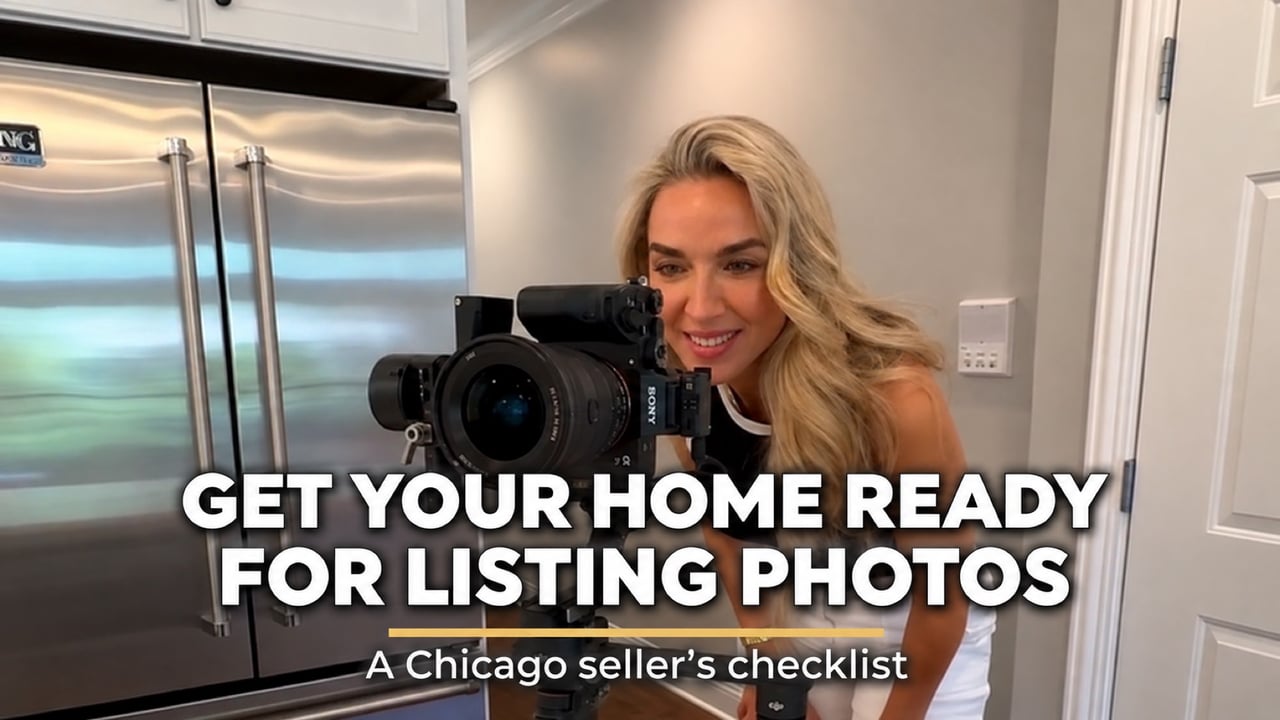
My room-by-room checklist for listing photos, video and 3D tours
I'm Dee Savic, your trusted Chicago real estate expert, and I'm here to guide you through your relocation journey. Discover why Chicago is the perfect city for you; from its diverse neighborhoods to its cultural vibrancy, Chicago offers an unmatched urban experience. Together, we'll find a community and home that fits your lifestyle and aspirations.