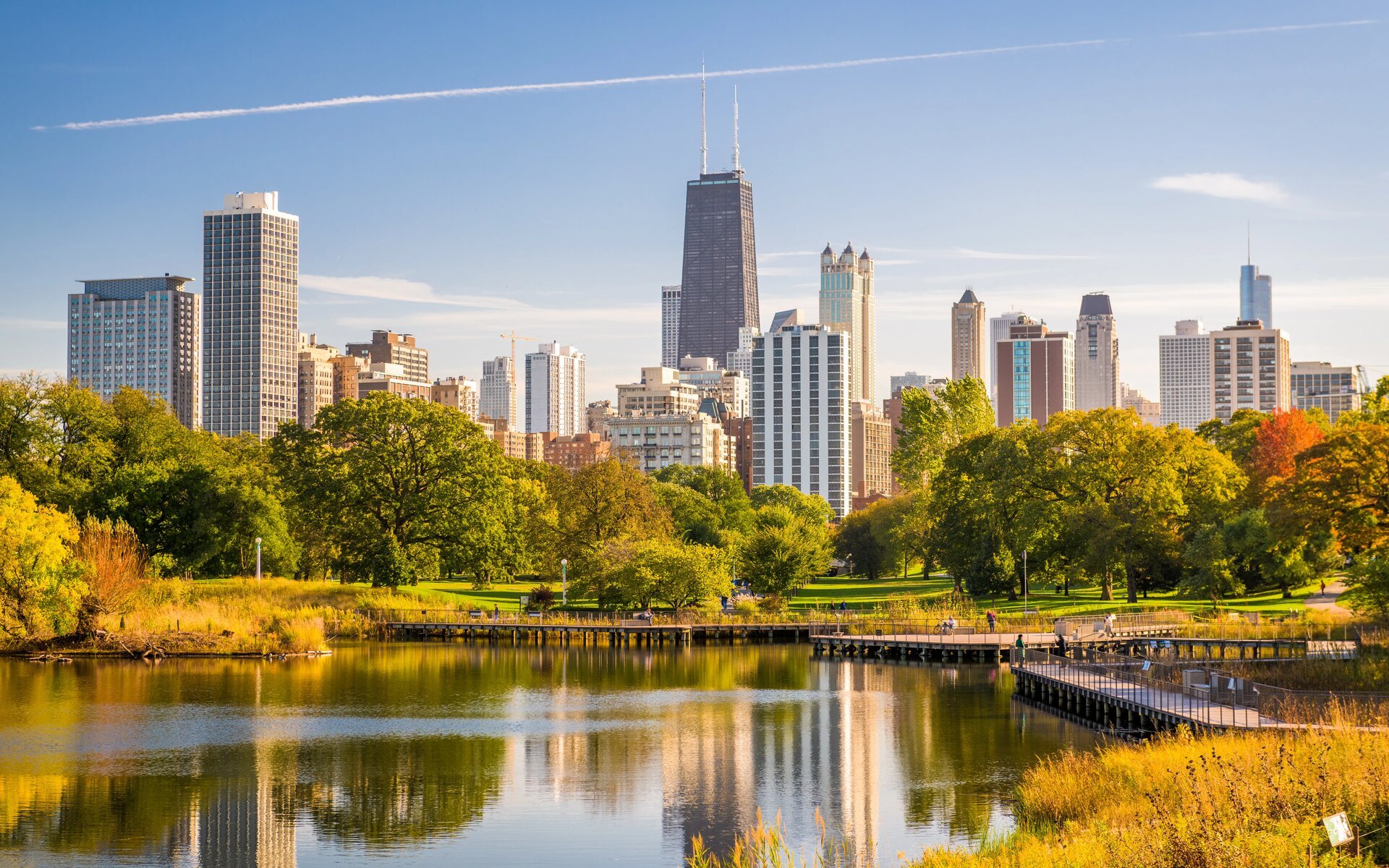

Lakeview is one of the most searched neighborhoods in Chicago, and also one of the most misunderstood. People come here expecting one neighborhood and find five. They fall in love with Wrigleyville energy and end up buying two miles west in a quiet greystone on a street they had never heard of. Or they assume it is out of their budget and never look - and miss a pocket called Graceland West that almost nobody outside local real estate knows exists.
I am Dee Savic, a Realtor with Baird & Warner. I have lived in Chicago for 27 years and sold homes across the North Side for 24 of them. This is what Lakeview actually looks like from the inside - six real pros, five real cons, and one hidden pocket I send value-focused buyers to before anyone else finds out about it.
For more on Chicago's North Side neighborhoods see my complete guide to Lakeview's 5 parts and my Lincoln Park pros and cons guide for a direct comparison.
Category | Lakeview Snapshot |
|---|---|
Character | Five distinct micro-neighborhoods under one name - from Wrigleyville's energy to the Southport Corridor's calm to East Lakeview's lakefront high-rises. |
Housing Types | Vintage two- and three-flats converted to condos, walk-ups, greystones, lakefront high-rises in East Lakeview, and single-family homes concentrated in Southport, West Lakeview, and Graceland West. |
Condo Prices | Generally mid $400,000s to $500,000s. A typical two-bed, two-bath lands around $575,000. |
Single-Family Homes | Generally $1.2 million to $1.4 million and up. |
The Five Neighborhoods | Wrigleyville, Northalsted, the Southport Corridor, East Lakeview, and West Lakeview - plus the hidden pocket, Graceland West. |
Main Pros | Lakefront access, walkability and transit, five distinct pockets, the Southport shopping scene, the food and coffee scene, established public schools. |
Main Cons | Parking and game-day crowds, almost no new construction, high assessments in some older high-rises, homes backing the train tracks, cost. |
Nearby Alternatives | Lincoln Park, Lincoln Square, North Center, Roscoe Village, and Ravenswood. |
Most Lakeview content online only sells you the neighborhood. You see the beach, a rooftop, and a Cubs game, and then you are supposed to fall in love and sign.
The problem is that Lakeview is not a single experience. The version two blocks from Wrigley Field is nothing like a quiet greystone street in the Southport Corridor, and both are different again from the lakefront high-rises of East Lakeview - even though they share a name and a zip code. If you only see the highlight reel, it is easy to buy into the wrong pocket for the way you actually live, and that is an expensive mistake to unwind.
So before you decide, you need the pros and the cons, and you need to know which part of Lakeview each one applies to.
Lakeview is a large North Side neighborhood that runs roughly from Diversey Parkway on the south to Irving Park Road on the north, and from Lake Michigan on the east to about Ravenswood and Clark on the west. It sits directly north of Lincoln Park and south of Uptown, with Lincoln Square and North Center to the northwest.
Lakeview is really five distinct micro-neighborhoods, each with its own personality and price point:
Wrigleyville surrounds Wrigley Field - the loud, social, sports-and-bars heart of the neighborhood. See my complete Wrigleyville guide for the full picture.
Northalsted, along Halsted Street, is one of the most historic and vibrant parts of the neighborhood, with a long-standing LGBTQ+ community and a packed festival calendar. See my complete Boystown and Northalsted guide for more.
The Southport Corridor is the calmer, tree-lined pocket built around Southport Avenue and its shops, theaters, and cafes. See my complete Southport Corridor guide for the detail on that one.
East Lakeview hugs the lake near Belmont Harbor - high-rises, vintage courtyard buildings, and the fastest walk to the water. See my complete East Lakeview guide for the detail on that pocket.
West Lakeview stretches toward Ashland and Lincoln, a bit quieter and more residential. See my complete West Lakeview guide for the breakdown.
And then there is the sixth pocket almost nobody talks about - Graceland West - which I break down further below.
Lakeview's biggest advantage is right in the name. You are steps from Lake Michigan, Belmont Harbor, the beaches, and the Lakefront Trail, which runs uninterrupted for miles for running, biking, and walking. In the summer, that lakefront becomes your backyard, and it is one of the real reasons people have paid a premium to live here for decades.
Lakeview has some of the best walkability and CTA connectivity in the entire city. You have the Red, Brown, and Purple Line Express all serving the neighborhood, putting you under 20 minutes from downtown, plus a dense network of buses. Day to day, you can walk to groceries, coffee, dinner, and the train, and a lot of residents here do not need a car.
Most neighborhoods make you take one vibe. Lakeview lets you choose. Want energy and a short walk to a Cubs game? Wrigleyville. Want festivals, nightlife, and history? Northalsted. Want tree-lined streets and a calmer residential feel? The Southport Corridor. Want the fastest walk to the water? East Lakeview. Want quieter and more residential? West Lakeview. Five distinct pockets, one neighborhood name - which is exactly why matching the right pocket to your life matters so much here.
The Southport Corridor is the calm, residential counterbalance to Wrigleyville and a genuine shopping destination - boutiques, restaurants, the historic Music Box Theatre, and a walkable main-street feel that is hard to find in a big city. It anchors a lot of buying decisions in this part of the North Side and is one of the most sought-after stretches in all of Lakeview.
Few Chicago neighborhoods give you this much to do without leaving home. Lakeview has an excellent coffee and food scene spread across all five pockets - independent cafes, a deep restaurant and bar lineup, and live music venues. If you want to walk out your door into things happening, Lakeview delivers on an everyday basis, not just on game days.
Lakeview is served by a number of Chicago Public Schools neighborhood schools, including Blaine, Burley, and Nettelhorst elementary schools and Lake View High School. School attendance is assigned by address and can change from block to block, so the right move is to confirm the assignment and check the ratings for any specific home before you buy. Look up the exact attendance area with the CPS School Locator and review ratings at GreatSchools.org. For a broader look at how Chicago school ratings compare across neighborhoods see my Chicago neighborhoods with the best-rated schools guide.
Lakeview is generally considered one of Chicago’s safer and more established North Side neighborhoods, especially when you compare the day-to-day residential feel here with Chicago’s broader national reputation.
That does not mean crime does not exist. Lakeview is still a busy urban neighborhood with CTA stops, nightlife, major commercial corridors, and Wrigley Field, so property crime, car break-ins, theft, and occasional incidents can happen. Game days and summer events can also bring larger crowds and more unpredictable energy around Wrigleyville.
But for many buyers relocating to Chicago, Lakeview feels very different from what they expected. The residential side streets, especially in parts of the Southport Corridor, West Lakeview, and Graceland West, often feel quiet, walkable, and community-oriented. That is one of the reasons Lakeview continues to be such a popular landing spot for relocators, professionals, and buyers who want a real neighborhood feel with city access.
My advice is to look at safety the same way you look at schools, commute, and housing: by the specific block, not just the neighborhood name. Review current crime data for the exact address and surrounding blocks using the Chicago Data Portal Crimes Map and the Chicago Police Department data dashboards. That will give you a more useful picture than relying on headlines or broad assumptions about Chicago.
Wrigley Field is a huge draw, and it is also the source of Lakeview's biggest headache. On roughly 81 home game days a year, plus concerts and summer weekends, the blocks around Wrigley get loud, crowded, and hard to move through. Parking is tight across the neighborhood and tighter near the ballpark. Most residential blocks are permit-zoned, and a guaranteed spot often costs extra. If you want a quiet Tuesday night, living too close to Wrigley will wear on you.
Lakeview is largely built out. That vintage charm is a big part of the appeal, but it also means there is very little brand-new construction, and what does exist is limited and priced accordingly. If your priority is a new-build condo with modern finishes and systems, you will have far more options in a neighborhood like the West Loop than you will in Lakeview.
Some of the older high-rises, especially in East Lakeview near the lake, carry high monthly assessments. Those buildings offer door staff, amenities, and unbeatable lake access, but the assessment can add hundreds of dollars a month on top of your mortgage and taxes. Always ask for the assessment, what it includes, and the building's reserves before you fall for the view - because it changes your real monthly number significantly.
The same train lines that make Lakeview so convenient run right through it, and some homes back directly up to the tracks. That can mean noise and a less private outdoor space, and it is the kind of thing that looks fine in listing photos and feels very different when you are standing in the backyard. Always check what a home backs up to before you commit.
Lakeview is expensive, and there is no way around it. Condos generally run in the mid $400,000s to $500,000s, with a typical two-bed, two-bath around $575,000. Single-family homes generally start around $1.2 million to $1.4 million and climb from there. It is a bit more accessible than Lincoln Park directly to the south, but it is still one of the pricier neighborhoods in the city. Between taxes and assessments, the real monthly number can run well above the mortgage. Run the full number before you fall in love with a list price.
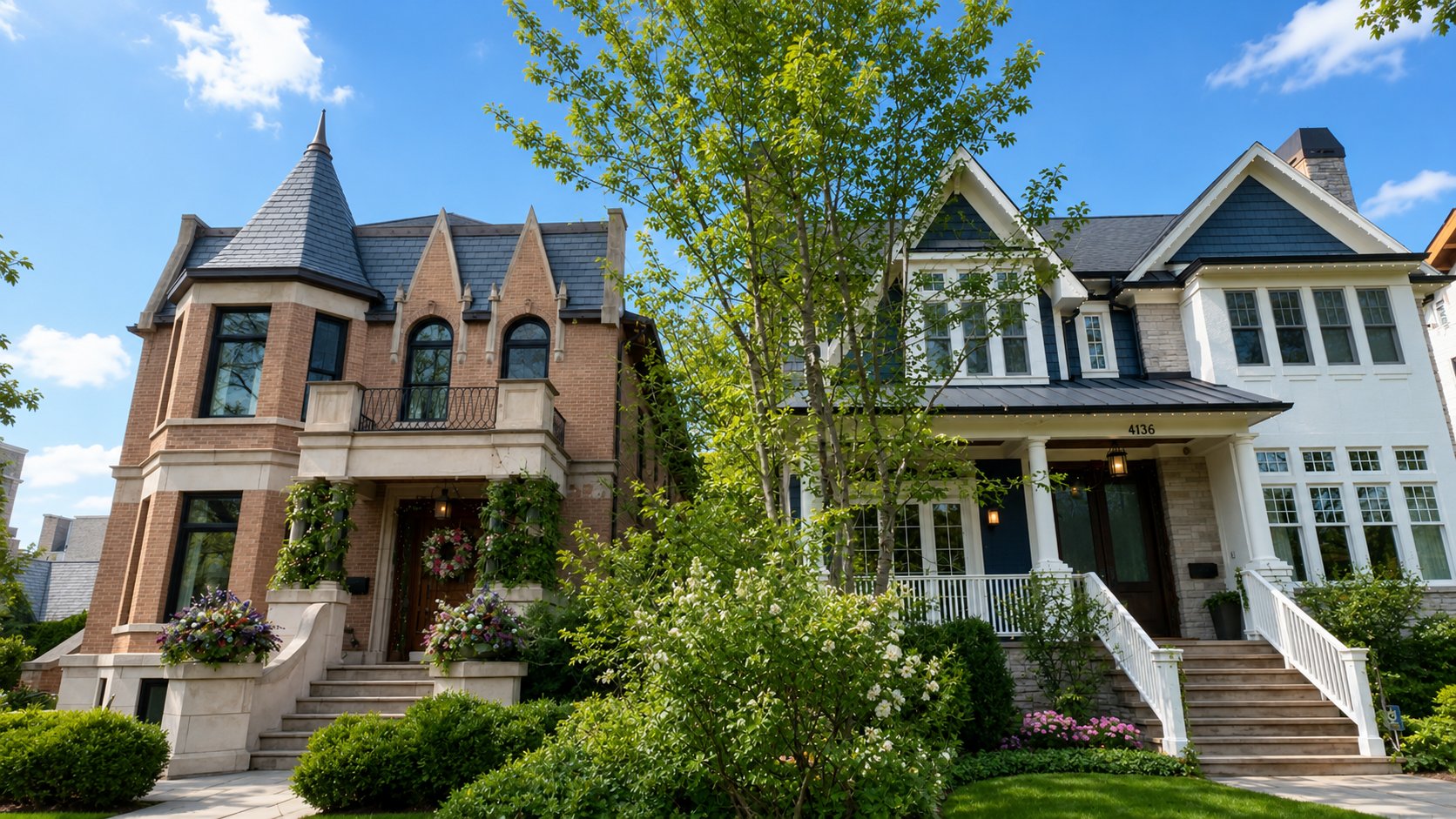
Here is the best-kept secret in Lakeview, and it is the kind of thing you only learn from someone who sells here: Graceland West.
It is a tiny pocket bordered by Graceland Cemetery to the east, Ashland to the west, Montrose to the south, and Foster to the north. Most people outside Chicago real estate have never heard of it, because it barely shows up on neighborhood maps. But cross into it and Lakeview suddenly looks like a different world - Victorian-era homes on oversized lots, wide lawns, mature trees, and a calm, almost suburban feel, all still inside the city and still within reach of that quick downtown commute.
The catch is supply. Homes in Graceland West almost never come up for sale. In all of 2025, there were just 15 sales in the entire pocket. So it is not a place you casually shop - it is a place you have to be watching, ready, and working with someone who will know the moment something hits. But if you want space and a quiet, established feel without leaving the North Side, it can be a strong value.
Lakeview is one of the best neighborhoods in Chicago if you want walkability, the lakefront, a real social scene, strong transit, and a pocket that fits your exact lifestyle - and you are willing to pay for it and choose your block carefully.
It is a tougher fit if you want brand-new construction, a guaranteed easy parking spot, or a large yard at a lower price point. If that describes you, neighborhoods like Lincoln Square, North Center, Roscoe Village, or Ravenswood can offer a similar North Side feel with more calm and, in some cases, more space for the money - or you look hard at Graceland West.
The honest answer, like always, is that there is no single best neighborhood in Chicago - there is the best one for you. In Lakeview specifically, it comes down to your budget, your commute, and how much energy versus calm you want on your street.
Yes. Lakeview is one of the most popular landing spots for people relocating to Chicago, because it combines lakefront access, walkability, strong transit into downtown, and five distinct pockets to choose from. The main things to plan for are the cost and picking the right sub-neighborhood for your lifestyle.
Lakeview is made up of Wrigleyville, Northalsted, the Southport Corridor, East Lakeview, and West Lakeview, each with its own feel and price point. There is also a sixth, lesser-known pocket called Graceland West, which offers larger homes and a quieter, almost suburban feel within the city.
Condos in Lakeview generally run in the mid $400,000s to $500,000s, with a typical two-bed, two-bath around $575,000. Single-family homes generally start around $1.2 million to $1.4 million and climb from there, higher in the most sought-after pockets.
Yes. Lakeview has some of the best walkability and CTA connectivity in the city, with the Red, Brown, and Purple Line Express all serving the neighborhood and putting you under 20 minutes from downtown. Many residents rely on transit and walking rather than a car.
Lakeview is generally considered one of Chicago’s safer and more established North Side neighborhoods, especially in residential pockets like the Southport Corridor, West Lakeview, and Graceland West. It is still a busy urban area, so buyers should expect normal city issues like property crime, car break-ins, theft, nightlife-related activity, and larger crowds near Wrigley Field on game days. The best approach is to review current crime data for the specific address and surrounding blocks using the Chicago Data Portal Crimes Map and Chicago Police Department data dashboards.
Lakeview is served by several Chicago Public Schools neighborhood schools, including Blaine, Burley, and Nettelhorst elementary schools and Lake View High School. Attendance is assigned by address and can change from block to block. Look up the exact assignment for any home with the CPS School Locator and check ratings at GreatSchools.org.
Graceland West is a small, lesser-known pocket of Lakeview bordered by Graceland Cemetery, Ashland, Montrose, and Foster. It features Victorian-era homes on oversized lots with a quiet, almost suburban feel, and it rarely comes up for sale - there were only about 15 sales in all of 2025 - which can make it a strong value for buyers who are patient and ready to move.
The biggest cons are tight parking and game-day crowds near Wrigley Field, very little new construction, high monthly assessments in some older high-rises, homes that back up to the train tracks, and the cost of entry. Which of these affects you depends heavily on the specific pocket and block you choose.
Neither is better - they are different. Lincoln Park is more established and generally more expensive. Lakeview is younger, more social, usually a bit more accessible on price, and offers more distinct pockets to choose from. I compare them directly in my pros and cons of living in Lincoln Park post.
Parking is tight in Lakeview and tighter near Wrigley Field. Most residential blocks are permit-zoned, game days bring additional restrictions, and a deeded garage or parking space is often sold separately from the home. If you drive daily, test the parking on the specific block before you buy.
Lakeview is a competitive, in-demand market, especially in the Southport Corridor and the rarely available Graceland West pocket. Well-priced homes often sell quickly and sometimes over asking, so being financially ready and working with an agent who knows the neighborhood matters.
Living in the Southport Corridor: full neighborhood guide
Living in East Lakeview: full neighborhood guide
Living in West Lakeview: full neighborhood guide
Living in Wrigleyville: full neighborhood guide
Living in Boystown and Northalsted: full neighborhood guide
Lakeview Chicago: The 5 Parts Buyers Should Know
Pros and Cons of Living in Lincoln Park Chicago
Chicago Neighborhoods With the Best-Rated Schools
CPS School Locator - find your assigned school by address
GreatSchools.org - check school ratings for any Chicago address
Buyers: start with my free Chicago Buyer's Course for a complete picture of how the buying process works in Chicago.
Sellers: start with a free home value review to see what your Lakeview home is worth in today's market.
Relocating to Chicago? Download my free Chicago Relocation Guide or schedule a complimentary and confidential consultation here.
Pricing and sales figures in this post reflect Chicago MLS data at the time of research and are for general guidance only. Market conditions change. Data is deemed reliable but not guaranteed. For current numbers on a specific home or pocket, reach out for an up-to-date analysis.
Dee Savic is a Realtor with Baird & Warner, a 24+ year real estate professional, and a 27+ year Chicago resident with 300+ closed transactions and hundreds of five-star reviews. She specializes in helping buyers, sellers, and relocation clients across Chicago's North Side - including Lakeview, Lincoln Park, Lincoln Square, Ravenswood, Andersonville, North Center, Roscoe Village, and surrounding neighborhoods.
Dee Savic
Realtor® | Baird & Warner
4553 N. Lincoln Ave, Chicago, IL 60625
773.719.0989
[email protected]
deesavic.com
Neighborhood Guides
What homes sold for, the 606, the Blue Line, types of homes, and Bucktown vs. Wicker Park
Buying
Real 2026 sales in Lincoln Park, Lakeview, North Center, Roscoe Village, Lincoln Square, Irving Park, Edgewater, and Andersonville

Buying
Where the unit sits, elevators, pets, wind and sound, views, parking, and building rules
Buying
The real monthly cost, yards, winter, parking, competition, long-term value, and choosing the right neighborhood
Neighborhood Guides
The six parts of 60613, from the lakefront to Damen, and what homes sold for in each in 2026
Neighborhood Guides
Where Buena Park is, what homes sold for in 2026, Hutchinson Street, the lakefront, schools, and safety
Buying
Five years of Chicago prices, where you can and cannot negotiate, and how to handle a 7.40% mortgage rate

Local Events
Dates, times, and exact blocks for Halloween events in Lakeview, Lincoln Park, Lincoln Square, Ravenswood, North Center, Andersonville, and Edgewater
Neighborhood News
The Camry Lot expansion, the 2027 All-Star Game, parking rules, and what homes nearby sold for in 2026
I'm Dee Savic, your trusted Chicago real estate expert, and I'm here to guide you through your relocation journey. Discover why Chicago is the perfect city for you; from its diverse neighborhoods to its cultural vibrancy, Chicago offers an unmatched urban experience. Together, we'll find a community and home that fits your lifestyle and aspirations.