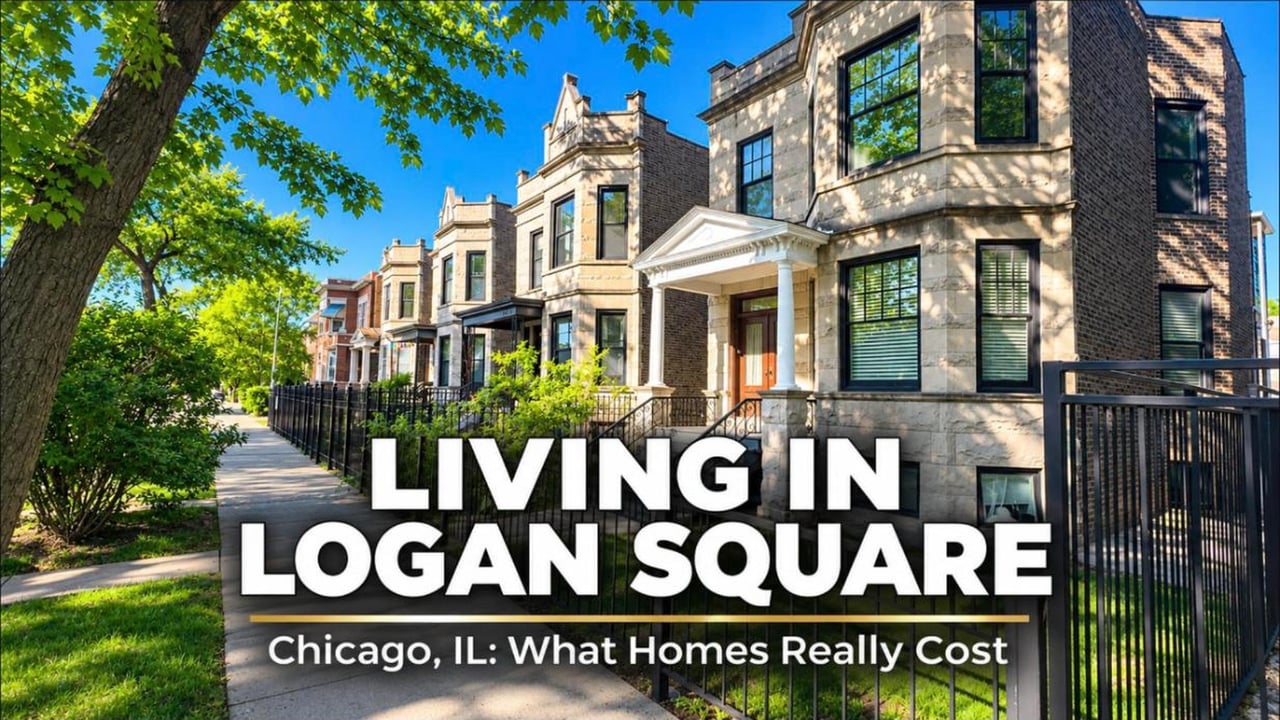
What is it like living in Logan Square, Chicago? You get beautiful tree-lined boulevards, vintage greystones, restaurants and coffee shops along Milwaukee Avenue, and the CTA Blue Line connecting you to downtown Chicago and O'Hare. It's a lively Northwest Side neighborhood with plenty of character, but buying a home here can be competitive.
Logan Square homes don't stay on the market long, and many get more than one offer. In early November 2026 there were only about 30 condos and townhomes and 19 houses for sale in the area I studied, according to the MLS. So it helps to know what to expect before you start touring.
I've lived in Chicago for 27 years and helped buyers and sellers here for more than 24. Logan Square is one of the neighborhoods people moving to Chicago ask me about most. If you're considering making it your home, here's what I'd want you to know about the neighborhood, what your money buys, and what to expect when you start looking.
The short answer:
Logan Square is on Chicago's Northwest Side, west of Bucktown and the Kennedy Expressway. Avondale is to the north, Bucktown and Wicker Park are to the east and southeast, and Humboldt Park is to the south.
For the housing market numbers in this article, I'm using these boundaries: Pulaski Road to the west, Western Avenue to the east, Diversey Avenue to the north, and Bloomingdale Avenue, where the 606 trail runs, to the south.
Why am I being so specific about the boundaries? Because when you're researching home prices online, the area used to calculate those numbers matters quite a bit.
The MLS area called "Logan Square" also includes all of Bucktown, where homes generally cost more. That can distort the numbers and make it difficult to understand what homes in Logan Square itself actually sell for.
I explain the difference in more detail in my Logan Square housing market report, where I break down actual closed sales rather than relying on broad neighborhood estimates.
You can also explore my Logan Square neighborhood page or browse homes for sale in Logan Square to get a better feel for what's available.
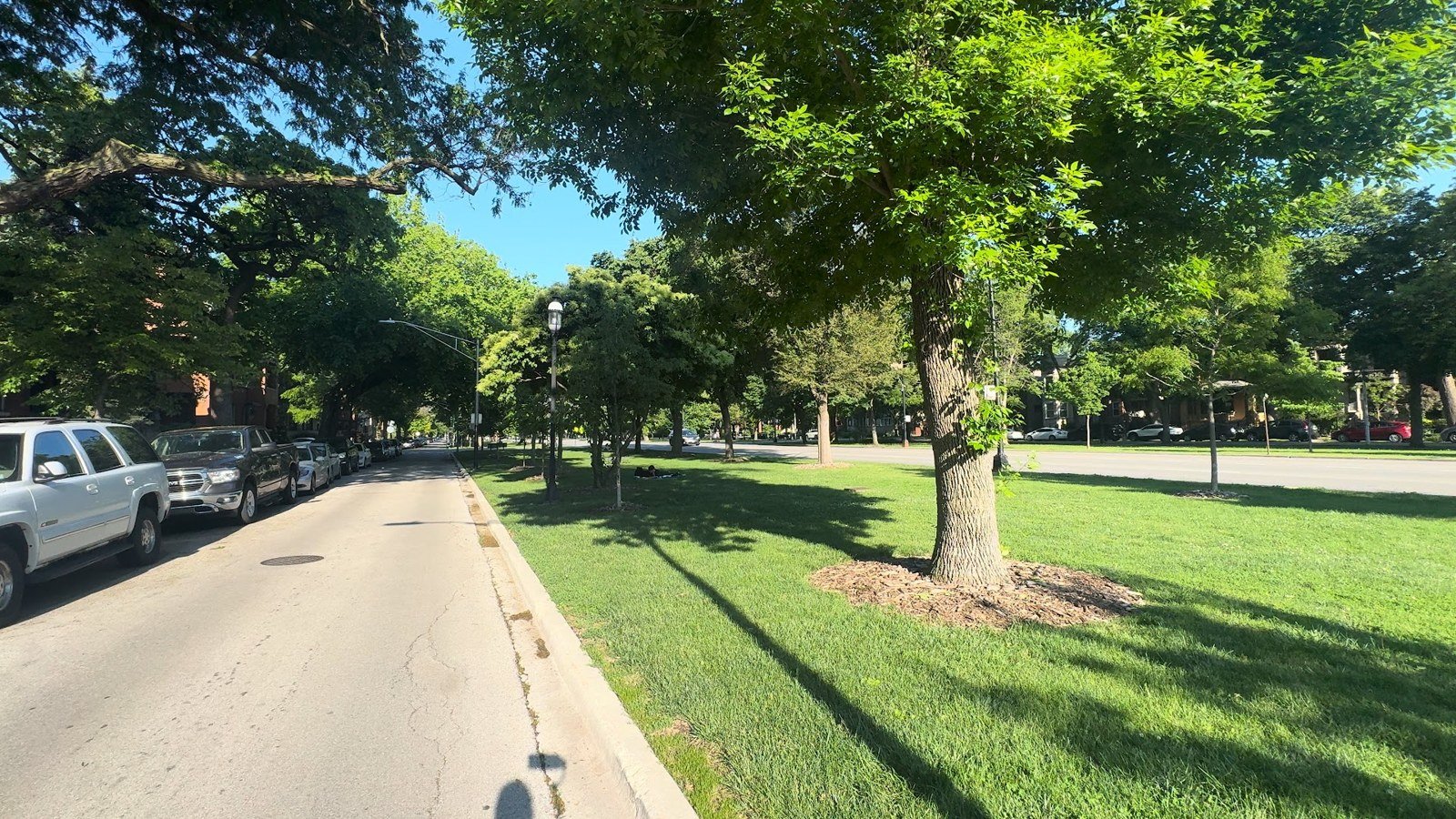
One of my favorite things about Logan Square is how different it can feel from one block to another. You have the energy of Milwaukee Avenue, with its restaurants, coffee shops, bars and bookstores, and then just a few blocks away, you'll find quiet residential streets with beautiful vintage homes.
But the boulevards are what really make this neighborhood stand out.
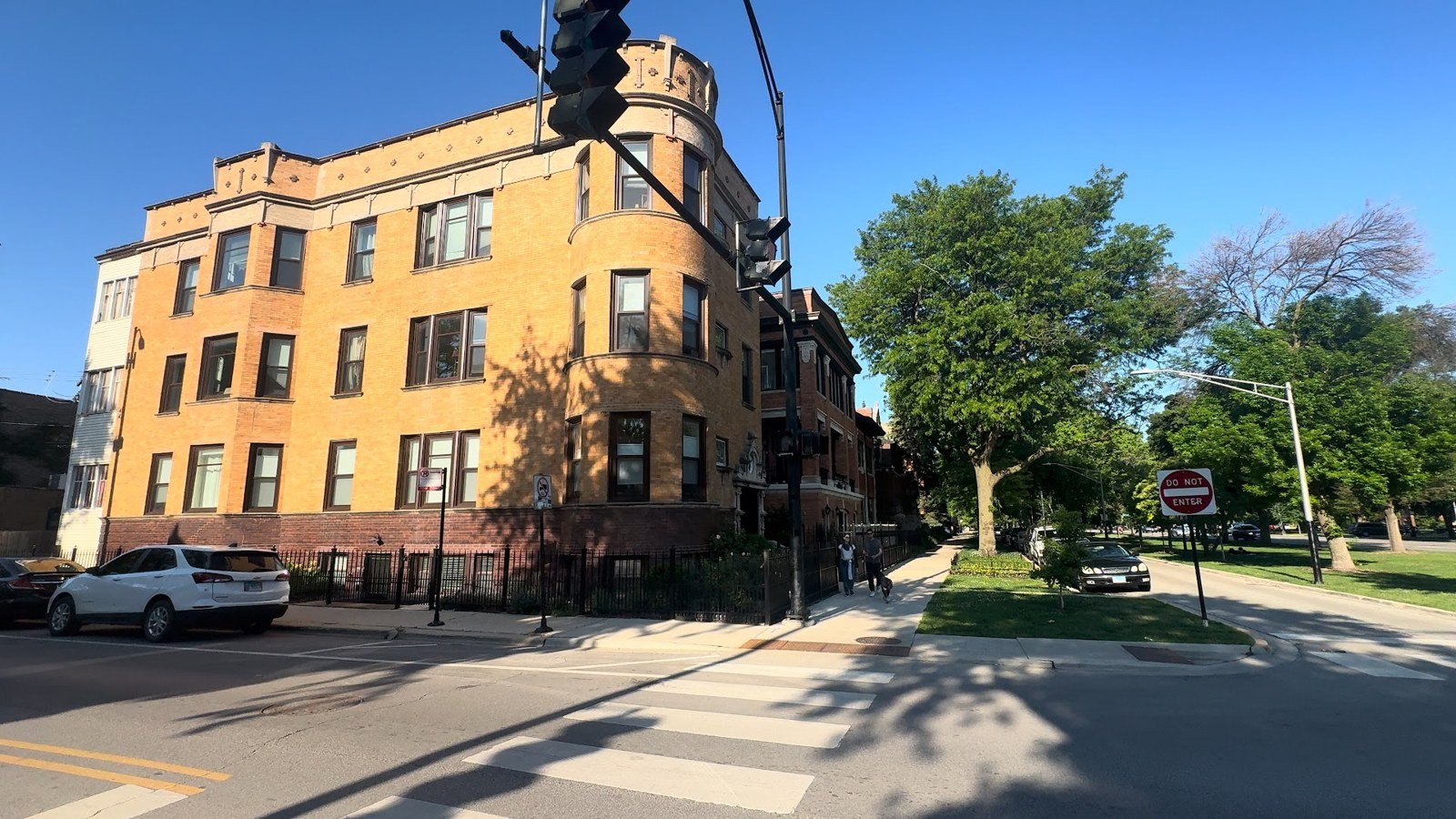
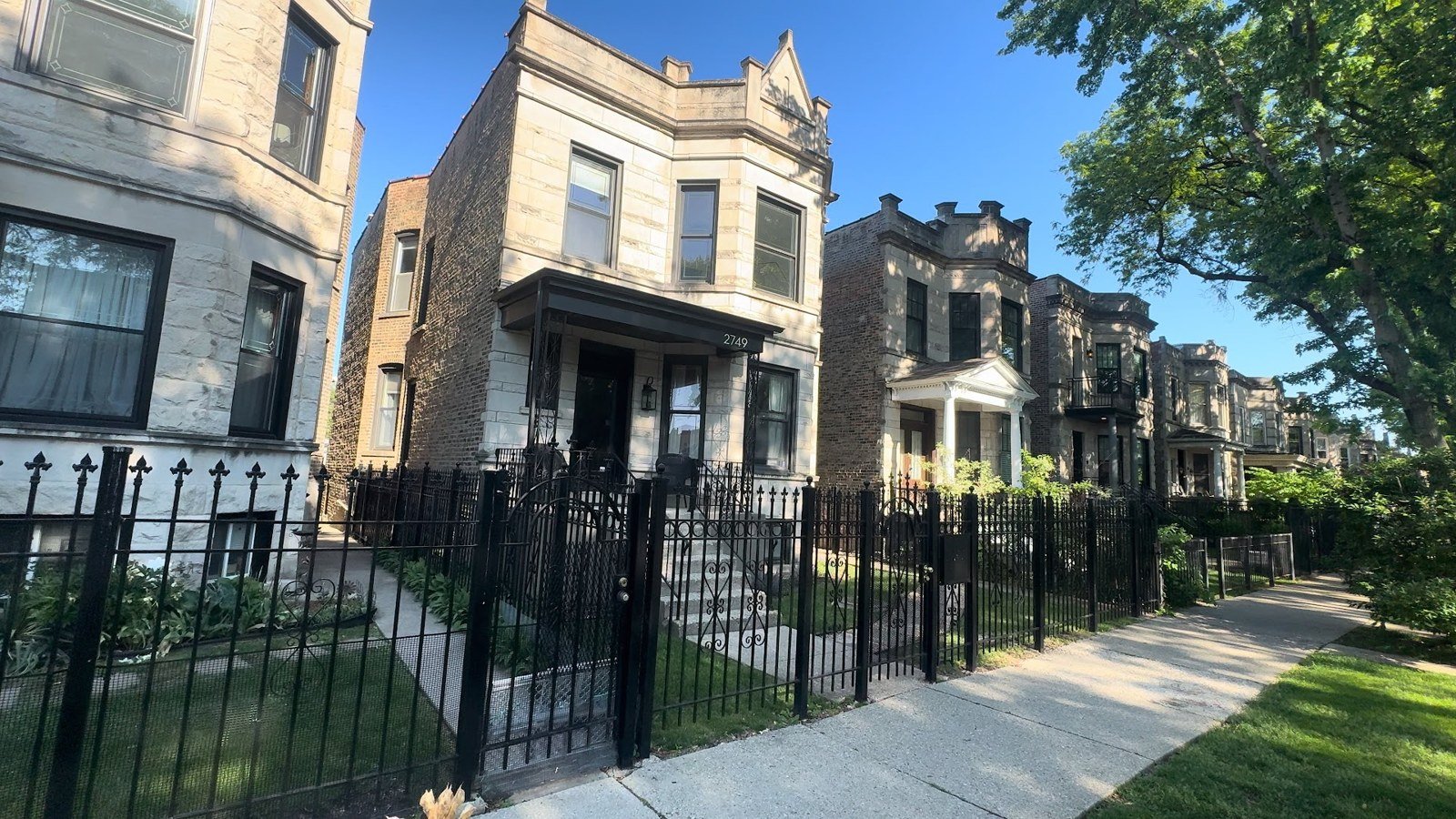
Logan, Kedzie, Palmer Square and Humboldt Boulevards are wide, tree-lined streets with beautiful greystones and brick homes. Some of the architecture is more than 100 years old, and walking along these boulevards feels very different from being on one of Chicago's busier commercial streets.
At the center is the Illinois Centennial Monument, the tall column where Logan Boulevard, Kedzie Avenue and Milwaukee Avenue meet. It's one of the neighborhood's most recognizable landmarks.
The boulevards and the homes along them are part of the Logan Square Boulevards District, a designated Chicago Landmark district.
Milwaukee Avenue is where you'll find much of the neighborhood's activity. There are restaurants, coffee shops, bars and bookstores, along with the Logan Theatre, a neighborhood movie theater that's been here for more than 100 years.
Palmer Square Park is popular for running, walking dogs and spending time outside on summer weekends. And along Logan Square's southern edge, the 606 trail gives you a way to walk or bike toward Bucktown and Wicker Park without following the regular street grid.
Here's something I'd encourage you to pay attention to if you're thinking about buying here. A home close to Milwaukee Avenue or a Blue Line station can feel very different from one just a few blocks farther into the residential streets.
Neither is necessarily better. It depends on whether you want to be right in the middle of everything or prefer a quieter block. That's why I recommend visiting the exact street you're considering, including at night and on a weekend, before making an offer.
Yes, Logan Square can be a practical neighborhood for living without a car, especially if you're near the Blue Line and the places you visit regularly. But I'd look at the exact location of the home before deciding whether you can comfortably give up your car.
The CTA Blue Line is a major advantage here. It runs 24 hours a day, with stations at Logan Square and California inside the neighborhood.
In one direction, the train takes you downtown to the Loop. In the other, it takes you to O'Hare Airport, which is especially convenient if you travel frequently for work or to visit family.
One thing I always tell people relocating to Chicago is that being near a train doesn't automatically mean you'll have an easy commute. You want to look at where you actually need to go, which train line serves that destination, and how far your home is from the station.
If you drive, the Kennedy Expressway runs along the eastern side of the neighborhood. But parking deserves a closer look when you're comparing homes.
Many vintage two-flats and condo buildings have a garage or a parking pad off the alley, but not all of them do. And if a listing doesn't include parking, don't assume you'll find a convenient spot on the street.
I would check whether the parking is deeded, assigned or otherwise included with the property, along with what the situation looks like on the surrounding blocks. It's a small detail that can make a big difference in your daily routine.
One of the things I like about Logan Square is the variety of housing. You can find everything from smaller vintage condos to large greystones, two-flats, bungalows and newly built homes.
Here are the main types of properties you'll come across when you start looking:
Many homes in Logan Square are 100 years old or more, and that character is a big part of the appeal. But age also means you need to pay careful attention to the building itself, not just the kitchen, bathrooms and finishes.
I always want buyers to understand the condition of the brickwork, electrical systems, plumbing and other major components before making a final decision. A beautiful vintage home can still come with repairs or improvements that need to be factored into your budget.
I cover the important things to look for in my video, Buying in an Old Chicago Building? 11 Costly Things to Check First. It's worth watching if you're considering a vintage condo, two-flat or single-family home.
Based on MLS closed sales from November 5, 2025, through November 2, 2026, the median price of a Logan Square condo or townhome was $557,000. For single-family houses, the median sold price was $1,050,000.
Those are actual closed sale prices within the Logan Square boundaries I described earlier, not automated estimates or prices for the larger MLS area that includes Bucktown.
Here's a closer look at what buyers paid for different types of homes.
Home type | Sales | Median sold price |
|---|---|---|
1-bedroom condo | 20 | $280,000 |
2-bedroom condo | 114 | $445,000 |
3-bedroom condo | 120 | $727,500 |
All condos and townhomes | 273 | $557,000 |
3-bedroom house | 58 | $1,012,500 |
4-bedroom house | 35 | $1,197,000 |
All single-family houses | 121 | $1,050,000 |
Source: MLS closed sales, November 5, 2025, through November 2, 2026. Logan Square boundaries: Pulaski Road to Western Avenue, Diversey Avenue to Bloomingdale Avenue. Data pulled at the time of research and deemed reliable but not guaranteed. Median prices reflect sold properties, not current asking prices.
If your budget is under $400,000, you'll primarily be looking at condos. Among the condos that sold below that price during the period I studied, the median sold price was $320,000, and most were one- or two-bedroom homes.
For context, the median price of a one-bedroom condo was $280,000, while two-bedroom condos had a median of $445,000. So if you need two bedrooms, you'll want to look closely at what is available within your budget rather than assuming every two-bedroom condo will be in the same price range.
For buyers who need more space, three-bedroom condos had a median sold price of $727,500, based on 120 closed sales. Across all condos and townhomes, the median was $557,000 from 273 sales.
But the number of bedrooms is only part of the picture. I'd also pay attention to the layout, parking, outdoor space, monthly assessments and condition of the building when comparing your options.
Yes, houses sold for less than $900,000 during the period I studied, although they were usually smaller or needed updating. The median price among houses that sold below $900,000 was $700,000.
Looking at the broader market, three-bedroom houses had a median sold price of $1,012,500, and four-bedroom houses had a median of $1,197,000.
There's also an important difference between existing houses and new construction. Existing single-family houses sold for a median of $943,500, compared with $1,475,000 for new construction.
That's why I wouldn't tell you that you need exactly $1 million to buy a house in Logan Square. I'd start with what kind of house you want, how much updating you're willing to take on, and which compromises you're comfortable making.
If you've been researching Logan Square online, you may have seen a Zillow "typical home value" around $560,000. But that number blends different types of properties together, and it's an estimate rather than a record of what individual homes actually sold for.
Here's why that distinction matters. According to the MLS sales I reviewed, existing single-family houses in Logan Square sold for a median of $943,500 during the 12-month period ending in early November 2026.
So if you're looking for a single-family house and basing your budget on a neighborhood-wide online estimate, you could end up with a very different expectation from what the actual sales support.
I prefer to look at recent closed sales for the specific property type and location you're interested in. A two-bedroom condo, a vintage two-flat and a newly built single-family house are very different purchases, and combining them into one number doesn't tell you enough.
Not necessarily. In some Chicago neighborhoods, I'm seeing 20 to 30% of the homes for sale that aren't on the MLS, which means they don't appear on public sites like Zillow or Realtor.com.
That's one reason I don't want my buyers relying only on public listing searches. I give my buyers access to private and coming-soon homes through Zenlist, so they can see opportunities they might otherwise miss.
It doesn't guarantee you'll find the right home or avoid competition, but when inventory is limited, I want you to know about as many available options as possible.
Logan Square was a competitive market in 2026, especially for condos and townhomes. The well-priced homes in good condition often went under contract within the first week or two, and many had more than one offer.
Houses were competitive too, though not every property drew the same interest. Homes that needed work or were priced above recent sales gave buyers more room to negotiate.
Inventory was limited, too. In early November 2026, there were only about 30 condos and townhomes and 19 houses listed for sale within the area I studied. At the pace homes were selling, that represented less than two months of supply for either property type.
What does that mean for you? You should be prepared to act when a home fits your needs, but that doesn't mean you should rush into a decision or ignore issues that matter to you.
It can be, and the MLS numbers show an interesting difference between the colder and warmer months.
Fewer buyers are out looking in the colder months. Logan Square houses that sold from November through April took longer to sell and drew less competition than houses that sold from May through early November, so buyers often had more room to negotiate. The exact home, price and level of competition still matter.
Condos remained competitive throughout the year, but they were also a little less competitive during the colder months.
I wouldn't recommend waiting until winter simply because of the season. But if you're ready to buy and the right home comes along during a quieter part of the year, you may find that the negotiating environment is different.
For a closer look at how seasonality affects buyers, read my post on the best time to buy a house in Chicago.
The most important thing is to be prepared before you find a home you love. That starts with being fully pre-approved, understanding your budget and knowing which features you absolutely need versus the ones you'd be willing to compromise on.
When a home attracts multiple offers, I want my buyers to understand the inspection and appraisal process before writing an offer. That way, you're making an informed decision rather than trying to figure everything out under pressure.
Price is important, but the terms of an offer matter too. The goal isn't simply to win a bidding war. It's to buy a home you feel comfortable owning at a price and under terms that make sense for you.
Here's a real example of how I helped first-time buyers stop losing bidding wars and successfully purchase their home in Uptown.
If you're considering moving to Logan Square, I understand why you would want to research safety before choosing a home. But I wouldn't give you a blanket answer about an entire neighborhood when conditions and individual experiences can vary from one block to another.
Instead, I recommend looking at official crime data for the exact locations you're considering. The City of Chicago publishes crime information, and I explain how to research it in my Chicago crime map guide for home buyers.
I'd also encourage you to visit the streets you're considering at different times of day and on weekends. That gives you a better opportunity to decide how comfortable you feel with the surroundings and whether the location fits your daily routine.
If schools are part of your home search, the first thing I'd recommend is checking the assigned schools for the exact property address. School attendance boundaries don't necessarily follow neighborhood boundaries, and two homes in the same neighborhood can have different assignments.
You can use the official Chicago Public Schools school locator to research individual addresses, school assignments and school information.
It's also helpful to review the information that's most important to you, rather than relying on a single rating. In my post on Chicago neighborhoods with the best-rated schools, I explain how I look at school ratings when helping buyers research neighborhoods.
If you're thinking about Logan Square, there's a good chance you've also looked at Bucktown, Wicker Park or Avondale. They share some similarities, but there are differences in location, housing and what your money can buy.
Wicker Park and Bucktown are closer to downtown Chicago and generally have higher home prices, especially for single-family houses. Logan Square is farther northwest, with its own mix of vintage housing, commercial streets and wide historic boulevards.
If downtown access is a major priority, I'd compare the actual commute from the specific homes you're considering. But if you're drawn to Logan Square's boulevards, architecture and neighborhood atmosphere, those are worth weighing alongside commute time and price.
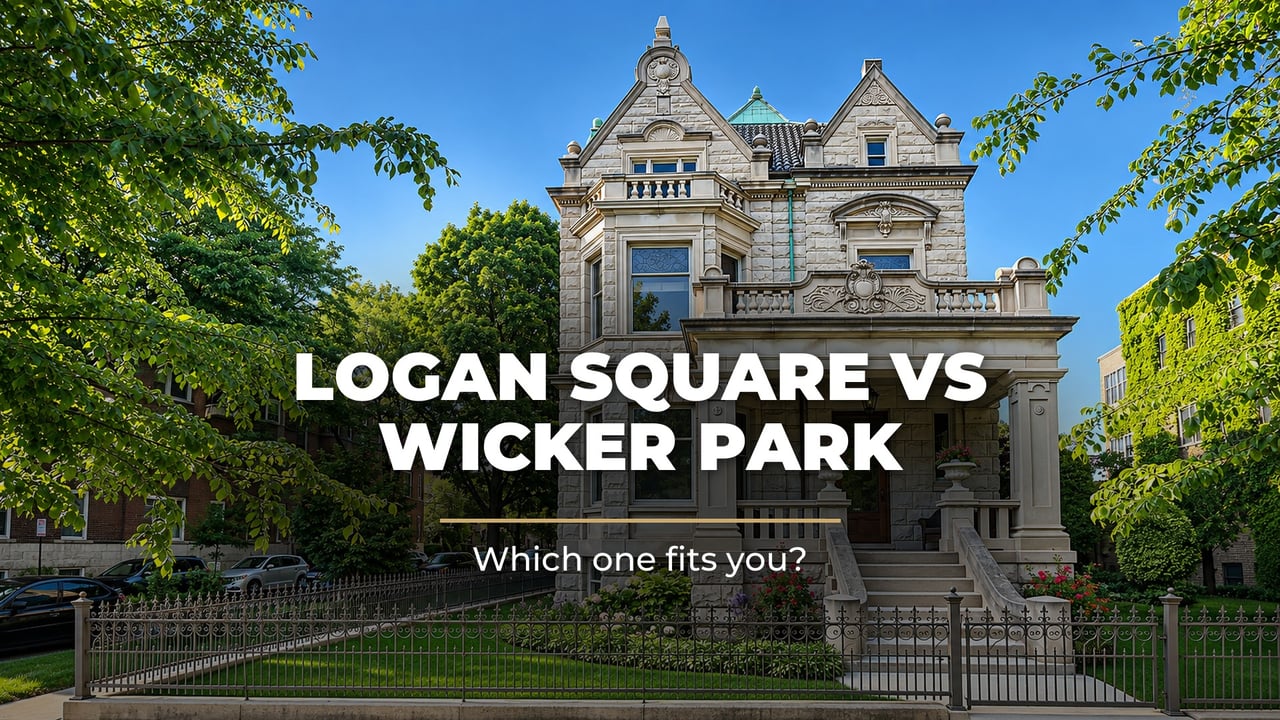
I also compare Logan Square and Wicker Park in this video, if you'd like to see how I think about the differences between the two neighborhoods.
You can also read my more detailed guides to living in Wicker Park and living in Bucktown.
Avondale sits directly north of Logan Square and often offers more space for the money. It's also near the Blue Line, which makes it worth considering if transit access is one of your priorities.
If you're finding that Logan Square prices are stretching your budget, I wouldn't automatically rule out Avondale. I'd compare actual homes in both neighborhoods and see what you're giving up or gaining in terms of space, location and condition.
Sometimes the better choice becomes much clearer once you start comparing properties rather than neighborhood names.
I think Logan Square is worth considering if you love vintage architecture, want restaurants and coffee shops nearby, and appreciate having the Blue Line for getting downtown or to O'Hare. It's also a neighborhood I'd put on your list if you're interested in a greystone, a two-flat or a duplex condo.
But I wouldn't tell you Logan Square is right for everyone.
If you want a large yard, an attached garage or a brand-new single-family house at a lower price, your search may be more challenging here. Those properties do exist, but they're harder to find and can attract competition when they come on the market.
And if quiet streets are important to you, I'd be selective about the exact blocks you consider. There's a difference between living near the activity on Milwaukee Avenue and living farther into the residential parts of the neighborhood.
For buyers relocating from another city, I always recommend looking at a few neighborhoods side by side before making a final decision. You might love Logan Square, or you might discover that another neighborhood gives you more of what matters to you.
If you're still narrowing down your options, my article on Chicago neighborhoods relocators get wrong explains some of the things I encourage buyers to consider before choosing where to live.
Logan Square is on Chicago's Northwest Side. It sits west of Bucktown and the Kennedy Expressway, north of Humboldt Park, and south of Avondale. The neighborhood is known for its historic boulevards, vintage homes and Milwaukee Avenue commercial corridor.
Based on MLS closed sales from November 5, 2025, through November 2, 2026, the median single-family house in Logan Square sold for $1,050,000. Existing houses had a median price of $943,500, while new construction houses had a median of $1,475,000. Prices vary depending on the size, condition and location of the property.
The median condo or townhome in Logan Square sold for $557,000 during the 12-month period ending in early November 2026, based on MLS closed sales. One-bedroom condos had a median price of $280,000, two-bedroom condos $445,000, and three-bedroom condos $727,500.
Yes. Logan Square has CTA Blue Line stations at Logan Square and California. The Blue Line runs 24 hours a day and connects the neighborhood to downtown Chicago's Loop and O'Hare Airport. Travel convenience depends on how close your home is to a station and where you need to go.
Living in Logan Square without a car can be practical, especially near the Blue Line and Milwaukee Avenue. The neighborhood has transit access and places to shop, eat and spend time nearby. Whether you need a car depends on the exact home location, your commute and your daily routine.
Safety is an individual consideration, and conditions can vary within any Chicago neighborhood. Buyers should review official City of Chicago crime data for specific locations, visit the blocks they're considering at different times and make their own assessment before purchasing.
Yes. Logan Square was competitive in 2026, and in early November there were only about 30 condos and townhomes and 19 houses for sale in the area I studied. Buyers should be fully pre-approved, understand the local market and be ready to tour the right homes quickly.
Often, yes. Fewer buyers are out looking in the colder months, and Logan Square houses that sold from November through April took longer to sell and drew less competition than those sold in late spring and summer. Each home and each price point is still different.
If Logan Square is on your list, I'd be happy to help you figure out whether it's the right fit. We can talk about what you're looking for, which parts of the neighborhood might work for you, and what your budget actually buys based on recent sales.
And if you're relocating to Chicago, we don't have to start with Logan Square alone. We can compare it with Bucktown, Wicker Park, Avondale or other neighborhoods so you can make a decision that feels right for you.
For more help getting started, you can download my free Chicago relocation guide. If you're purchasing your first home, my free Chicago Buyer's Course walks you through the buying process step by step.
When you're ready to talk, you can schedule a time with me or call or text me at 773.719.0989. I'd love to help you explore your options.
I've lived in Chicago for 27 years, sold real estate here for more than 24, and closed more than 300 transactions worth over $100 million. You can read what my clients say in the reviews linked below.
Dee Savic is a Chicago Realtor® with Baird & Warner. She has more than 24 years of real estate experience, has lived in Chicago for more than 27 years, and has closed more than 300 transactions. She helps buyers, sellers, downsizers and relocation clients across Chicago, including Logan Square, Bucktown, Wicker Park, Lakeview, Lincoln Park, Lincoln Square, Ravenswood, North Center, Roscoe Village, Andersonville, Uptown and the Gold Coast. You can read what her clients say on her testimonials page.
Dee Savic
Realtor® | Baird & Warner
4553 N. Lincoln Ave, Chicago, IL 60625
773.719.0989
[email protected]
deesavic.com
Buyer Guides
Size, the Blue Line, daily life and six months of MLS prices for condos and houses
Buyer Guides
The boulevards, the Blue Line, the homes, and what condos and houses really sell for
Sellers
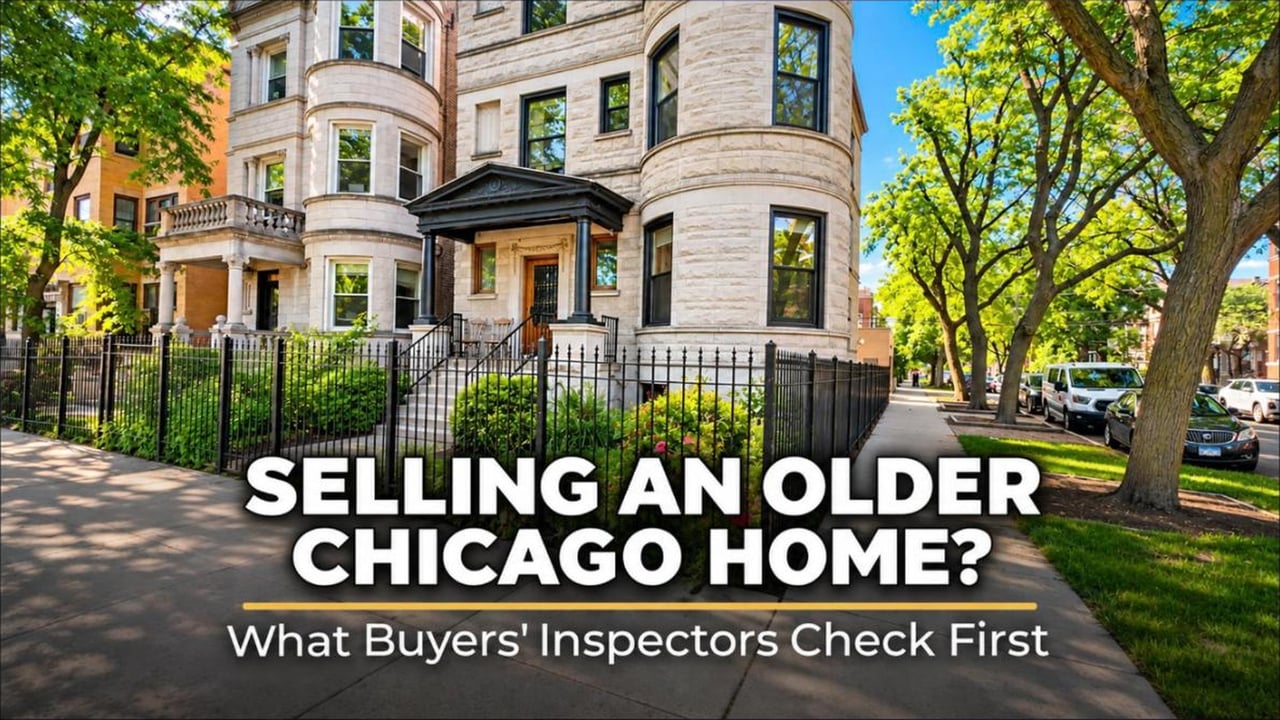
The nine things inspectors check in a vintage Chicago home, and what to do before you list

Local Events
Times, gates, closures, transit and how to do both in one night
Seller Advice
12 months of MLS condo and house sales, and what they mean for sellers
Seller's Advice
How much Chicago homeowners have gained, and what it can mean for your next move
Buying
Neighborhoods, getting around without a car, parking and dibs, winter, the real cost, schools, lead pipes, and property taxes, from a local since 1998
Seller Advice
What 12 months of MLS sales show for Logan Square condo and house sellers
Seller's Advice
A day-by-day checklist from a Chicago listing agent, one small step at a time
I'm Dee Savic, your trusted Chicago real estate expert, and I'm here to guide you through your relocation journey. Discover why Chicago is the perfect city for you; from its diverse neighborhoods to its cultural vibrancy, Chicago offers an unmatched urban experience. Together, we'll find a community and home that fits your lifestyle and aspirations.