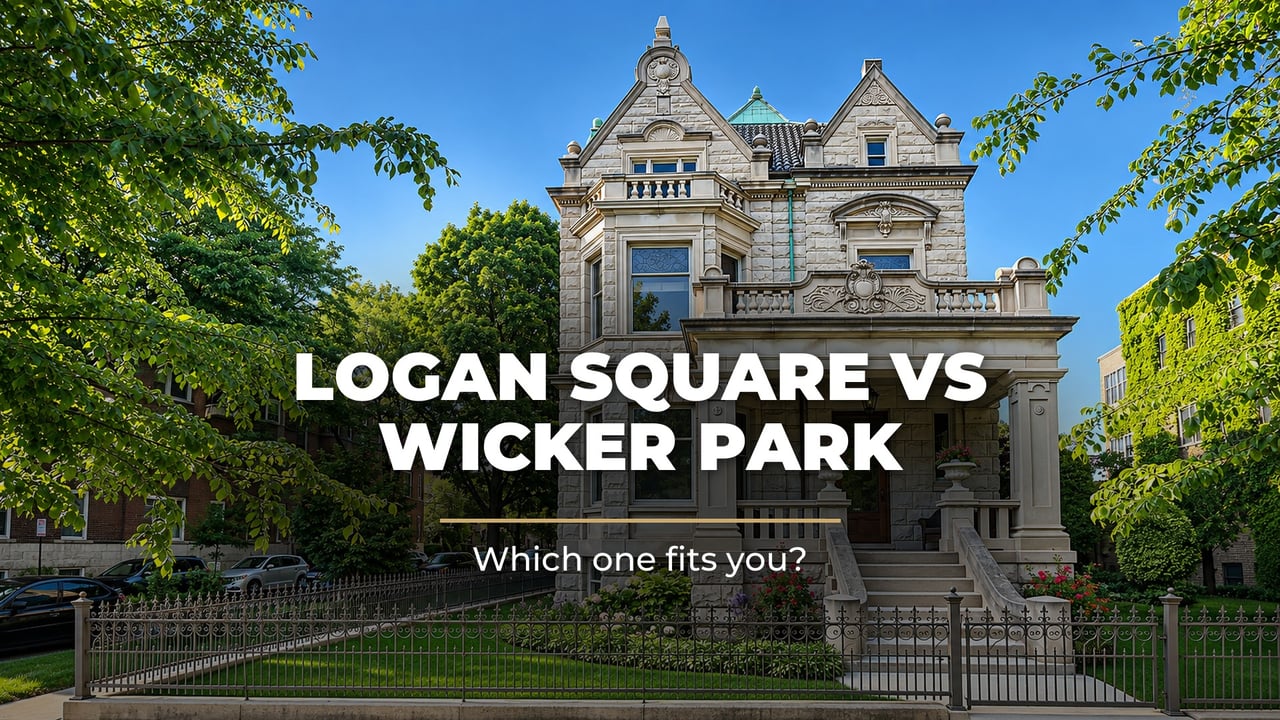
Should you buy a home in Logan Square or Wicker Park? If you want restaurants, shops, nightlife and the Blue Line within a short walk, Wicker Park may be a better fit. If you're looking for more housing choices, quieter residential streets or a single-family house with a yard, Logan Square may give you more options.
But there's more to this decision than lifestyle. Based on six months of MLS closed sales, the median price of a two-bedroom condo was $469,000 in Logan Square compared with about $581,000 in Wicker Park. For three-bedroom condos, though, the difference was only about 6%.
And if you're looking for a house rather than a condo, that's where things get really interesting.
I've lived in Chicago for 27 years and helped buyers and sellers here for more than 24. Logan Square and Wicker Park come up together in so many of my relocation conversations, and I understand why. They're neighbors, they share Milwaukee Avenue and the Blue Line, and both have beautiful vintage buildings and plenty to do.
But they're not interchangeable. Where you live within each neighborhood can make a big difference in your commute, your daily routine and the kind of home you can buy.
Here's what I'd want you to know before choosing between them.
If you're moving to Chicago and trying to narrow down your neighborhood choices, these are the differences I'd focus on first.
Neither neighborhood is automatically the better choice. The question is what you want your everyday life to look like, and how much you're comfortable spending to get it.
Both neighborhoods are on Chicago's Northwest Side, northwest of downtown and connected by Milwaukee Avenue and the CTA Blue Line.
Wicker Park is closer to the Loop, about three miles out. Logan Square begins at Western Avenue, just past Bucktown, and stretches farther west.
For this comparison, I'm using the following boundaries so you know exactly which homes are included in the MLS numbers.
This is one of the first things I explain to buyers relocating from another state.
Wicker Park is about one mile wide and half a mile from north to south. You can walk across it in about 20 minutes. That means most homes are relatively close to the neighborhood's restaurants, shops and transit.
Logan Square is a different story. It's about two miles wide and more than a mile from north to south. That's several Wicker Parks put together.
A home near Logan Square's central square and a home near Pulaski Road may have the same neighborhood name in the listing, but your daily routine could be completely different.
Near the square, you might walk to coffee, groceries and the train. Farther west, you may find yourself driving for errands or taking a bus to reach the Blue Line.
That's why, when we're looking in Logan Square, I want to know which part of the neighborhood works for you before we start falling in love with individual homes.
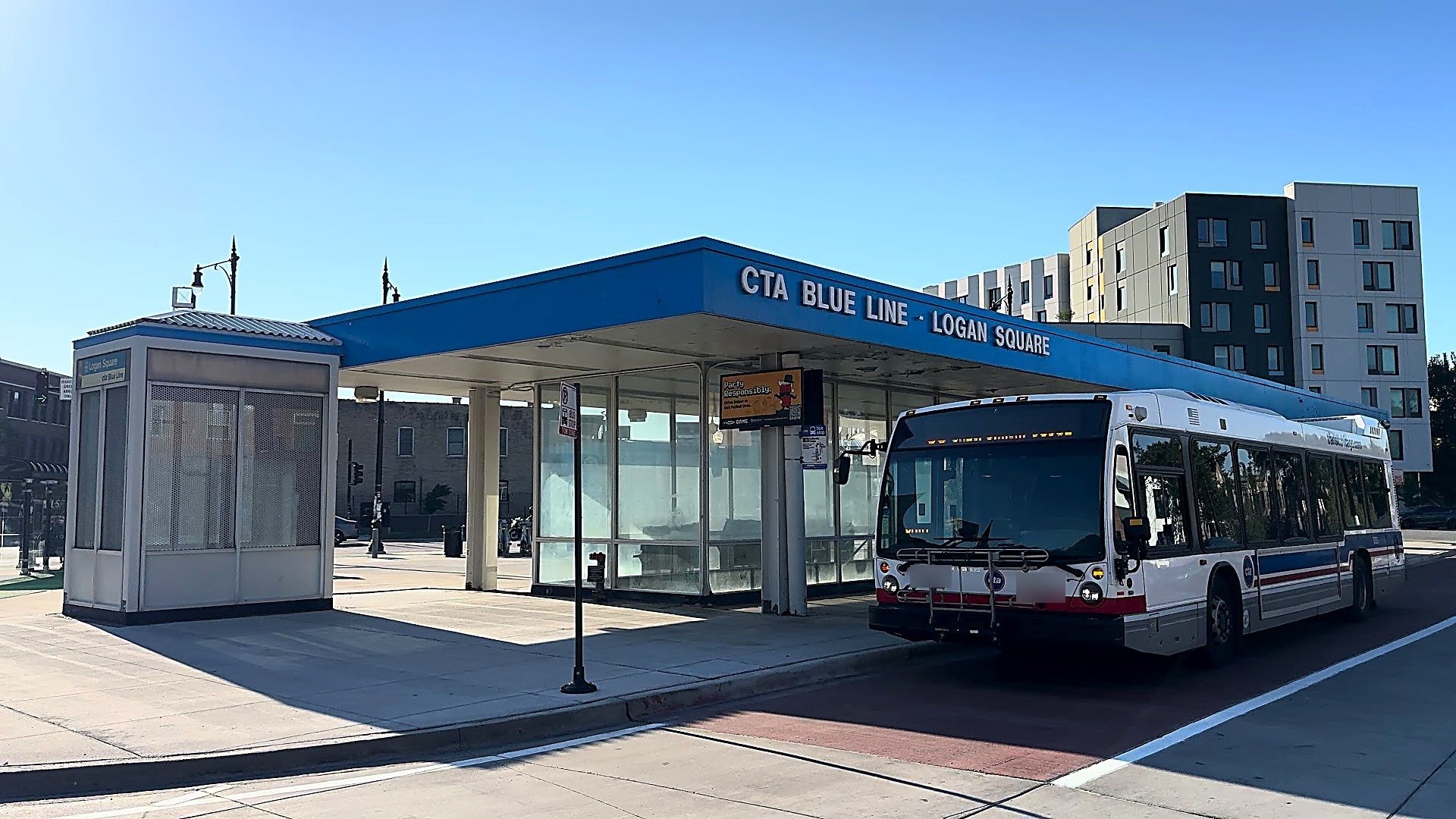
Both Logan Square and Wicker Park have access to the CTA Blue Line, which runs 24 hours a day. It connects both neighborhoods to downtown Chicago and O'Hare Airport.
Wicker Park has two Blue Line stops, Damen and Division. Logan Square has the California and Logan Square stops, with the Belmont stop just north of the neighborhood.
Wicker Park is a few stops closer to downtown, while Logan Square is a few stops closer to O'Hare. If you travel frequently for work, that difference may matter to you.
I'd pay more attention to your walk to the station than to the number of stops between neighborhoods.
In Wicker Park, the neighborhood is small enough that most homes are relatively close to a Blue Line station.
In Logan Square, both stations are in the eastern half of the neighborhood. Pulaski Road is about a mile west of the Logan Square stop, so residents on those blocks may need a bus ride just to reach the train.
That may not sound like much in June. In January, when it's cold and you're heading to work, it can feel very different.
Here's what I tell buyers who plan to commute by train: Start with the Blue Line station you'll use, then look at homes within a walking distance you're comfortable with year-round.
A home can look close to downtown on a map and still give you a longer daily commute than you expected.
Let's look at what buyers actually paid, because asking prices and online home estimates don't tell you the whole story.
These figures come from MLS closed sales over the last six months. Logan Square uses sales from May through early November 2026. Wicker Park uses the six months of sales from my Wicker Park guide.
These are median sold prices, not asking prices or estimates. Data is at the time of research, deemed reliable but not guaranteed.
Home Type (Median Sold Price) | Logan Square | Wicker Park |
|---|---|---|
2-bedroom condo | $469,000 (70 sales) | About $581,000 |
3-bedroom condo | $777,500 (64 sales) | About $825,000 |
3-bedroom single-family house | $943,500 (36 sales) | About $1.44 million (only 4 sales) |
Yes, based on these MLS sales, but the difference depends on what kind of home you're buying.
For two-bedroom condos, Logan Square had a median sold price of $469,000, compared with about $581,000 in Wicker Park. That's a difference of roughly $112,000.
For many buyers, that's a meaningful amount of money. It could change which neighborhood is within your budget.
But here's the part that might surprise you.
The gap gets much smaller when you look at three-bedroom condos. The median was $777,500 in Logan Square and about $825,000 in Wicker Park. That's only about $47,500, or roughly 6%.
For years, Logan Square was often discussed as the more affordable alternative to Wicker Park. As prices in Wicker Park and Bucktown climbed, buyers looked farther west, and Logan Square prices increased too.
So I wouldn't assume that choosing Logan Square automatically saves you a lot of money, especially if you're looking for a larger condo.
If two homes are similarly priced, I'd rather help you compare the location, building condition, layout and daily convenience. Those are the things you'll live with long after you've forgotten the asking price.
The biggest difference is in single-family houses. And it's not just about price. It's also about how many houses are available to choose from.
Over the six-month period, 36 three-bedroom single-family houses sold in Logan Square at a median price of $943,500.
In Wicker Park, only four three-bedroom houses sold during that same period, with a median of about $1.44 million.
That's a very different housing market if you're hoping to buy a house rather than a condo.
Here's a typical conversation I have. A couple relocating for work has about $900,000 to spend and wants to be near the Blue Line. In Wicker Park, that budget usually buys a very nice three-bedroom condo. In Logan Square, the same money can buy a house with a yard and a garage. Neither choice is wrong, but they're completely different ways to live, and that's the decision I help them make first.
Of course, buying a house brings different responsibilities than buying a condo.
With a condo, you'll have a monthly assessment, but someone else handles the roof and snow removal. With a single-family house, you won't have a condo assessment, but you'll be responsible for repairs and maintenance yourself.
And the purchase price isn't the only number that matters. You need to look at your full monthly housing costs and what you're comfortable taking on.
If you're comparing condos, my guide to Chicago condo HOA fees explains what owners actually pay by neighborhood and what those assessments cover.
Both neighborhoods have limited inventory, but Logan Square generally gives you more choices because it's so much larger.
When I pulled the Wicker Park numbers, there were only 12 condos and townhomes for sale in the entire neighborhood.
In early November 2026, Logan Square had about 30 condos and townhomes and 19 single-family houses for sale.
That doesn't mean every home will fit your budget or your needs. But it does mean you may have more options to compare, particularly if you're looking for a house.
In Wicker Park, someone looking for a single-family house may not have several homes to tour at the same time. Sometimes the challenge is waiting for a suitable one to come on the market.
You can see what's currently available in both neighborhoods:
Both neighborhoods have beautiful vintage Chicago architecture, but the housing choices aren't exactly the same.
In Wicker Park, you'll find vintage walk-up condo buildings, many without elevators, along with greystones, brownstones, two-flats and smaller loft buildings.
Much of the newer construction is along the main streets, while the residential side streets have a mix of older buildings and historic homes.
Hoyne Avenue is especially known for its large historic houses, including homes built by brewery owners in the 1800s.
If you're looking for a condo, there are different building styles and layouts to consider. But if a single-family house is your priority, the number of available options can be very limited.
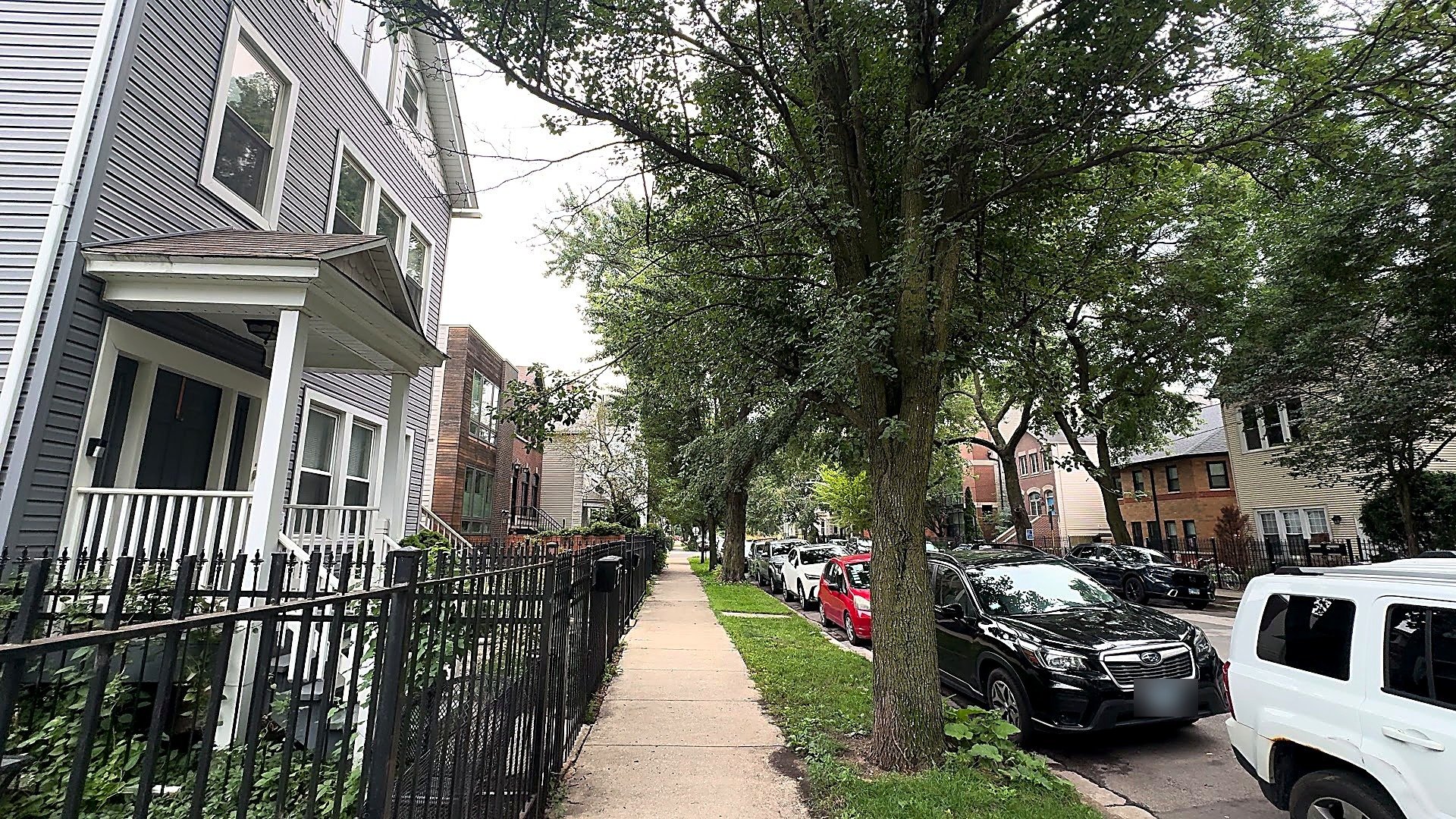
Logan Square has some beautiful historic residential streets, especially around its boulevards.
Logan, Kedzie, Palmer and Humboldt Boulevards are part of the Logan Square Boulevards District, a designated Chicago Landmark district. You'll find greystones, large brick homes and the wide, landscaped boulevards that give this part of the neighborhood its character.
As you move west toward Kedzie and Pulaski, you'll find fewer condo buildings and more two-flats and single-family homes with yards and garages.
One thing I always tell buyers about Logan Square is that the condition of homes can vary quite a bit, even on the same block.
You might see a home that's been completely renovated, then another a few doors down that hasn't been updated in decades.
That isn't necessarily a negative. But you need to understand what you're buying, especially in a vintage building.
Pay attention to the building itself, not just the kitchen and bathrooms. The inspection, condition and maintenance history matter in both neighborhoods.
If you're considering a condo in a vintage Chicago building, my Chicago condo specialist page explains what to look at before buying.
This is where I think the decision becomes more personal.
Both neighborhoods have restaurants, coffee shops, nightlife and interesting architecture. But living near Wicker Park's Six Corners isn't the same experience as living along one of Logan Square's residential boulevards.
And in both neighborhoods, the exact block can make a bigger difference than you might expect.
A lot of Wicker Park's activity centers around the Six Corners, where North Avenue, Damen Avenue and Milwaukee Avenue meet.
You'll find restaurants, coffee shops, boutiques, music venues and bars within a few blocks. Milwaukee, Division, Damen and North are the main streets for shopping, dining and everyday errands.
If you like being able to step outside and have plenty of places to go without getting into your car, that's a big part of Wicker Park's appeal.
But you should also understand what comes with that convenience.
On Friday nights, the area around the Six Corners gets busy. Many visitors come from other parts of Chicago, and some bars along Division Street stay open until 4 a.m. on weekends.
That doesn't mean all of Wicker Park is noisy. Streets like Hoyne, Pierce and Evergreen can be much quieter than the commercial corridors.
It's why I'd encourage you to see a home and its surrounding blocks at different times, not just during a quiet weekday showing.
Logan Square has its own busy spots, but the neighborhood feels different because it's so much larger.
The central square is where Logan Boulevard, Kedzie Avenue and Milwaukee Avenue meet. You'll recognize it by the tall Illinois Centennial Monument.
Palmer Square is a few blocks away, and the historic boulevards provide wide residential streets where people walk, run and spend time outside.
Along Milwaukee Avenue, you'll find restaurants, coffee shops and bars, along with the Logan Theatre, which has been showing movies for more than 100 years.
There are busy nights here too. But compared with the Six Corners, the activity often feels more connected to the surrounding neighborhood, and the boulevards tend to quiet down earlier in the evening.
What I really want buyers to understand, though, is that not all of Logan Square is equally walkable.
If you're near the square, the boulevards or Milwaukee Avenue, you may be able to walk to groceries, coffee and dinner.
Once you get well west of Kedzie, you may find yourself driving more often for everyday errands.
So when someone tells me they want to live in Logan Square because they love being able to walk everywhere, my next question is always which part of Logan Square they're considering.
Both neighborhoods have outdoor spaces, but they offer different experiences.
Wicker Park has the park it was named after, with a fieldhouse, playground and dog area. It's a convenient neighborhood park surrounded by busy city streets.
Logan Square has Palmer Square and its historic boulevards, where you'll see people walking dogs, running and enjoying summer weekends.
And there's one outdoor feature both neighborhoods share: the 606.
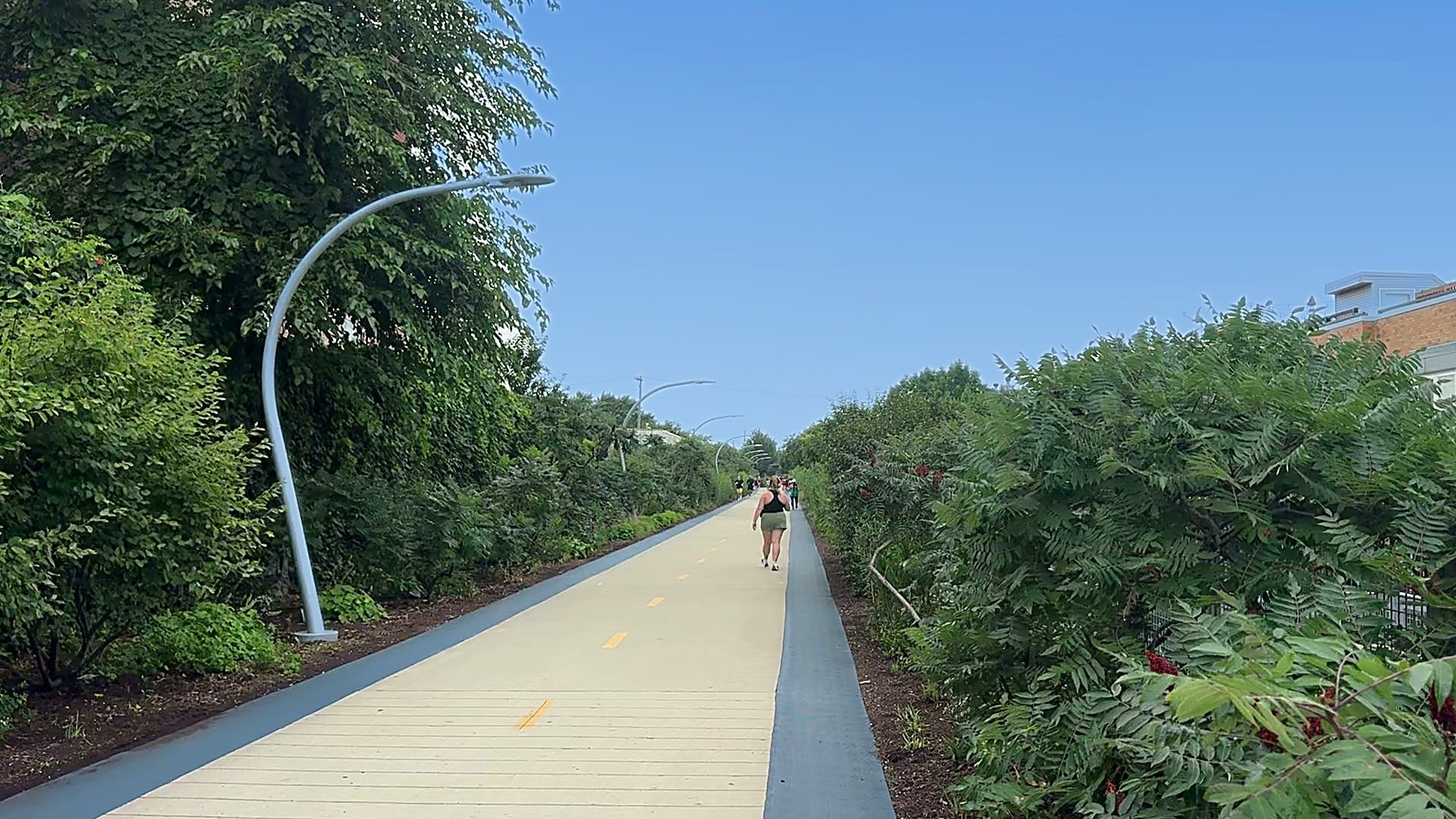
This 2.7-mile elevated trail was built on a former rail line along Bloomingdale Avenue. It runs from Ashland Avenue west to Ridgeway Avenue.
You can walk or bike from near Wicker Park into Logan Square without having to stop at a street crossing along the trail.
If you enjoy walking, running or biking, living near the 606 can be a nice part of your daily routine.
If you have a car, this is something I'd look at carefully before choosing a home.
Street parking can be difficult in Wicker Park, particularly at night and on weekends near Milwaukee, Division, Damen and North.
In the western part of Logan Square, more homes have garages, which may make it a better fit if parking is important to you.
But don't assume a listing includes parking just because it has a garage or shows a parking space.
With condos, find out whether parking is deeded, assigned or street only. I want buyers to understand exactly what comes with the home before they make an offer.
Sometimes it's easier to understand the differences when you can actually see the neighborhoods.
I walked through both Wicker Park and Logan Square on camera to show you what the streets look like, how the neighborhoods feel and what buyers should consider when comparing them.
The video also takes a closer look at the commute, housing choices and everyday trade-offs.
If you'd like to explore Wicker Park in more detail, you can also watch my Wicker Park walking tour, where I take you through the shops, restaurants and residential streets.
I wouldn't tell you one neighborhood is better than the other. They're both worth considering, but for different reasons.
Here's how I'd help you narrow down your choice based on what matters most to you.
Wicker Park may be worth focusing on if you:
If your ideal weekend involves walking out the door, getting coffee, browsing shops and meeting friends for dinner without needing your car, I can see why Wicker Park would appeal to you.
Just remember that convenience comes with trade-offs, including parking, activity and housing availability.
Logan Square may be worth focusing on if you:
If you're hoping for more space, a yard and a garage, Logan Square is definitely worth a closer look.
But I'd still want to make sure the location fits your commute and your daily routine. A beautiful house isn't necessarily the right house if you're unhappy with how far it is from the things you use every day.
That's actually a good position to be in, because it gives you more homes and locations to consider.
If you're comparing three-bedroom condos, the MLS numbers show that the price difference between the neighborhoods may not be as large as you expected.
In that situation, I'd look closely at the individual home, the condition of the building, the street and how convenient the location is for your routine.
If you're comparing single-family houses, the numbers tell a different story. Logan Square has substantially more options in the sales data, and the median price is considerably lower.
Neither choice is right for everyone. What matters is finding the combination of home, location and cost that works for you.
And if you're still deciding which parts of Chicago to explore, take a look at my guide to the best Chicago neighborhoods for 2026 and my post about Chicago neighborhoods relocators get wrong.
Generally, yes, based on six months of MLS closed sales in 2026. The median sold price of a two-bedroom condo was $469,000 in Logan Square compared with about $581,000 in Wicker Park. For three-bedroom condos, the difference was only about 6%. The biggest price difference was in single-family houses.
Wicker Park is more consistently walkable because it's compact, with restaurants, shops and Blue Line stations close to most homes. Logan Square is very walkable around the square, Milwaukee Avenue and the boulevards, but the western blocks toward Pulaski Road are more car-dependent. The exact location of a home matters.
Yes. Wicker Park has the Damen and Division Blue Line stops. Logan Square has the California and Logan Square stops, with Belmont just north of the neighborhood. The Blue Line operates 24 hours a day and connects both neighborhoods to downtown Chicago and O'Hare Airport.
Logan Square generally offers more quiet residential areas, particularly along its boulevards and side streets. Wicker Park has more late-night activity around the Six Corners and Division Street, although residential streets such as Hoyne, Pierce and Evergreen can be much quieter. In either neighborhood, I'd pay attention to the exact block before buying.
Logan Square offers more choices based on the six-month MLS sales data. There were 36 three-bedroom single-family house sales in Logan Square, with a median price of $943,500. Wicker Park had only four sales of three-bedroom houses, with a median of about $1.44 million. If you're looking for a house with a yard and garage, Logan Square may give you more options.
They're neighboring areas on Chicago's Northwest Side. Bucktown sits just north of Wicker Park, and Logan Square begins just northwest of both, at Western Avenue and Bloomingdale Avenue. Milwaukee Avenue, the Blue Line and the 606 trail connect the neighborhoods.
Both neighborhoods have relatively limited housing inventory, and desirable homes can attract multiple offers. When the MLS numbers were pulled, Wicker Park had just 12 condos and townhomes for sale, while Logan Square had about 30 condos and townhomes and 19 houses in early November 2026. I'd recommend getting fully pre-approved and deciding which blocks fit your lifestyle before you start touring.
Here's something I tell buyers who are moving to Chicago: you can learn a lot about a neighborhood online, but it's much harder to understand the difference between individual blocks.
Two homes can be only a few streets apart and offer very different experiences. One might be close to everything you want, while another could mean a longer walk to the train or more noise than you're comfortable with.
That's where having someone who knows these neighborhoods can really help.
If you're considering Logan Square, Wicker Park or both, send me the listings you're looking at. I'll share what I know about the street, the building and the location, and help you decide whether they fit the way you want to live.
If you're relocating, you can start with my free Chicago relocation guide.
If you're buying your first home, my free Chicago Buyer's Course explains the buying process step by step. You can also learn more about how I help people moving here on my Chicago relocation real estate agent page.
And if you'd rather talk through your options, you can schedule a time with me or call or text me at 773.719.0989.
I've lived in Chicago for 27 years, sold real estate here for more than 24, and closed more than 300 transactions worth over $100 million. You can read what my clients say on my testimonials page.
Prices reflect MLS closed sales at the time of research and change over time. Data deemed reliable but not guaranteed.
Dee Savic is a Chicago Realtor® with Baird & Warner. She has more than 24 years of real estate experience, has lived in Chicago for more than 27 years, and has closed more than 300 transactions. She helps buyers, sellers, downsizers and relocation clients across Chicago, including Logan Square, Wicker Park, Bucktown, Lakeview, Lincoln Park, Lincoln Square, Ravenswood, North Center, Roscoe Village, Andersonville, Uptown and the Gold Coast.
Dee Savic
Realtor® | Baird & Warner
4553 N. Lincoln Ave, Chicago, IL 60625
773.719.0989
[email protected]
deesavic.com
Buyer Guides
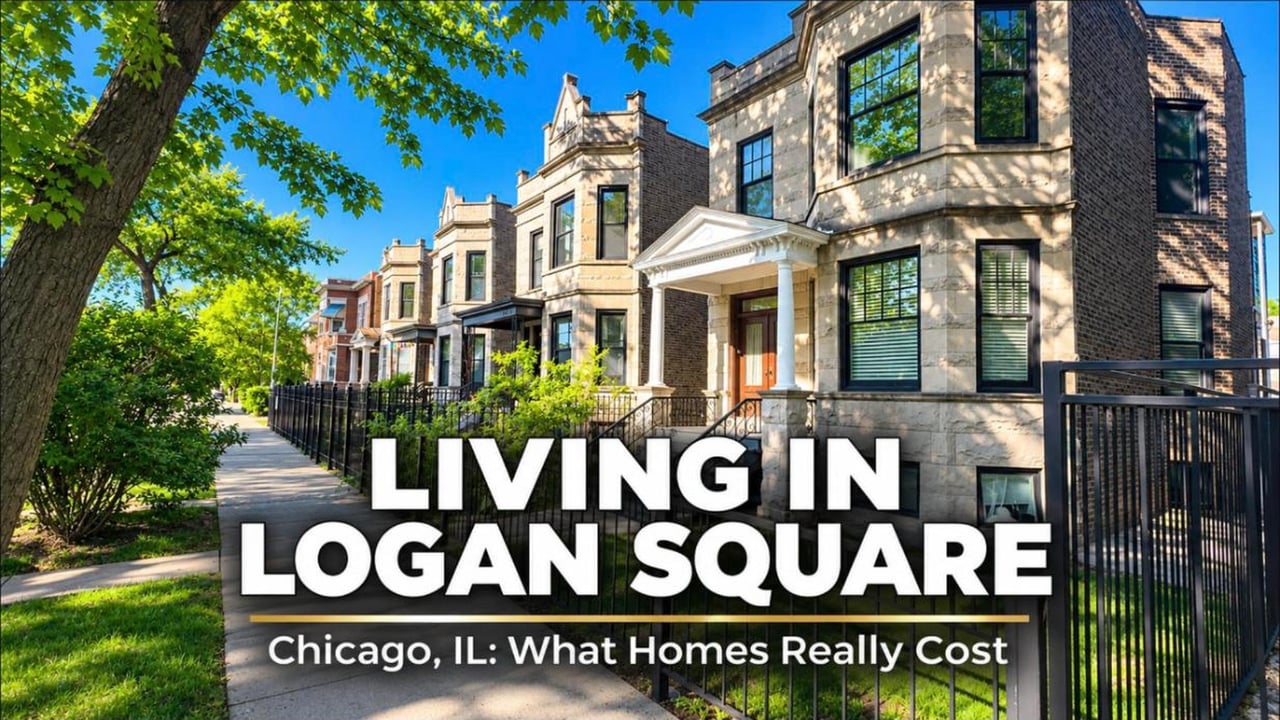
Size, the Blue Line, daily life and six months of MLS prices for condos and houses
Buyer Guides
The boulevards, the Blue Line, the homes, and what condos and houses really sell for
Sellers
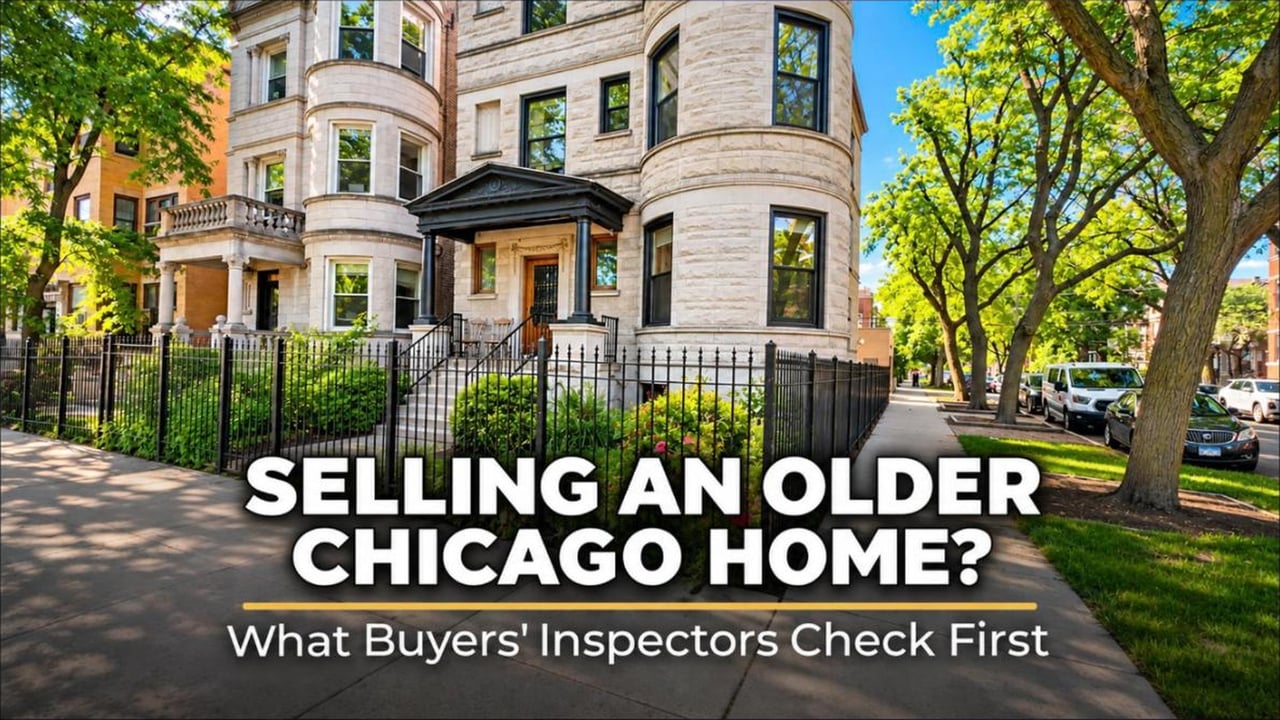
The nine things inspectors check in a vintage Chicago home, and what to do before you list

Local Events
Times, gates, closures, transit and how to do both in one night
Seller Advice
12 months of MLS condo and house sales, and what they mean for sellers
Seller's Advice
How much Chicago homeowners have gained, and what it can mean for your next move
Buying
Neighborhoods, getting around without a car, parking and dibs, winter, the real cost, schools, lead pipes, and property taxes, from a local since 1998
Seller Advice
What 12 months of MLS sales show for Logan Square condo and house sellers

Seller's Advice
A day-by-day checklist from a Chicago listing agent, one small step at a time
I'm Dee Savic, your trusted Chicago real estate expert, and I'm here to guide you through your relocation journey. Discover why Chicago is the perfect city for you; from its diverse neighborhoods to its cultural vibrancy, Chicago offers an unmatched urban experience. Together, we'll find a community and home that fits your lifestyle and aspirations.