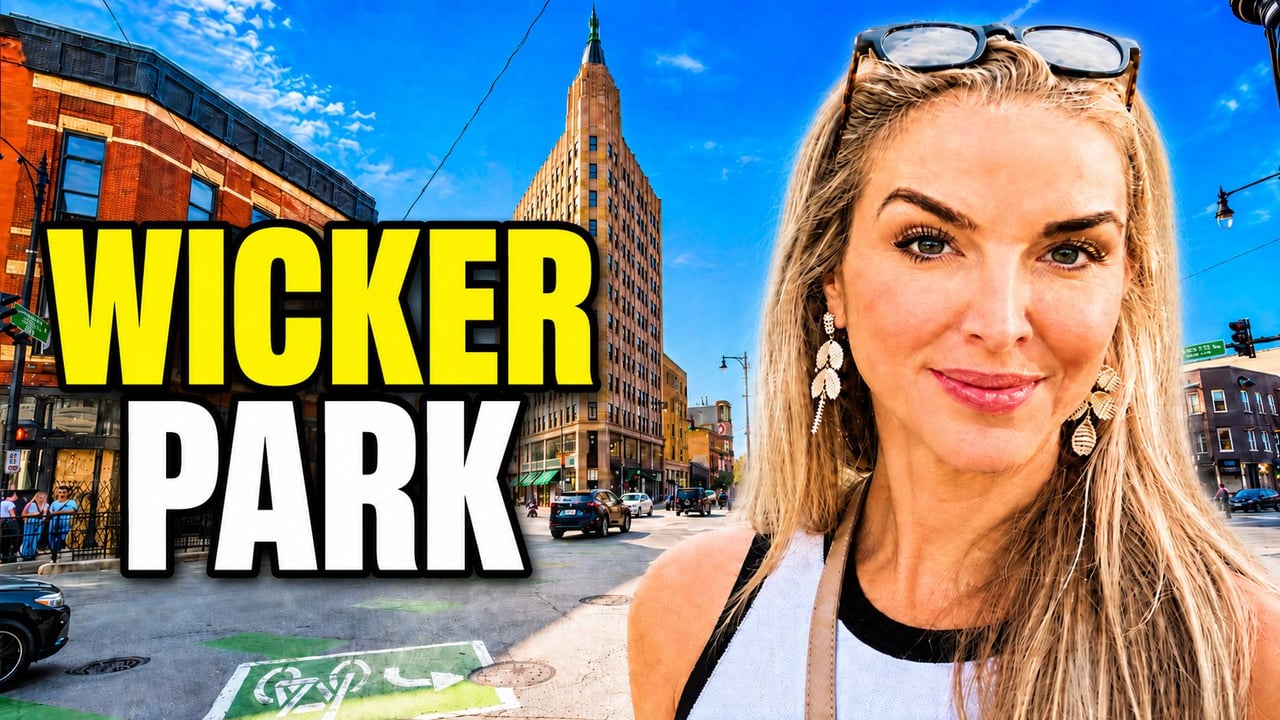
Living in Wicker Park Chicago: What Zillow Won't Tell You
What is it like living in Wicker Park, Chicago? Wicker Park is one of Chicago's most walkable, energetic neighborhoods, about three miles northwest of downtown with two Blue Line stops, great restaurants, nightlife, shopping, and some beautiful residential streets.
But it is also one of the easiest neighborhoods to misunderstand if you are only looking online.
Because in Wicker Park, one block can completely change your day-to-day life.
You can live close enough to walk to coffee, dinner, the Blue Line, the 606, and a night out - and still come home to a quiet, tree-lined street.
Or you can live directly above the action, where the bars are open late, deliveries start early, and the energy outside your window is part of the deal.
Same neighborhood. Sometimes a similar price. Two very different lives.
That is the part Zillow cannot tell you.
So I walked the neighborhood on camera to show you where Wicker Park changes, what the different parts actually feel like, and what homes really cost using MLS sales instead of online estimates.
Watch the full Wicker Park walking tour here, or keep reading.
Wicker Park sits about three miles northwest of downtown Chicago. The neighborhood is generally bounded by Ashland Avenue on the east, Western Avenue on the west, North Avenue on the north, and Division Street on the south.
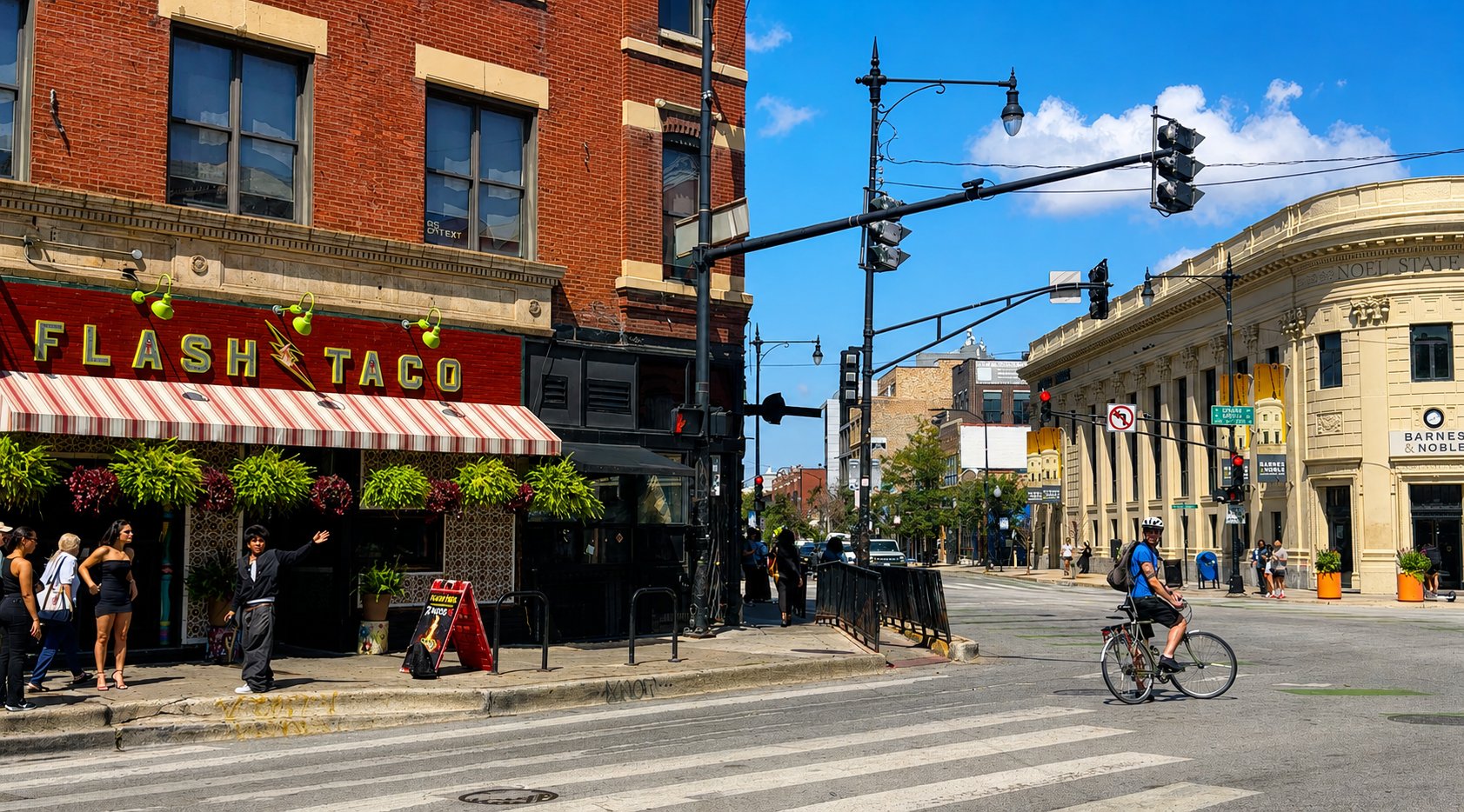
The heart of the neighborhood is the "six corners," where North, Damen, and Milwaukee all meet. That intersection is what most people picture when they think of Wicker Park: busy sidewalks, restaurants, coffee shops, boutiques, bars, the Damen Blue Line stop, and a lot of energy.
But that is only one version of Wicker Park. A few blocks away, the neighborhood can feel completely different. That is why I always tell buyers not to judge Wicker Park from one corner.
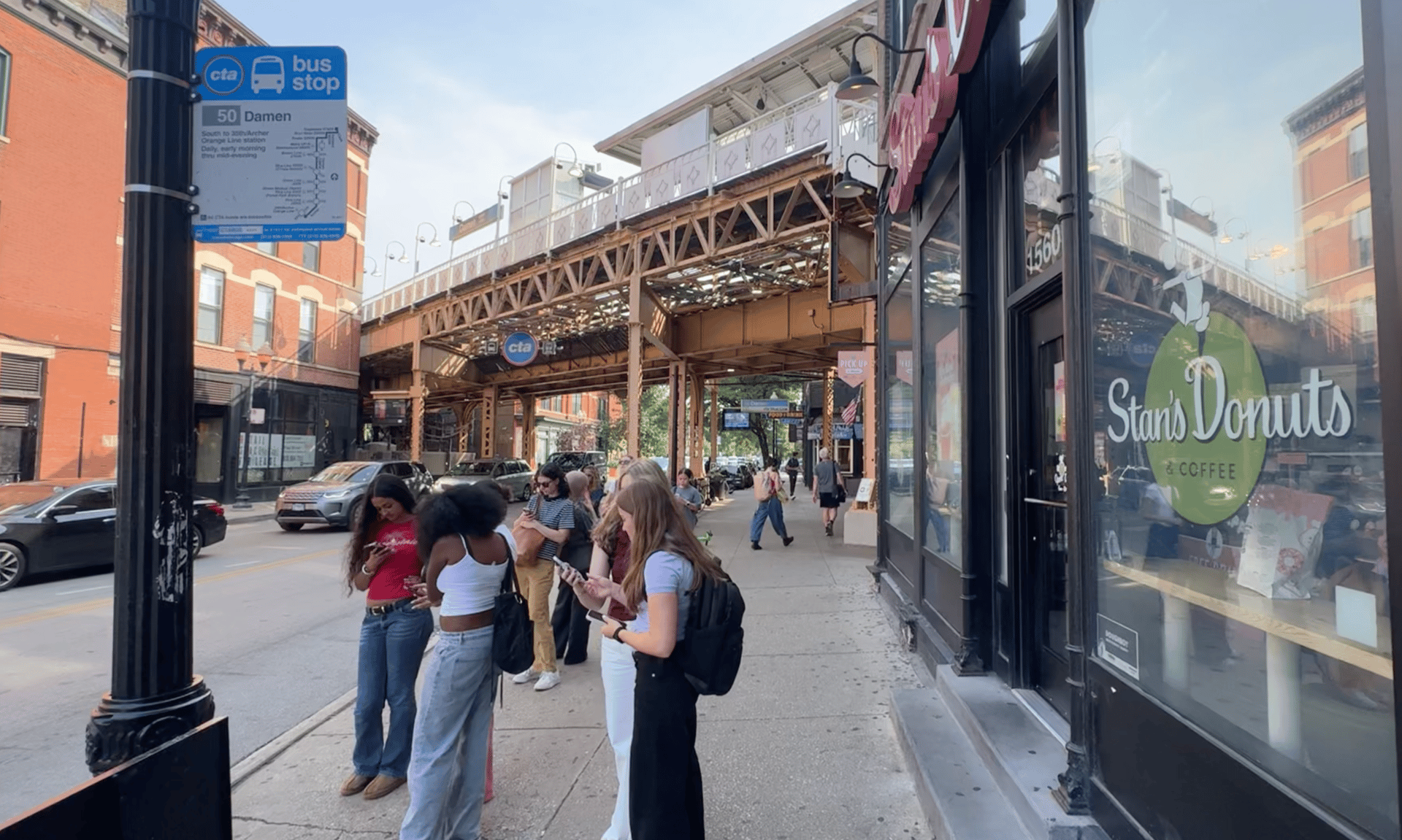
Wicker Park is one of the easier Chicago neighborhoods to live in without depending on a car. You have two CTA Blue Line stops: Damen and Division. The Blue Line takes you straight downtown and also directly to O'Hare, which is a huge plus if you travel often for work.
You also have buses running along Milwaukee, Ashland, Western, Division, North, and Damen, so you have several ways to get around even if you do not live right next to the train.
Driving is possible, of course, but parking is something to think about seriously. Street parking can be difficult at night and on weekends, especially near Milwaukee, Division, Damen, and North. If you are buying in Wicker Park and you own a car, do not assume parking will be easy. Confirm whether parking is included, whether it is deeded, assigned, rented, or street-only. That detail can change your day-to-day life more than people realize.
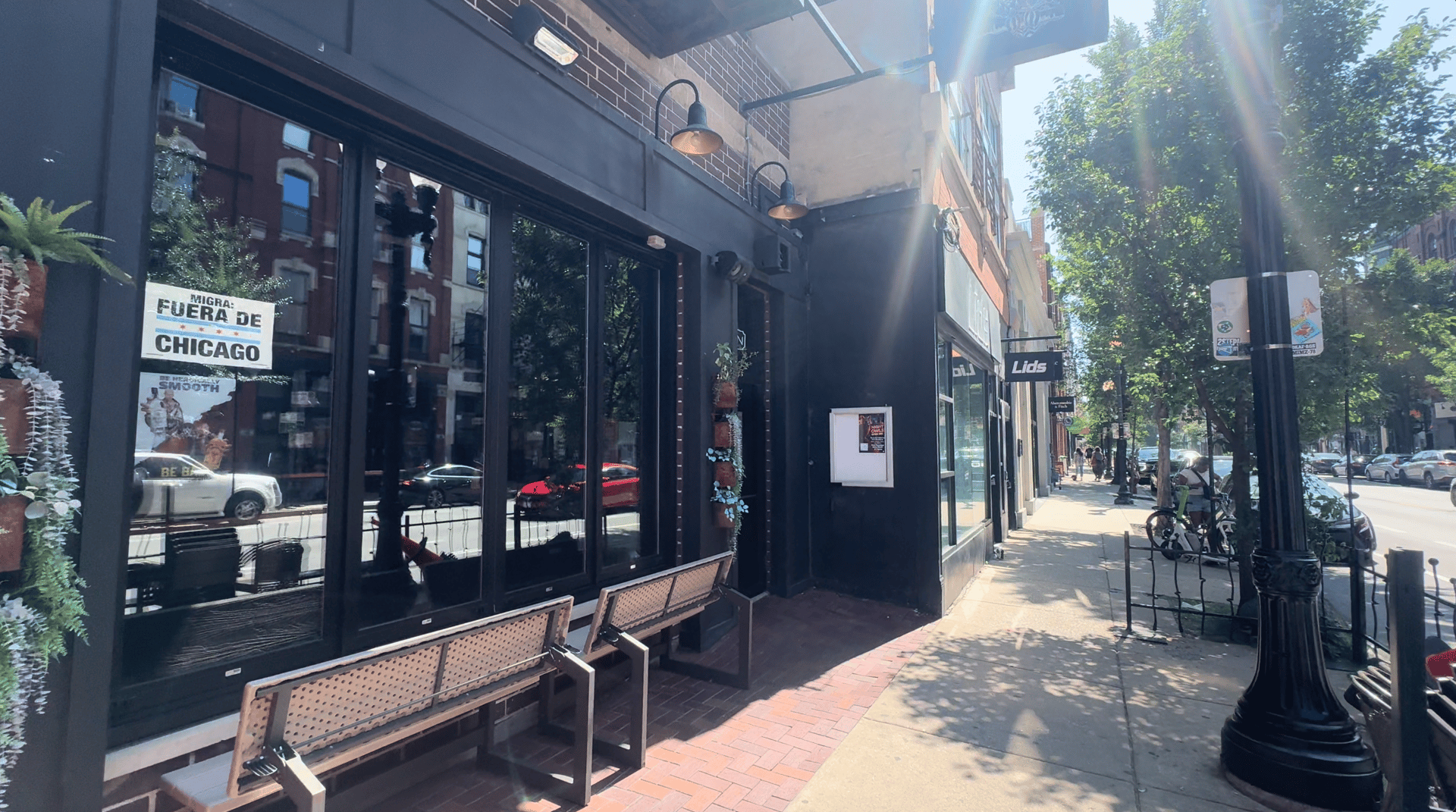
Milwaukee Avenue is where Wicker Park feels the most alive. Coffee, restaurants, bookstores, record stores, fitness studios, boutiques, vintage shops, bars - it is all right there. People are out during the day, after work, and late at night. Wicker Park does not shut down early, and for some buyers, that is exactly the appeal.
But here is the first thing I want you to understand if you are thinking about moving to Wicker Park:
Living near Milwaukee Avenue and living directly on Milwaukee Avenue are two different experiences.
One or two blocks off Milwaukee can give you the same walkable access with a lot less noise outside your windows. That is the one-block rule. You can be close to everything without living on top of everything. A map will not show you that. A listing description will not explain it. You understand it when you stand on the block, listen to the street, and imagine coming home there at 10 p.m., midnight, or 2 a.m. That is why the exact block matters so much in Wicker Park.
One of the best things about Wicker Park is that you are not stuck with one main strip. Depending on where you live, your regular coffee shop, dinner spot, workout studio, and walk home can be completely different.
Around Milwaukee, Damen, and North, you have a mix of restaurants, coffee shops, bookstores, record stores, gyms, vintage stores, boutiques, and bars. A few neighborhood staples include Myopic Books, Wormhole Coffee, Reckless Records, Shuga Records, Antique Taco, Big Star, Piece Brewery and Pizzeria, Barry's, and Solidcore.
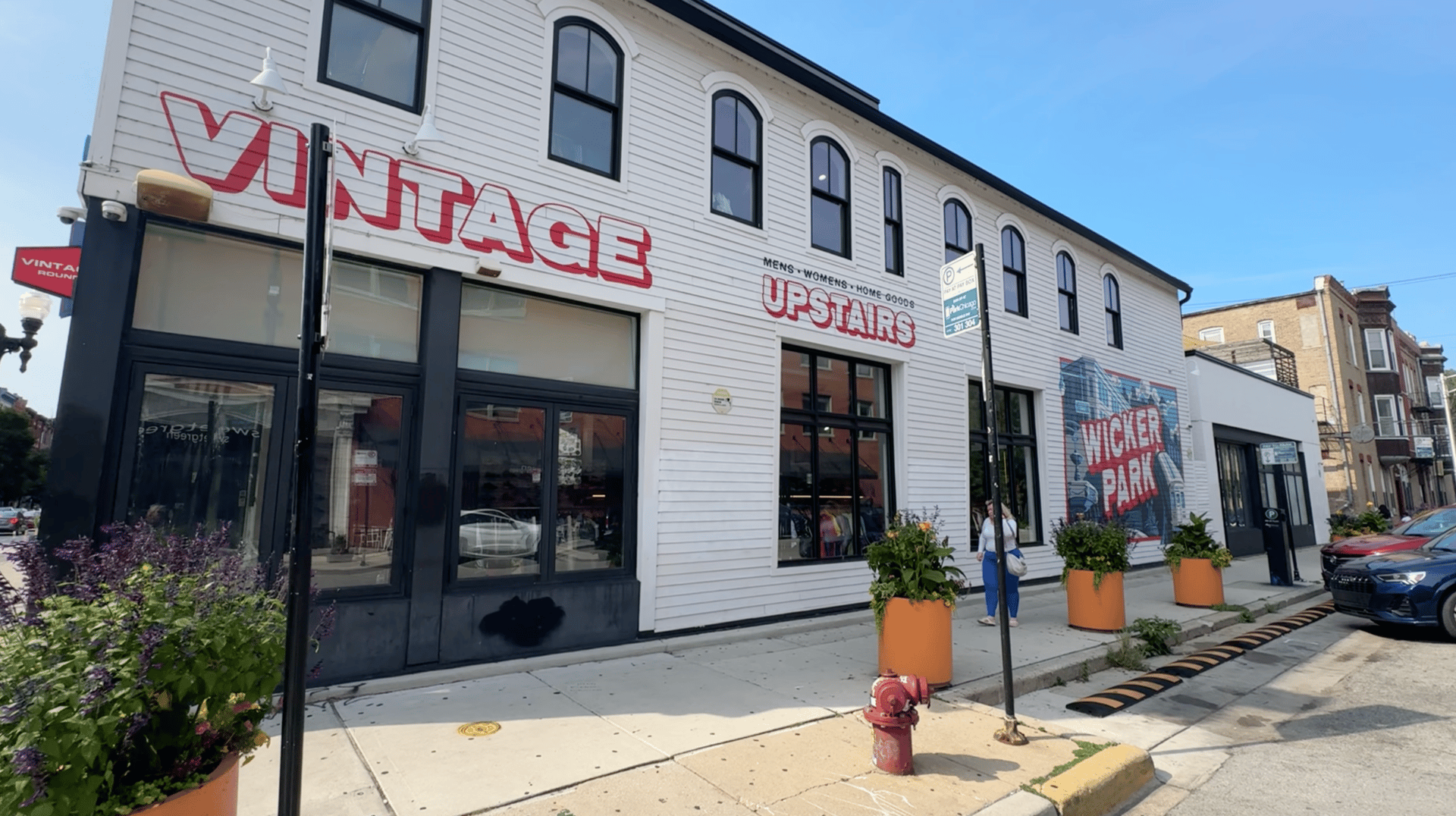
You also have galleries, murals, small shops, and a lot of independent businesses that give the neighborhood its personality. This is where Wicker Park really shines. You can get coffee, work out, meet someone for lunch, browse a bookstore, pick up a record, grab dinner, and go out after - all without getting in a car. That is not true in every Chicago neighborhood. And it is one of the reasons people who love Wicker Park really love it.
If nightlife matters to you, Wicker Park is one of the better neighborhoods in the city. You have cocktail bars, live music, rooftops, arcade bars, late-night food, DJs, and places that stay open much later than some buyers expect. A few examples: The Violet Hour for cocktails, Emporium for drinks, arcade games, and DJs, Subterranean for live music, The Up Room at The Robey for skyline views, and bars and restaurants along Milwaukee, Damen, North, and Division.
That can be amazing if you want that energy. It can also be a problem if your bedroom faces the wrong direction. So when I am showing property in Wicker Park, I am not just looking at the unit. I am looking at what is below it, behind it, across from it, and how that block feels at night. For some buyers, being in the middle of everything is the entire reason they choose Wicker Park. For others, two blocks off the action is the better version of the same neighborhood.
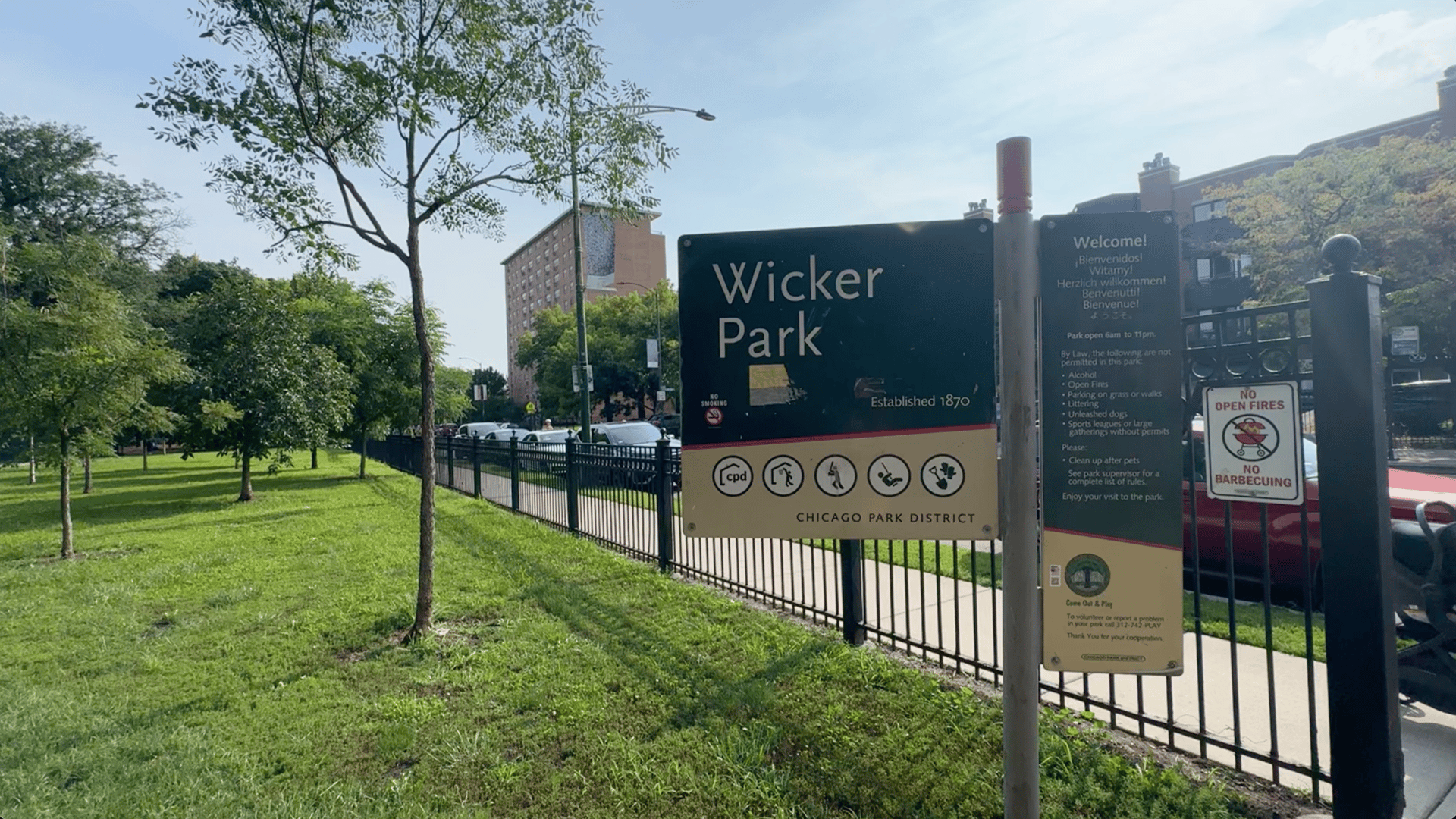
Wicker Park the actual park is not one of Chicago's largest parks, but it is the neighborhood's gathering place. You have green space, a fieldhouse, a playground, a dog-friendly area, and neighborhood programming throughout the year. The park also gives the neighborhood some breathing room, especially around Damen and Schiller.
Wicker Park has gone through a lot of versions of itself: historic homes after the Great Chicago Fire, immigrant communities, artists and musicians, independent shops, and now one of the most desirable neighborhoods on the Near Northwest Side. You can still see that mix in the architecture, murals, music venues, vintage stores, and side streets. That layered feeling is part of the appeal. It does not feel like a brand-new neighborhood that popped up overnight. It feels lived-in.
If you only visit North, Damen, and Milwaukee, you are missing a huge part of Wicker Park. Walk onto Hoyne, Pierce, Evergreen, Schiller, or some of the residential blocks just off the main streets, and the neighborhood can feel completely different. This is where you see tree-lined blocks, historic greystones, brownstones, brick two-flats, three-flats, older single-family homes, and new construction mixed in.
Some of the most beautiful homes in Wicker Park are on these quieter streets. That is why I would never tell someone to judge the neighborhood only by the six corners. The six corners are the energy. The side streets are where many people actually want to live. And the difference between those two can be one block.
These numbers come from MLS sales over the last six months, not online estimates:
Property Type | Median Sale Price | Sold vs. Asking |
|---|---|---|
1-bedroom condo | About $359,000 | 8% over asking |
2-bedroom condo | About $581,000 | 4% over asking |
3-bedroom condo | About $825,000 | 2% over asking |
Median market time across those categories was about seven days or less. So yes, even at these prices, buyers are still competing for good homes.
These are recent MLS sales. They are not Zillow estimates, and they are not a promise of what the next home will sell for. They are a snapshot of what buyers have actually been paying.
The bigger issue in Wicker Park is inventory. When I pulled these numbers, there were only 12 condos and townhomes for sale in the entire neighborhood, ranging from roughly $330,000 to $1.6 million. Once you narrow those 12 by price, bedroom count, parking, outdoor space, location, building type, and whether you want to be on a quiet street or closer to the action, you may only have one or two homes that actually fit.
That does not mean you should automatically offer over asking on everything. It does mean you need to be ready when the right home appears. If you are still working on financing, see my guide to how much to put down when buying a home in Chicago. You can also browse current Wicker Park homes for sale on my site.
If you want a single-family home in Wicker Park, the challenge is not just the price. It is finding one. Only four three-bedroom single-family homes sold in the entire neighborhood over six months. That is less than one a month. The median was about $1.44 million, but with only four sales, that number does not tell the whole story. Some homes sold for less. Larger or more updated homes sold for considerably more.
The real takeaway is scarcity. The hard part is not just affording a single-family home in Wicker Park. The hard part is finding one that checks your boxes. Location, lot size, condition, parking, outdoor space, bedroom count, and proximity to nightlife all matter. When inventory is that limited, buyers need to be very clear on what they will compromise on and what they will not.
Wicker Park has a lot of condos, and some of them photograph beautifully. But if you are buying a condo, do not let pretty finishes distract you from the building. Look at HOA reserves, upcoming repairs, meeting minutes, special assessments, insurance, rental rules, pet rules, owner occupancy, building maintenance, roof age, masonry condition, and parking.
A beautiful kitchen is great. But a poorly managed building can cost you a lot more after closing. This is especially important in Chicago's vintage buildings. You want to understand the building, not just the unit. If you are considering a condo, my Chicago condo specialist page explains more about what buyers should review before closing.
Division Street feels a little different from Milwaukee. To me, it feels a bit more polished in certain stretches, with restaurants, patios, cocktail spots, bakeries, and the Division Blue Line stop at the east end.
Walking east from Damen toward Ashland, you have several blocks of restaurants and bars. Perch Kitchen and Tap has a great patio. Ella brings Turkish and Mediterranean food. Alliance Bakery has been on Division for over a century and is a true neighborhood institution.
Walk west from Damen, and the feel changes again. You have different restaurants, a little more neighborhood rhythm, and then more residential blocks as you move farther west. That is the thing with Wicker Park. Even the main streets do not all feel the same. Milwaukee, Damen, North, and Division each give you a different version of the neighborhood.
This is where buyers need to slow down. Living near Division and living directly on Division can be very different. A block or two off Division gives you the walk to restaurants, coffee, the train, and nightlife. Living directly above or behind a busy restaurant or bar can mean deliveries in the morning, patio noise at night, and more activity outside your window than you expected.
Some places stay open later than buyers realize. Bourbon on Division, for example, can run until 4:00 a.m. on weekends. That may not bother you at all. For some buyers, that is part of the fun. But if you are looking for quiet, you need to know exactly what is around the unit before you write an offer. Look below you. Look behind you. Look across the street. Then go back at night if you are serious. A condo can feel very different at 2 p.m. on a Tuesday than it does at midnight on a Saturday.
Wicker Park works really well for people who want their daily life to be walkable. Coffee, lunch, errands, workouts, shopping, dinner, drinks, the train, the trail - a lot of it can happen without a car. That is why the neighborhood is so popular with young professionals, people who commute downtown, people who travel through O'Hare, and buyers who want city energy without living in the Loop.
The fitness scene is also strong. You have boutique studios, larger gyms, yoga, pilates, spin, Barry's, Solidcore, and plenty of options nearby. If your ideal weekend is coffee, a workout, vintage shopping, lunch, a walk on the 606, and dinner without touching your car, Wicker Park makes that easy. If your ideal weekend is total quiet, easy parking, and more space for the money, you may want to compare it with other North Side neighborhoods before committing.
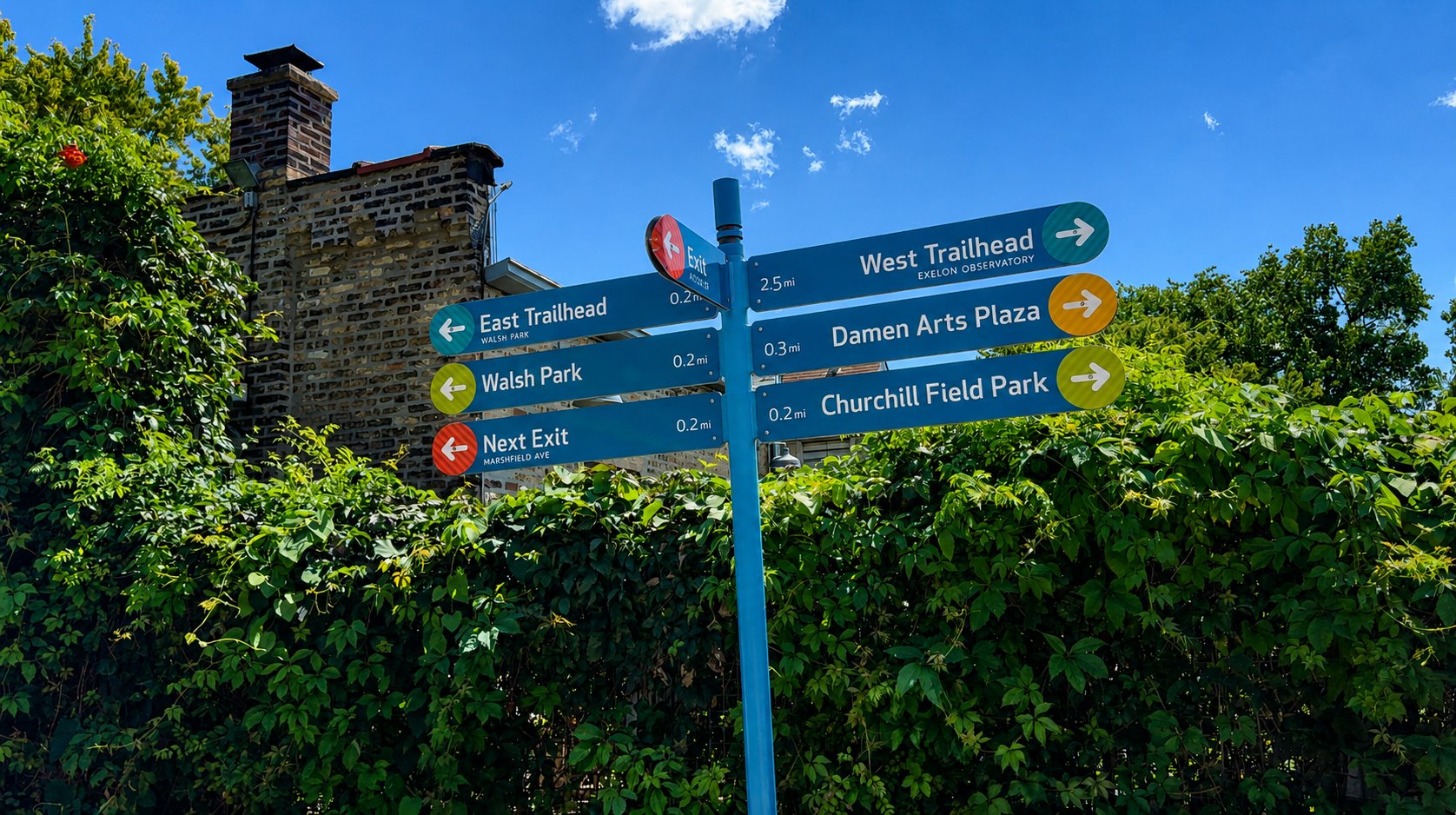
The 606, also called the Bloomingdale Trail, is one of the biggest lifestyle perks near Wicker Park. It is a 2.7-mile elevated trail built on a former rail line, running from Ashland west to Ridgeway. You can start near Wicker Park and connect toward Bucktown, Logan Square, and Humboldt Park without crossing intersections the same way you would on street level.
That elevation matters. You are not just walking on a sidewalk next to traffic. You are above the street, with space for walking, running, biking, strollers, and dogs. In the morning, you see runners and commuters. During the day, you see walkers, parents, kids, and people with dogs. In the summer, it becomes part of the rhythm of the neighborhood. It also affects real estate. Homes near 606 access points tend to attract buyers who want that trail lifestyle. For some people, being close to the 606 is a major selling point.
Wicker Park and Bucktown sit right next to each other, and buyers often compare them. Prices can overlap, but the feel is not exactly the same. Wicker Park usually has more of the Milwaukee Avenue energy: restaurants, nightlife, vintage shopping, music, and a little more edge. Bucktown tends to feel quieter and more residential as you move north, especially once you are farther from the six corners and closer to the tree-lined blocks.
That is a generalization, of course. There are quiet pockets of Wicker Park and busy pockets of Bucktown. But if a buyer tells me they want walkability and nightlife, Wicker Park is usually part of the conversation. If they want to be close to everything but prefer a slightly calmer feel, Bucktown may be worth comparing. The name of the neighborhood matters less than the exact block. That is true in a lot of Chicago neighborhoods, but it is especially true here.
Wicker Park is a great fit if you want walkability, Blue Line access, a quick connection to downtown and O'Hare, restaurants and nightlife, coffee shops and independent businesses, fitness studios, vintage shopping, the 606, a neighborhood that feels active most of the week, and beautiful residential side streets close to the action.
It may not be the best fit if you want easy street parking, quiet above everything else, a lot of space for the money, a slower residential feel, a newer high-rise lifestyle, or a neighborhood that shuts down early. That does not make Wicker Park good or bad. It just means it has a personality. And you need to know whether that personality fits your life.
If you want energy, walkability, great restaurants, shopping, nightlife, beautiful residential streets, and fast access to downtown and O'Hare, Wicker Park is hard to beat. If you want quiet, space, and affordability, this may not be your neighborhood. Or at least, you need to be very careful about which part of it you choose.
That is the biggest thing to understand about Wicker Park: your experience changes drastically depending on where you land. Right on Milwaukee, Division, Damen, or North, you are in the middle of the action. One or two blocks off, you may be able to walk to everything and still come home to a quiet street.
With inventory this tight, knowing which version you want before you start looking is not a nice-to-have. It is the search strategy. If you are still comparing neighborhoods, start with my guide to the best Chicago neighborhoods in 2026.
Based on recent MLS sales from the last six months, one-bedroom condos sold around $359,000, two-bedroom condos around $581,000, and three-bedroom condos around $825,000. Median market time was about seven days or less, and good listings were still attracting strong buyer activity.
Yes. Wicker Park is one of Chicago's most walkable neighborhoods. You can get coffee, work out, run errands, shop, meet for lunch, go out to dinner, and take the Blue Line without relying on a car.
Yes. Wicker Park has two Blue Line stops, Damen and Division, plus several bus routes along Milwaukee, Ashland, Western, Division, North, and Damen. The Blue Line connects directly to downtown Chicago and O'Hare.
Parts of it can be. Wicker Park has nightlife, restaurants, bars, late-night businesses, and busy main streets. But one or two blocks off Milwaukee, Division, North, or Damen can feel much quieter. The exact block matters.
Yes, but they are limited. Only four three-bedroom single-family homes sold in the neighborhood over the six-month period I reviewed. The median was about $1.44 million, but with so few sales, buyers should look carefully at the individual home, block, condition, and competition.
Yes. Wicker Park is one of the better Chicago neighborhoods for buyers who want restaurants, bars, live music, cocktails, rooftops, and late-night options close to home. Just make sure you understand the noise and activity level around the specific property.
It depends on what you want. Wicker Park generally has more nightlife and Milwaukee Avenue energy. Bucktown often feels a little quieter and more residential as you move north. Buyers often compare both because prices and location can overlap.
A Wicker Park condo can be a great fit if you want walkability, Blue Line access, restaurants, nightlife, and a strong neighborhood feel. Just make sure you review the building carefully, including HOA reserves, meeting minutes, special assessments, insurance, rules, and whether parking is included. See my Chicago condo specialist page for what to review before closing.
I am Dee Savic, a Realtor with Baird & Warner. I have lived in Chicago for 27 years and spent the last 24 helping people move here and move within the city. Figuring out which version of a neighborhood fits you - and which block delivers it - is exactly the part I help with.
Browse Wicker Park homes for sale, read my full Wicker Park neighborhood guide, or schedule a complimentary and confidential consultation.
You can also book directly on my calendar here, or call or text me directly at 773.719.0989.
Watch the full walking tour on YouTube and subscribe for Chicago neighborhood tours every week.
Prices reflect recent MLS sales and change over time. Data deemed reliable but not guaranteed. Verify current figures before making a buying decision. This post is for informational purposes only and does not constitute legal, financial, or investment advice.
Dee Savic is a Realtor with Baird & Warner, a 24+ year real estate professional, and a 27+ year Chicago resident with 300+ closed transactions and hundreds of five-star reviews. She specializes in helping buyers, sellers, and relocation clients across Chicago's neighborhoods.
Dee Savic
Realtor® | Baird & Warner
4553 N. Lincoln Ave, Chicago, IL 60625
773.719.0989
[email protected]
deesavic.com

Seller Advice
The hardest part of downsizing is usually not the market or the money. It is the house, the stuff, the timing, and not knowing where you would go next.
Market Updates
The North Side is Chicago. The North Shore is suburbs north of Chicago. The difference matters for schools, taxes, commute, housing style, and daily life.
Neighborhood Guides
A walking tour of Chicago's most misunderstood neighborhood - real MLS prices, the one-block rule, and which version of Wicker Park actually fits you.
Market Updates
North Side Chicago home prices hit a record $500,000 in Q2 2026 while inventory fell 22.8%. Here is what the numbers mean for buyers and sellers.
Market Updates
Chicago has grown three years in a row - but growth is slowing, and the housing market is doing something the headlines cannot explain.
Market Updates
Mortgage rates have barely moved all year. The 30-year fixed averaged 6.65% the week of August 20, 2026 - only slightly above where it was a year ago. In Chicago's 202… Read more
Market Updates
A plain-language guide to the four components of your Cook County property tax bill - what each one means, which ones you can actually move, and how to use this knowle… Read more
Market Updates
Cook County property taxes grew 182% between 1995 and 2024 - double the rate of inflation and faster than wages. Here is exactly where that money went and why your ass… Read more
Market Updates
If you own property in Rogers Park Township - which covers Rogers Park and Edgewater - your Board of Review appeal window is open now and closes September 1, 2026. Evi… Read more
I'm Dee Savic, your trusted Chicago real estate expert, and I'm here to guide you through your relocation journey. Discover why Chicago is the perfect city for you; from its diverse neighborhoods to its cultural vibrancy, Chicago offers an unmatched urban experience. Together, we'll find a community and home that fits your lifestyle and aspirations.