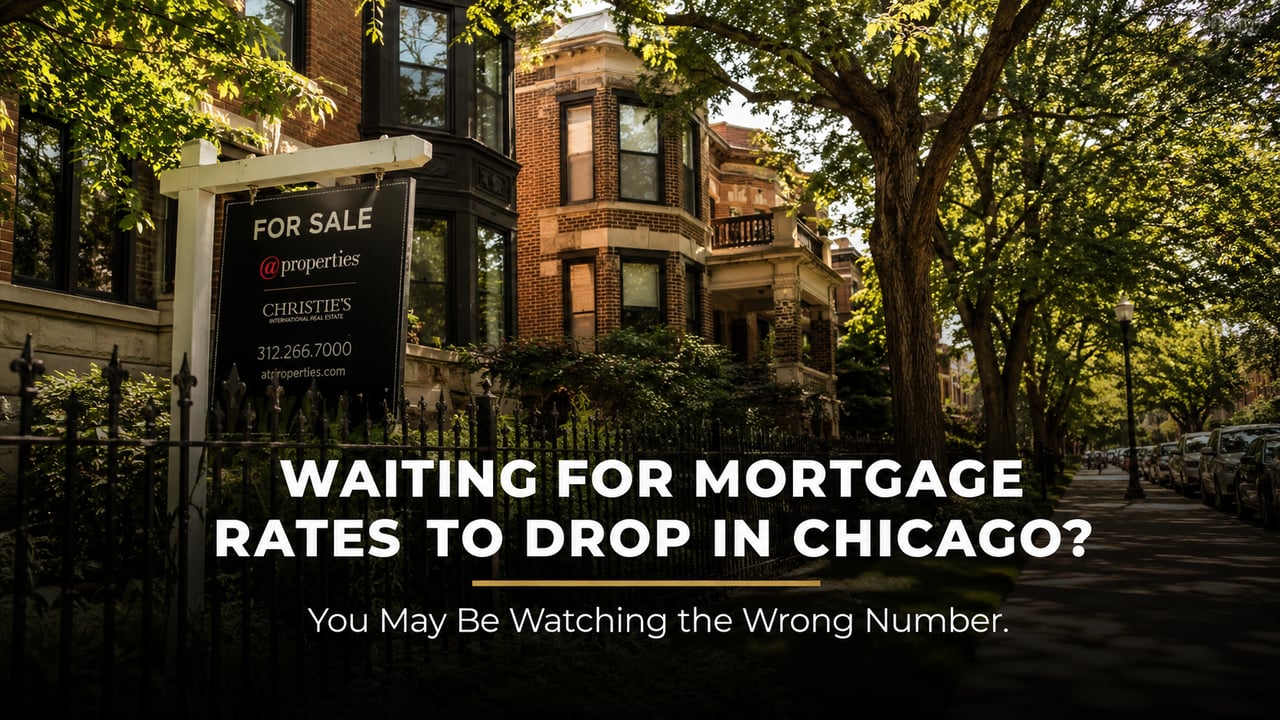
Many Chicago buyers in 2026 are waiting for mortgage rates to fall before they start seriously shopping.
I understand why. A lower rate sounds like the thing that would make buying feel easier.
But here is the problem with that strategy: mortgage rates have barely moved, while Chicago inventory has stayed tight and prices have continued rising.
The 30-year fixed-rate mortgage averaged 6.65% the week of August 20, 2026, according to Freddie Mac's Primary Mortgage Market Survey. One year earlier, it averaged 6.58%. That is not a meaningful drop. It is barely movement at all.
So if you are trying to decide whether to buy or wait in Chicago, the bigger question may not be, "What will rates do?" The better question is: Will the right home be available when I am ready? Because in Chicago's 2026 housing market, inventory is the real variable.
I am Dee Savic, a Realtor with Baird & Warner. I have lived in Chicago for 27 years and worked with buyers and sellers across Chicago's neighborhoods for 24 of them. This post breaks down what the current rate environment actually means, what the inventory picture looks like in Chicago right now, and what both buyers and sellers should be doing differently because of it.
The 30-year fixed-rate mortgage has moved in a fairly narrow range for most of 2026. Here is the recent Freddie Mac PMMS data:
Week | 30-Year Fixed | 15-Year Fixed |
|---|---|---|
August 20, 2026 | 6.65% | 5.95% |
August 13, 2026 | 6.67% | 5.96% |
August 6, 2026 | 6.69% | 6.01% |
April 2, 2026 | 6.46% | 5.77% |
One year ago (August 2025) | 6.58% | 5.75% |
Source: Freddie Mac Primary Mortgage Market Survey. The PMMS tracks conventional, conforming, fully amortizing home purchase loans for borrowers with 20% down and excellent credit.
The important point is not whether rates moved a few basis points from one week to the next. They always do. The important point is that rates have not moved enough to fundamentally change the math for most Chicago buyers.
A small rate improvement can help. Of course it can. But a 0.20% or 0.25% change is not usually the difference between an affordable home and an unaffordable one. It may change the monthly payment, but it does not solve the bigger issue buyers are facing in Chicago right now: limited inventory.
The Fed meets September 15-16 with updated projections, and whatever happens there will affect rate expectations and market sentiment. But trying to predict the exact timing and size of rate movement is not something anyone can do with certainty. Building a six- or seven-figure real estate decision around a rate forecast is risky. Building it around your actual budget, your timeline, your neighborhood options, and current inventory is much more practical.
Chicago is still not operating like a balanced housing market. The City of Chicago had approximately 2.8 months of available supply as of the most recent market data. The broader Chicago metro reported approximately 2.6 months of supply during the spring market. Both figures remain well below the six months of supply typically associated with a balanced market.
What that means in practice:
The inventory constraint is not new. It has been one of the defining features of Chicago's housing market for several years. What is different in 2026 is that many buyers have been sitting on the sidelines waiting for rate relief that has not really arrived. During that same time, prices continued moving higher and good inventory remained limited.
So the buyer who waited for rates to drop may now be facing a very frustrating combination: a similar mortgage rate, a higher purchase price, and fewer good homes to choose from.
The most common buyer strategy I hear in 2026 is: "I am going to wait until rates come down." That sounds logical. But it assumes rates are the biggest variable in the decision. In Chicago right now, they often are not. The bigger variable is inventory.
If the right home appears today and you can afford it, waiting for a slightly better rate may not help you if the next similar home costs more, attracts more competition, or does not come on the market for months.
Here is the basic math. A buyer who waited one year for rates to improve did not actually get relief. The 30-year fixed mortgage averaged 6.58% a year ago and 6.65% the week of August 20, 2026. That is slightly higher, not lower. At the same time, Chicago's median sale price rose approximately 7.4% year-over-year. On a median-priced Chicago home around $429,766, that 7.4% increase represents roughly $31,800 in additional purchase price.
So the buyer who waited may not be choosing between "high rate now" and "lower rate later." They may be choosing between buying at today's rate and today's price, or buying later at a similar rate and a higher price.
That is the part that gets lost when buyers focus only on mortgage rates. Rates absolutely matter. But buyers need to understand which number is actually changing the most in their market. In Chicago right now, the number changing the outcome is not the mortgage rate. It is inventory and price.
The buyers who are succeeding in Chicago's 2026 market are not necessarily the ones trying to perfectly time rates. They are the ones who are prepared. That means:
In a market where well-priced homes can go under contract in around 10 days, buyers who need three weekends to think about it are often too late. The rate you close at will almost certainly be different from the rate you see when you first start browsing. Rate locks, float-down options, and refinancing later if rates move meaningfully lower are all tools worth discussing with your lender. But the home itself is different. You cannot refinance into a home that someone else bought while you were waiting.
For more on getting prepared before you start your search see my guide to preparing yourself to buy a home, my Chicago down payment guide, and my Chicago buyer closing costs guide. For first-time buyers see my complete guide to buying a home in Chicago.
For sellers, the current market is still structurally favorable. Low inventory, rising prices, and a buyer pool that has largely adjusted to the current rate environment all create opportunity. But that does not mean every listing sells itself.
This is not 2021, when almost anything could hit the market and attract a frenzy. Buyers today are more selective. They are looking carefully at price, condition, taxes, assessments, location, and the amount of work a home needs. The homes performing best right now tend to have three things in common: they are priced correctly based on recent comparable sales, they are prepared so buyers can feel the value immediately, and they are marketed well enough to create strong early activity.
A 2.8-month supply market is still a seller's market, but it is not a market where overpricing is harmless. If a home comes on too high, buyers notice. If it needs work and the price does not reflect that, buyers notice. If the photos are weak or the home does not show well, buyers move on. For more on how to approach selling in Chicago's current market see my guide to getting top dollar when selling your Chicago home.
It is natural to remember the home that sold last year for less. It is natural to think, "If I just wait, maybe the market will cool off." And sometimes waiting is the right decision, especially if your finances, job situation, or timeline are not ready.
But if you are financially ready and you know you want to buy, waiting only helps if something improves enough to offset what you give up. That could be lower rates, more inventory, softer prices, or less competition. But in Chicago right now, that is not what we have seen. Rates have barely moved. Inventory is still tight. Prices are higher. And good homes are still moving quickly.
So the better question is not: "Should I wait for rates to drop?" The better question is: If the right home came on the market today, would I be ready to act? That question will tell you a lot more about your real position.
The 30-year fixed-rate mortgage averaged 6.65% the week of August 20, 2026, down from 6.67% the prior week, according to Freddie Mac's PMMS. A year earlier, the 30-year averaged 6.58%. The 15-year fixed averaged 5.95% as of August 20, 2026. Mortgage rates vary by borrower, credit score, loan type, down payment, lender, and timing - always confirm your actual rate options with a lender.
No one can predict the timing or size of mortgage rate changes with certainty. Rate movement depends on Federal Reserve policy, inflation data, Treasury yields, employment data, and broader economic conditions. The Fed meets September 15-16 with updated projections, which may affect rate expectations. Buyers should be careful about building their entire home-buying strategy around a rate forecast. In Chicago's current market, inventory and price movement may matter more than small changes in the mortgage rate.
It can be, but it depends on your financial position, timeline, and expectations. Chicago has approximately 2.8 months of available housing supply - well below the six months typically associated with a balanced market. Prices have also risen year-over-year and well-priced homes are still moving quickly. For buyers who are financially prepared, clear on their needs, and realistic about the market, the current environment rewards readiness. For buyers who are not financially ready, the right move is not to chase the market - it is to get prepared first.
Not always. Waiting can make sense if your finances are not ready or if buying now would stretch your budget too far. But waiting only for rates to drop can backfire if prices continue rising and inventory remains tight. In Chicago's 2026 market, buyers should compare the full picture: rate, price, inventory, taxes, monthly payment, and the likelihood of finding the right home later.
Structurally, yes. Low inventory and rising prices create a favorable environment for well-positioned sellers. But the strongest results are still going to the homes that are priced correctly, prepared well, and marketed effectively. A low-inventory market gives sellers leverage, but sellers still need the right strategy to capture that leverage. Start with a free home value review to understand what your specific home is worth in today's market.
Well-priced homes are going under contract quickly, with median time to pending around 10 days in the current market. The full process from accepted offer to closing typically runs about 30 to 45 days depending on financing, attorney review, inspection, appraisal, lender timelines, and closing logistics. See my guide to how long it takes to buy a home in Chicago for the full timeline.
Buyers: start with my free Chicago Buyer's Course to understand the full buying process, or schedule a complimentary consultation to talk through your specific situation.
Sellers: start with a free home value review to understand what your home is worth in today's market and what needs to happen before you list.
Mortgage rate data sourced from Freddie Mac's Primary Mortgage Market Survey as of August 2026. Market data reflects conditions at the time of research and is subject to change. Market conditions vary by neighborhood, property type, and price point. This post is for informational purposes only and does not constitute financial, legal, tax, or investment advice.
Dee Savic is a Realtor with Baird & Warner, a 24+ year real estate professional, and a 27+ year Chicago resident with 300+ closed transactions and hundreds of five-star reviews. She specializes in helping buyers and sellers across Chicago's neighborhoods.
Dee Savic
Realtor® | Baird & Warner
4553 N. Lincoln Ave, Chicago, IL 60625
773.719.0989
[email protected]
deesavic.com

Seller Advice
The hardest part of downsizing is usually not the market or the money. It is the house, the stuff, the timing, and not knowing where you would go next.

Market Updates
The North Side is Chicago. The North Shore is suburbs north of Chicago. The difference matters for schools, taxes, commute, housing style, and daily life.

Neighborhood Guides
A walking tour of Chicago's most misunderstood neighborhood - real MLS prices, the one-block rule, and which version of Wicker Park actually fits you.
Market Updates
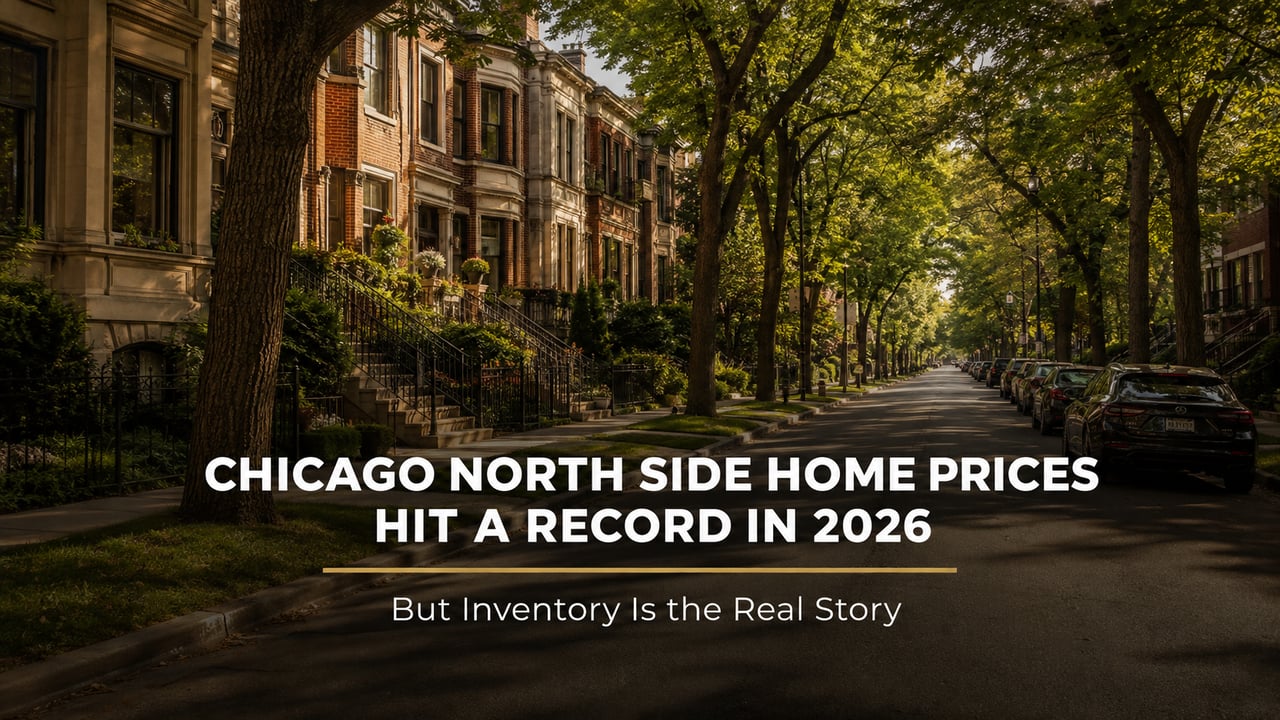
North Side Chicago home prices hit a record $500,000 in Q2 2026 while inventory fell 22.8%. Here is what the numbers mean for buyers and sellers.

Market Updates
Chicago has grown three years in a row - but growth is slowing, and the housing market is doing something the headlines cannot explain.
Market Updates
Mortgage rates have barely moved all year. The 30-year fixed averaged 6.65% the week of August 20, 2026 - only slightly above where it was a year ago. In Chicago's 202… Read more

Market Updates
A plain-language guide to the four components of your Cook County property tax bill - what each one means, which ones you can actually move, and how to use this knowle… Read more

Market Updates
Cook County property taxes grew 182% between 1995 and 2024 - double the rate of inflation and faster than wages. Here is exactly where that money went and why your ass… Read more

Market Updates
If you own property in Rogers Park Township - which covers Rogers Park and Edgewater - your Board of Review appeal window is open now and closes September 1, 2026. Evi… Read more
I'm Dee Savic, your trusted Chicago real estate expert, and I'm here to guide you through your relocation journey. Discover why Chicago is the perfect city for you; from its diverse neighborhoods to its cultural vibrancy, Chicago offers an unmatched urban experience. Together, we'll find a community and home that fits your lifestyle and aspirations.