

What is the hardest part of downsizing a Chicago home you have lived in for decades? It is usually not the market, the price, or the paperwork. For many longtime homeowners, the hardest part is simply starting.
The house may have more space than you need now. Maybe the upstairs bedrooms are empty. Maybe the stairs feel different than they used to. Maybe the yard that once felt enjoyable now feels like one more thing to manage.
And then there is the stuff.
The basement. The closets. The furniture. The boxes nobody has opened in years. The things your kids do not want, the things you are not ready to part with, and the things you do not even know how to begin sorting.
If that sounds familiar, you are not behind. You are in exactly the place where many downsizing conversations begin.
I am Dee Savic, a Realtor with Baird & Warner. I have spent 24 years helping people buy and sell homes in Chicago, especially across the North Side. And I can tell you this: most homeowners thinking about downsizing do not start with a spreadsheet.
They start with a feeling.
The house still works. Nothing is urgent. But little by little, it stops fitting the life they are actually living.
This post is for you if you are thinking about downsizing in Chicago, but you are not ready to be pushed, rushed, or talked into something before you understand your options.
This post is for you if:
You do not need to have a full plan before you start.
You do not need to know where you are moving.
You do not need to have the house cleaned out.
And in many cases, you do not need to renovate the whole thing before you sell.
You can start much smaller than that.
Most people know before they act.
Not always in a dramatic way. More like a quiet realization that keeps coming back.
The extra bedrooms are not really being used. The basement feels like a project you do not want to face. The yard takes more energy than it gives back. The stairs are fine, but you notice them more. A repair comes up, and instead of thinking, “We will take care of it,” you think, “Do I really want to keep doing this?”
None of that is an emergency.
That is exactly why it is so easy to do nothing.
The house still works. It may be paid off or close to it. You know the neighborhood. You know the pharmacy, the grocery store, the coffee shop, the person who plows the alley, and the shortcut you take without thinking.
There is no crisis forcing your hand, so the decision stays open.
But the reasons to move keep piling up.
That is very normal.
If you have been circling the idea for a year or two, that does not mean you failed to act. It means you are human. Downsizing a longtime home is not the same as selling a starter condo after three years. It carries more history than that.
When homeowners tell me what is holding them back, it is usually not just the money.
It is some version of these questions.
This is the big one.
A house can absorb a lot over 20, 30, or 40 years. Furniture, photos, tools, holiday decorations, paperwork, kids’ things, family things, things you meant to deal with years ago.
When you live in the house, those things have somewhere to sit.
When you start thinking about moving, suddenly every drawer and every closet feels like a decision.
That is often the part that stops people first.
Not the sale.
The stuff.
This question goes deeper than square footage.
A home you have lived in for decades is not just a property. It holds a version of your life. Your routines, your holidays, your family, your old mornings, your old problems, your old celebrations.
So the fear is not just, “Will a condo be comfortable?”
The real fear is, “Will I still feel like myself somewhere else?”
That is a very real question, and it deserves more than a quick answer.
Less maintenance sounds good.
But then the real questions come up.
Will I know my neighbors?
Will I still be close to the places I like?
Will I miss the yard?
Will I be bored?
Will I regret selling once the house is gone?
This is why I think downsizing should start with lifestyle, not just price.
You are not just choosing a smaller home. You are choosing a different rhythm.
This one stops a lot of people.
And it deserves its own section because, in many cases, the answer is no.
Here is a conversation I have had many times.
A longtime homeowner starts thinking about selling. They talk to someone, and suddenly they are handed a list.
New kitchen. Refinish all the floors. Update both bathrooms. Paint everything. Replace this. Repair that. Then, maybe, the house will be ready.
The homeowner does the math, imagines living in a construction zone at this stage of life, and decides to deal with it next year.
Then next year comes, and nothing has changed except that the list feels even heavier.
I want to be direct about this:
In many cases, you do not need to renovate your Chicago home before selling it.
Sometimes preparation absolutely matters. Cleaning, decluttering, paint, small repairs, lighting, landscaping, and good presentation can make a real difference.
But a full renovation is not automatic.
Before you spend $80,000 fixing a kitchen for a buyer you have not met yet, let’s look at the actual numbers.
Chicago’s North Side has plenty of buyers looking for homes they can make their own. A vintage two-flat in Ravenswood, an older single-family home in Lincoln Square, a longtime-owned house in North Center, or a classic Andersonville home in original condition may not be a problem to hide.
For the right buyer, it may be the opportunity.
They may prefer to buy the home at a fair price and choose their own finishes rather than pay a premium for someone else’s renovation.
That does not mean condition does not matter. It does.
But there is a big difference between preparing a home for market and renovating it as if you are going to live there for another 15 years.
Over-renovating before a sale can easily cost more than it returns. You spend money, time, energy, and months of disruption, only to find that the buyer would have changed half of it anyway.
That is not strategy.
That is stress with a contractor invoice attached.
The right question is not, “What could we fix?”
You can always find something to fix.
The right question is:
What will actually change the sale price or buyer demand enough to be worth doing?
That answer depends on your home, your neighborhood, your likely buyer, and the current competition.
If a renovation list is the reason you have not started, get a second opinion before you accept it as fact.
For more on this, see my guide to renovating before selling in Chicago.
Downsizing feels impossible when you treat it like one enormous decision.
Sell the house. Empty the house. Choose the next place. Move. Adjust to a different life. Handle the money. Deal with the emotions. All at once.
No wonder people freeze.
But it does not have to start that way.
Downsizing is not one decision. It is a sequence.
And the first steps are small.
They are also reversible.
Not after a fantasy renovation.
Not after you clean out every closet.
Not based on a Zestimate.
Start with what your home is worth in its current condition, in the current market, with current comparable sales.
This is the number that gives you a starting point.
Sometimes homeowners are surprised in a good way because the home has appreciated far more than they realized. Sometimes the number helps clarify what needs to happen before listing. Either way, information is better than guessing.
A real home value review should look at:
This does not commit you to selling.
It simply gives you a number.
Longtime homeowners may have significant appreciation.
That is a good thing, but it can also create tax questions.
The federal home sale exclusion may allow eligible homeowners to exclude up to $250,000 of gain for single filers and up to $500,000 for married couples filing jointly on a primary residence, subject to IRS ownership and use requirements.
You can read the IRS overview here: IRS Topic No. 701 - Sale of Your Home.
But please do not treat a blog post as tax advice.
If you have owned the home for a long time, talk to a qualified tax advisor before you get too far into the process. It is much better to understand the tax picture early than to be surprised near closing.
You can also read my Chicago capital gains tax guide for a more detailed overview.
This is not the same as buying.
You are just looking.
Many homeowners have an image in their head of what downsizing means, and sometimes that image is too narrow.
Downsizing does not always mean leaving the neighborhood.
It does not always mean moving downtown.
It does not always mean giving up everything familiar.
For some people, it means a smaller condo a few blocks away.
For others, it means an elevator building in Lakeview, Edgewater, Streeterville, Gold Coast, or River North.
For someone else, it may mean a smaller home, a coach house, a townhome, or a full-amenity building where someone else handles the roof, the boiler, the snow, and the exterior maintenance.
You do not have to know the answer before you start.
Seeing real options turns the decision from a fog into an actual comparison.
Downsizing is not one destination.
In my experience, Chicago downsizers usually fall into a few different paths.
A lot of North Side homeowners do not want a completely different life.
They want less house.
They still want the same coffee shop, the same grocery store, the same pharmacy, the same restaurants, and the same streets they already know.
This is common in neighborhoods like Lincoln Square, Ravenswood, Andersonville, North Center, Roscoe Village, Lakeview, and Lincoln Park.
Someone may sell a larger single-family home or two-flat and move into a smaller condo, townhome, elevator building, or lower-maintenance property nearby.
For many people, this is the least emotionally disruptive option.
You are changing the home, but not the whole life around it.
This is the option many people overlook at first.
After years of handling stairs, snow, repairs, roof issues, landscaping, contractors, and surprise maintenance, the idea of an elevator building can become very appealing.
You are not just buying a smaller place.
You are buying less responsibility.
Depending on the building, you may get door staff, garage parking, fitness space, guest parking, package receiving, an elevator, and professional management.
For homeowners thinking ahead about accessibility, an elevator building is worth considering before it becomes urgent.
That could be on the North Side, near the lakefront, or in neighborhoods like Streeterville, Gold Coast, River North, the Loop, or South Loop.
Some people are not trying to make life smaller.
They are trying to make it easier and more interesting.
After decades in a house with a yard, downtown can be appealing for a very specific reason: access.
The Art Institute. The Lyric. The Goodman. The river. The lakefront. Restaurants. Museums. Theaters. Doctors. Shopping. The ability to walk downstairs and be close to things you used to make a whole evening out of.
For the right person, that is not a compromise.
It is the point.
The maintenance is gone. The car may become optional. The lifestyle becomes more convenient.
A lot of downsizers do not want quieter.
They want closer to everything.
Some homeowners decide Chicago is no longer the right fit.
They may want to be closer to children or grandchildren. They may want a warmer climate, lower property taxes, one-level living, or a quieter pace.
That is completely valid too.
The important thing is to separate the emotional decision from the practical one.
Where do you want your daily life to happen next?
What do you want to stop managing?
What do you want to be closer to?
What would make life easier five years from now?
Those questions matter more than the label “downsizing.”
Then you are not ready.
That is okay.
I would never tell someone to sell a longtime home before they are emotionally or financially ready.
But there is a difference between not being ready and not having information.
You can find out what your home is worth without listing it.
You can talk to a tax advisor without deciding to sell.
You can look at possible next homes without writing an offer.
You can walk through what preparation might look like without hiring a contractor.
Sometimes having the information relieves the pressure because the decision becomes less mysterious.
And sometimes the answer is: not yet.
That is still a useful answer.
There is rarely one perfect moment. For many homeowners, the best time to explore downsizing is before the move becomes urgent. It is usually easier to make good decisions when you still have time, choices, and control over the timeline.
Not automatically. Many Chicago buyers, especially on the North Side, are open to homes they can update themselves if the price and location make sense. Cleaning, decluttering, paint, small repairs, lighting, and strong presentation often matter. A full renovation should be based on the numbers for your specific home, not treated as the default.
Start with three simple steps: find out what your home is worth as-is, understand your possible tax picture, and look at real next-step housing options. None of those steps requires you to list your home or commit to moving.
It depends on your equity, cash position, comfort level, and the market on both sides of the move. Some downsizers sell first and rent briefly. Others buy first and carry both homes for a short time. Some coordinate both transactions together. See my guide to selling and buying at the same time in Chicago for more on your options.
Some stay in the same neighborhood and move into a smaller home, condo, townhome, or elevator building. Others move to downtown neighborhoods like Streeterville, Gold Coast, River North, the Loop, or South Loop. Some leave the city to be closer to family, lower maintenance, or find a different lifestyle.
No. You do not need the house emptied, staged, or perfect before starting the conversation. In fact, it is often better to talk before doing too much, so you do not spend time and money on things that may not improve the sale.
A dated home can still sell well if it is priced and presented correctly. Some buyers prefer dated or original-condition homes because they want to renovate to their own taste. The key is understanding whether your home should be sold as-is, lightly prepared, or selectively improved before listing.
Then you do not have to move yet. But you can still gather information. Knowing what your home is worth, what your next options look like, and what the tax picture may be can help you make a calmer decision whenever the time feels right.
You do not need a perfect plan.
You do not need the basement cleaned out.
You do not need to know exactly where you are going.
And you definitely do not need to be ready to list tomorrow.
Sometimes the first step is simply getting a number and having an honest conversation.
If you are thinking about downsizing on Chicago’s North Side, start with a free home value review to find out what your property may be worth in today’s market.
You can also read more about how I work with downsizing clients on my Chicago downsizing specialist page, explore my Chicago Home Seller Course, or schedule a complimentary and confidential consultation.
There is no pressure to move faster than you are ready to move.
This post is for general informational purposes only and is not legal, tax, or financial advice. Every property and every homeowner’s situation is different. Please consult a qualified tax, legal, or financial advisor for guidance specific to your situation.
Dee Savic is a Realtor with Baird & Warner, a 24+ year real estate professional, and a 27+ year Chicago resident with 300+ closed transactions. She specializes in helping buyers, sellers, downsizers, and relocation clients across Chicago’s North Side.

Dee Savic
Realtor® | Baird & Warner
4553 N. Lincoln Ave, Chicago, IL 60625
773.719.0989
[email protected]
deesavic.com


Selling
What older homes sold as-is went for in 2026, who buys them, and when a few light updates pay off

Selling
What 2026 sales show about winter buyers, competition, and price

Neighborhood Guides
What homes sold for, the 606, the Blue Line, types of homes, and Bucktown vs. Wicker Park

Buying
Real 2026 sales in Lincoln Park, Lakeview, North Center, Roscoe Village, Lincoln Square, Irving Park, Edgewater, and Andersonville

Buying
Where the unit sits, elevators, pets, wind and sound, views, parking, and building rules

Buying
The real monthly cost, yards, winter, parking, competition, long-term value, and choosing the right neighborhood
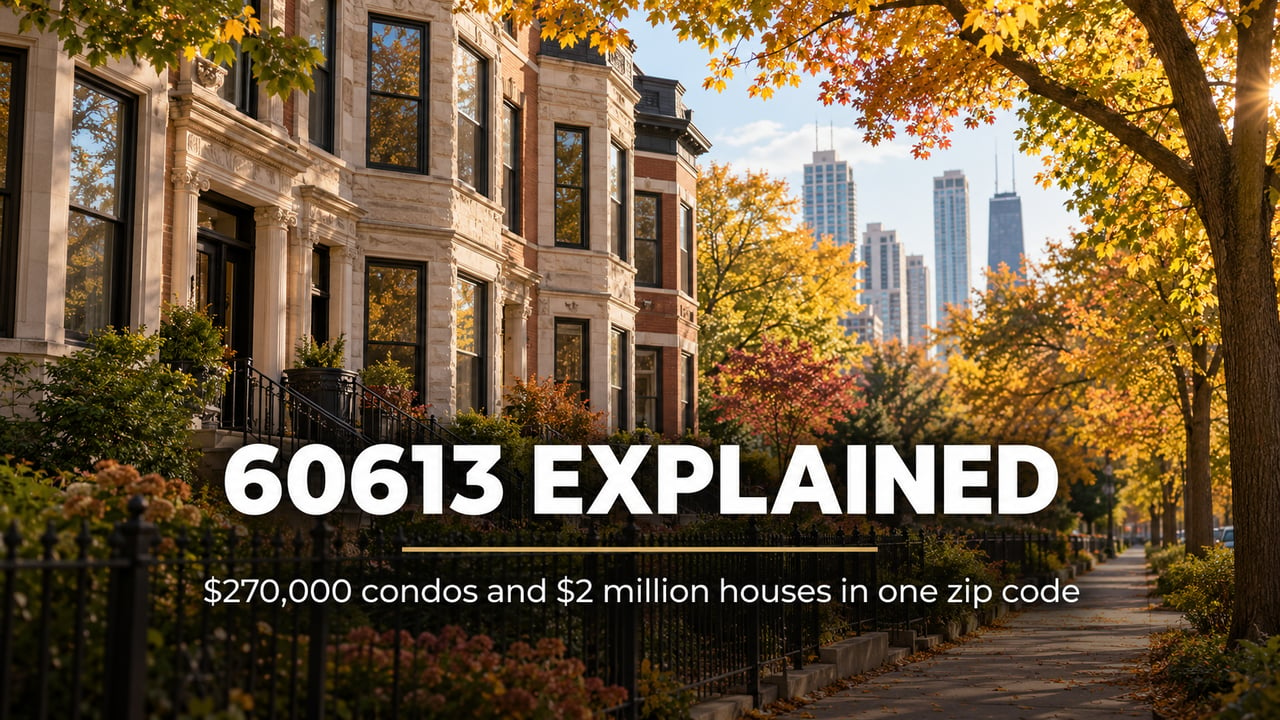
Neighborhood Guides
The six parts of 60613, from the lakefront to Damen, and what homes sold for in each in 2026

Neighborhood Guides
Where Buena Park is, what homes sold for in 2026, Hutchinson Street, the lakefront, schools, and safety

Buying
Five years of Chicago prices, where you can and cannot negotiate, and how to handle a 7.40% mortgage rate
I'm Dee Savic, your trusted Chicago real estate expert, and I'm here to guide you through your relocation journey. Discover why Chicago is the perfect city for you; from its diverse neighborhoods to its cultural vibrancy, Chicago offers an unmatched urban experience. Together, we'll find a community and home that fits your lifestyle and aspirations.