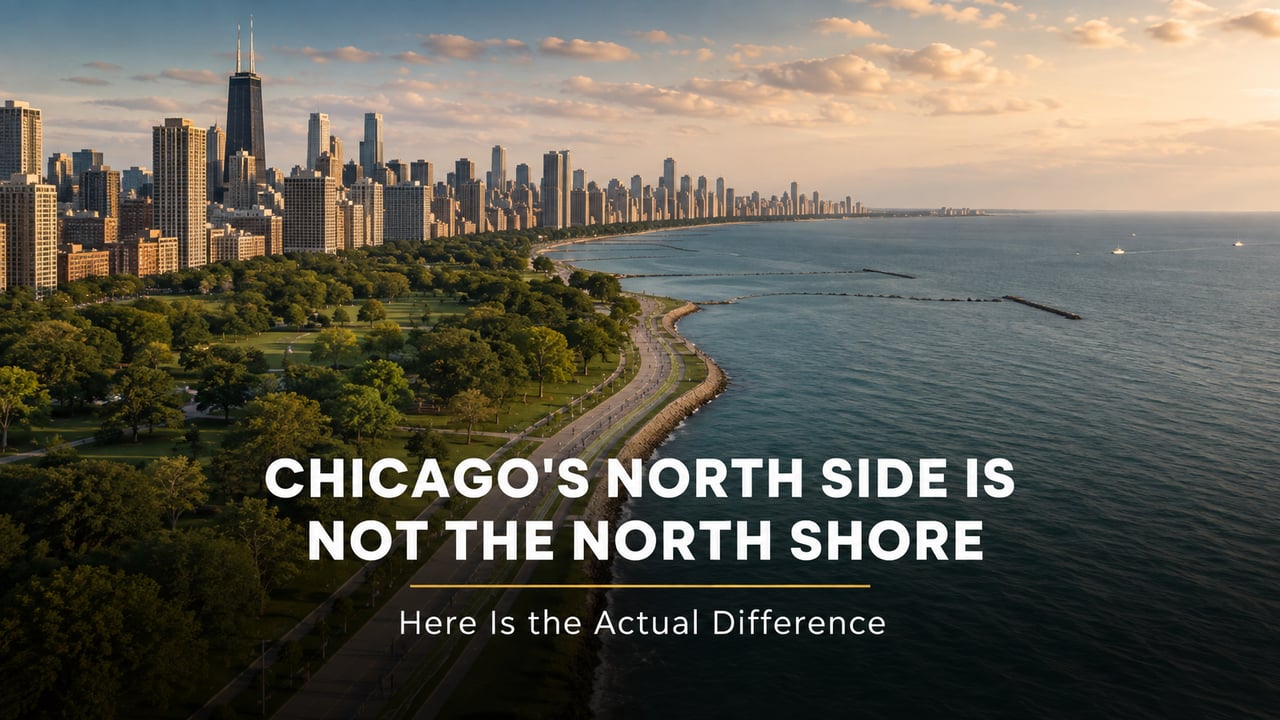
What is the difference between Chicago's North Side and the North Shore? The North Side is Chicago. The North Shore is suburbs north of Chicago.
That is the simplest way to understand it.
And if you are relocating to Chicago, this is one of the easiest things to mix up.
I know the names sound similar. I know both areas are north. I know both connect to the lake. And I know Google does not always make this easier.
But this difference matters.
The North Side and the North Shore are not two versions of the same thing. They are different markets, different lifestyles, different school systems, different tax structures, and different commutes.
A condo in Lakeview and a house in Winnetka are not just different homes. They are completely different ways of living.
I am Dee Savic, a Realtor with Baird & Warner and a Chicago relocation specialist. I have lived in Chicago for 27 years and have spent 24 years helping buyers and sellers understand this city block by block.
I have this conversation with relocators all the time. Someone starts searching online, sees North Side and North Shore used almost interchangeably, and suddenly they are comparing homes in completely different places without realizing it.
So before you compare a condo in Lincoln Park with a house in Glencoe, let us draw the line clearly.
The North Side is inside the City of Chicago.
The North Shore is outside the City of Chicago, north of the city, mostly along Lake Michigan.
That means:
Both can be wonderful places to live.
They are just not interchangeable.
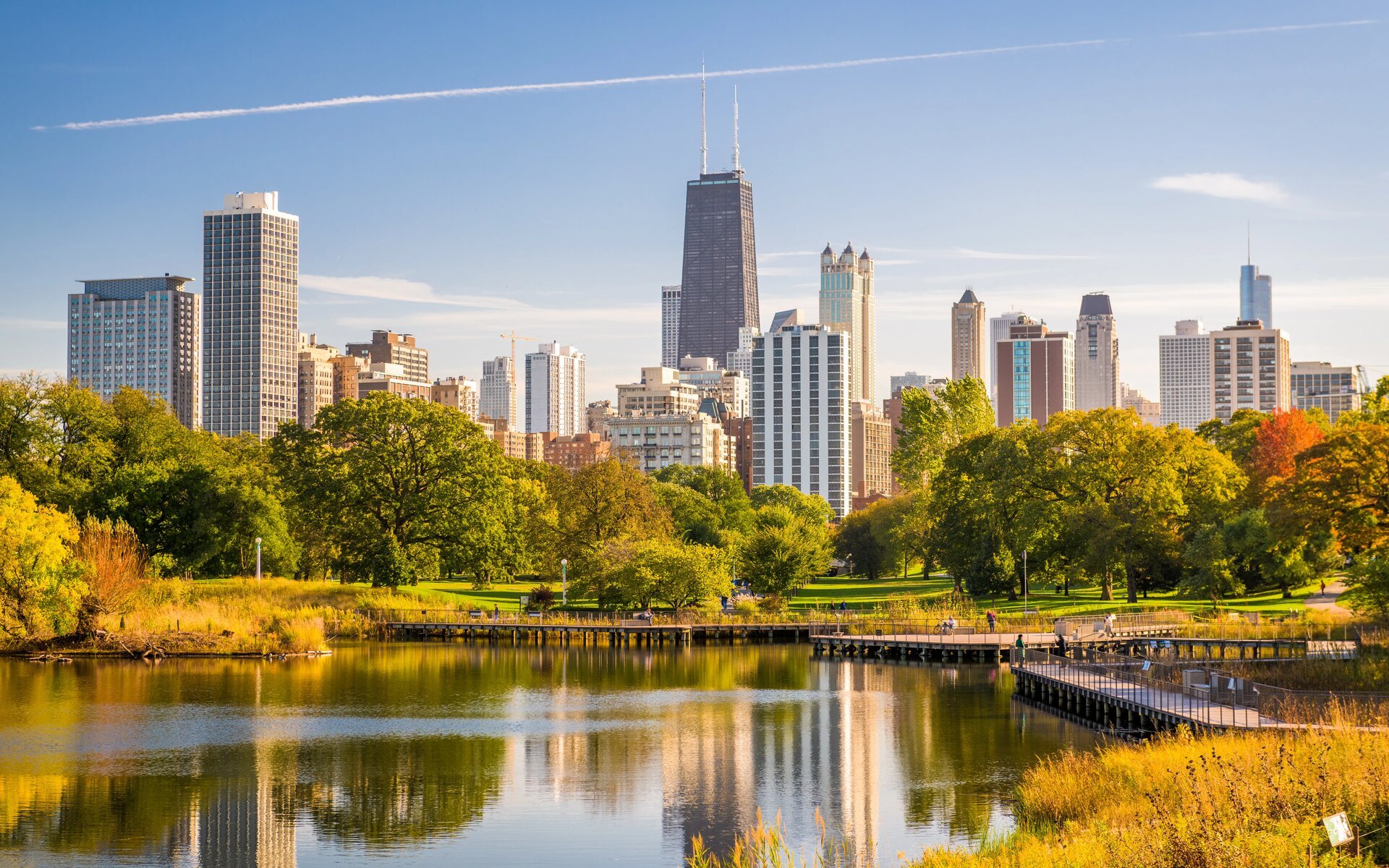
The North Side is a collection of neighborhoods inside Chicago city limits, generally north of the Loop and the Chicago River.
There is not one perfect North Side list that everyone uses the exact same way.
For market reports, you will often see a defined group of neighborhoods. Baird & Warner's Chicago North Side Market Report uses these nine areas:
In normal conversation, people may use "North Side" more broadly to include places like Andersonville, Ravenswood, Roscoe Village, Bucktown, Wicker Park, and Logan Square.
That can get a little messy, but the important part is simple:
These are still Chicago neighborhoods. They are not North Shore suburbs.
If you live on the North Side, you have a Chicago address. You pay Chicago city taxes and Cook County property taxes. Your children attend Chicago Public Schools unless you choose private school, magnet, selective enrollment, or another option. You use the CTA, buses, rideshare, biking, walking, or driving to get around.
It is city living.
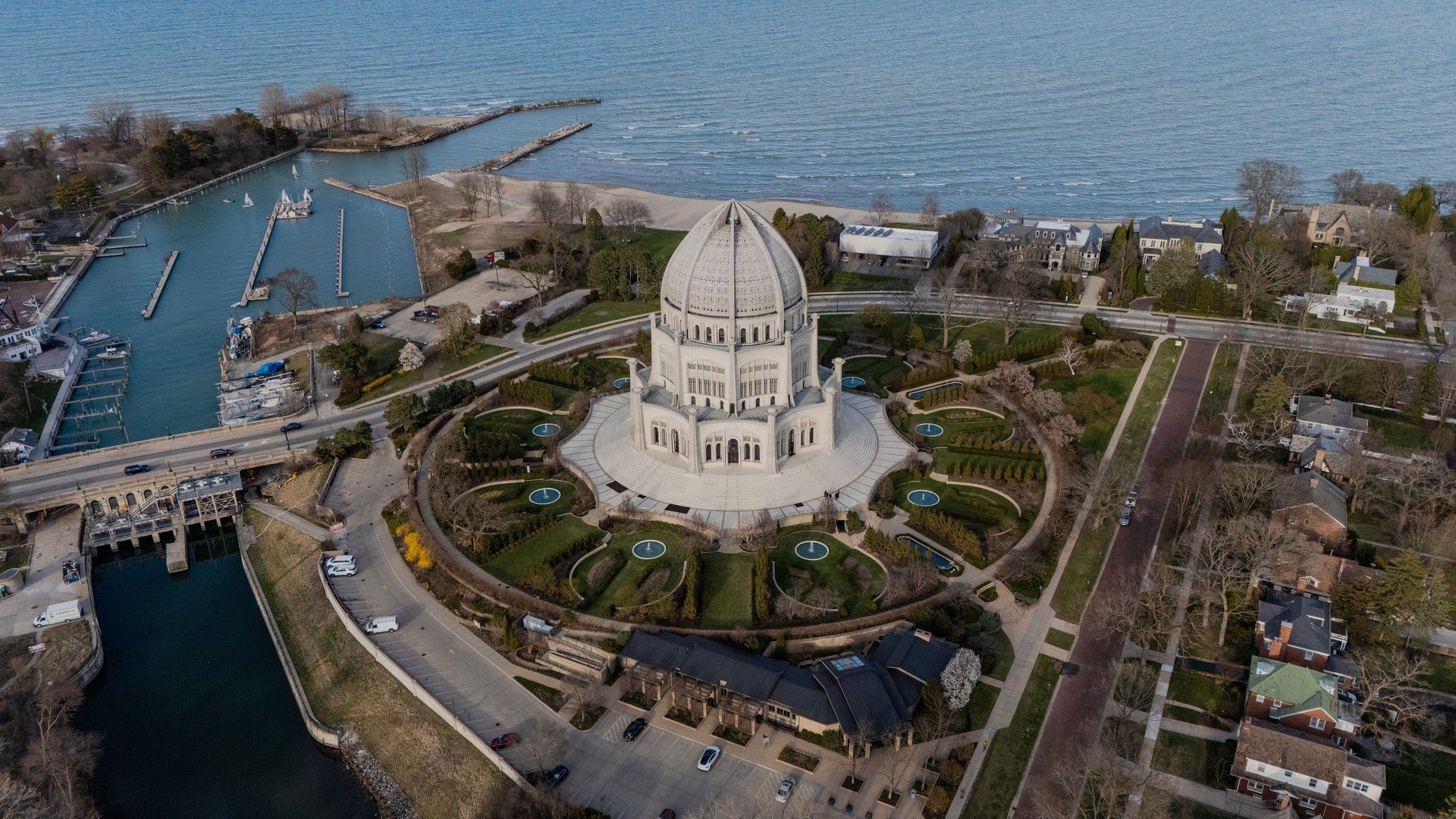
The North Shore is a group of suburbs north of Chicago, many of them along Lake Michigan.
The communities most people mean when they say "North Shore" include:
Some broader definitions may also include places like Deerfield, Northbrook, Glenview, and other nearby communities.
But the main point is this:
The North Shore is not Chicago.
A home in Winnetka is not a Chicago home. A home in Glencoe is not a Chicago home. A home in Lake Forest is not a Chicago home. Evanston borders Chicago, but it is still its own city.
These are separate municipalities with their own governments, schools, taxes, rules, and commute patterns.
Most North Shore buyers are looking for something different from a North Side buyer. They may want more space, a larger yard, a specific school district, a quieter residential feel, or a more traditional suburban setup.
That is a very different search from someone looking for a condo in Lakeview or a two-flat in Lincoln Square.
Factor | Chicago North Side | North Shore Suburbs |
|---|---|---|
Location | Inside Chicago city limits | Outside Chicago city limits, north of the city |
Address | Chicago, IL | Evanston, Wilmette, Winnetka, Glencoe, Highland Park, Lake Forest, etc. |
County | Cook County | Cook County closer to Chicago, Lake County farther north |
Schools | Chicago Public Schools, private schools, magnet and selective enrollment options | Separate suburban school districts, often tied directly to the town or township |
Transit downtown | CTA Red, Brown, Purple Lines and buses, depending on neighborhood | Metra Union Pacific North Line or driving |
Housing | Condos, vintage courtyard buildings, two-flats, three-flats, greystones, some single-family homes | More single-family homes, larger lots, some condos and townhomes depending on suburb |
Walkability | Usually higher, with restaurants, coffee, errands, parks, and transit nearby | Varies; Evanston is very walkable, while many suburbs are more car-dependent |
Lifestyle | Urban, denser, more transit-connected, closer to city energy | Suburban, quieter, more space-oriented, often more school-district driven |
I do not blame people for mixing this up.
If you are not from here, "North Side" and "North Shore" sound like they could mean the same thing.
They are both north. They both connect to Lake Michigan. And if you drive north from Lincoln Park through Rogers Park, Evanston, Wilmette, and Winnetka, you do not cross some giant sign that says, "Welcome to a completely different real estate market."
But practically, you did cross a line.
You crossed from city to suburb.
That changes a lot.
Search engines also make this worse. When someone searches "North Side Chicago real estate" or "North Shore Chicago neighborhoods," results can mix city neighborhoods with suburban communities. If you are relocating from another state, there is no obvious reason you would automatically know the difference.
Real estate marketing can make it even messier. Some listings or online content use "North Shore" loosely when they really just mean "north of downtown." That is not how locals usually use the term, but it happens.
So if you have mixed them up before, you are not alone.
But before you start touring, you want to know which market you are actually shopping in.
The Chicago North Side is city living.
It is urban, walkable, transit-connected, and neighborhood-driven.
You will see condos, vintage courtyard buildings, two-flats, three-flats, greystones, townhomes, and some single-family homes. But the housing mix depends heavily on the neighborhood and even the block.
Lincoln Park and Lakeview are among the most established and expensive North Side markets, with lakefront access, restaurants, shopping, transit, and strong demand.
Lincoln Square, Andersonville, North Center, and Ravenswood feel more residential in many spots, with independent commercial corridors, tree-lined streets, and a strong neighborhood identity.
Uptown, Edgewater, and Rogers Park give you lakefront access with a wider mix of housing types and price points.
Every neighborhood is different. That is why broad labels only get you so far.
But the shared North Side lifestyle is pretty clear: CTA access, walkability, restaurants, coffee shops, parks, lakefront access in many areas, older architecture, and city energy.
For a deeper look at how these neighborhoods compare, see my guide to the best Chicago neighborhoods in 2026 and my Lincoln Square vs. Ravenswood comparison.
The North Shore is suburban living, but not every suburb feels the same.
Evanston is the closest to Chicago and the most city-like of the North Shore communities. It borders Rogers Park, has Northwestern University, a walkable downtown, lakefront access, Metra, and CTA Purple Line access. A lot of buyers compare Evanston with Rogers Park, Edgewater, and other far North Side neighborhoods because it still feels connected to the city.
Wilmette, Kenilworth, Winnetka, and Glencoe feel more residential and school-district driven. Buyers looking here are often focused on single-family homes, more space, highly regarded public schools, and a quieter suburban lifestyle.
Highland Park, Lake Forest, and Lake Bluff are farther north, with larger lots, more wooded settings in some areas, estate-style properties, and longer commutes into downtown Chicago.
The North Shore is not one thing either. Evanston and Lake Forest are both North Shore, but they do not feel the same.
That is exactly why buyers need to get clear on lifestyle before they start comparing prices.
Do you want to walk to a CTA train and a coffee shop?
Do you want a larger yard and a suburban school district?
Do you want to commute by Metra?
Do you want city energy or a quieter residential environment?
Those answers matter more than the label.
This is one of the biggest differences for relocating buyers.
On the North Side, public schools are part of Chicago Public Schools. That means your assigned neighborhood school depends on your address, and the boundary can change block by block.
CPS also has magnet schools, selective enrollment schools, charter schools, and private school options. For some buyers, that range of options is a plus. For others, it feels confusing, especially if they are relocating from a suburb where the school path is more straightforward.
On the North Shore, public schools are generally organized by separate suburban districts. For many buyers, that feels more predictable because the school path is tied to the town, township, or district.
That does not mean one is automatically better.
It means you need to understand the school path before you choose the home.
If schools matter to your decision, do not rely on a listing blurb or a general neighborhood reputation. Check the assigned school for the actual address, and confirm directly with the district.
For Chicago addresses, use the CPS School Locator.
Taxes are another place where buyers need to look at the actual property, not the general label.
North Side buyers pay Chicago city taxes and Cook County property taxes.
North Shore buyers pay taxes based on the specific suburb, school district, county, and local taxing bodies. Some North Shore communities are in Cook County. Others are in Lake County.
Illinois property taxes are high in general, so I would not assume the North Shore is automatically cheaper from a tax standpoint.
Sometimes the suburban tax bill is higher. Sometimes the Chicago tax bill is higher. It depends on the actual home, assessed value, exemptions, and local tax rate.
This is why I tell buyers the same thing over and over:
Look up the actual tax bill for the actual property.
Do not guess. Do not rely only on a rule of thumb. Do not assume because something is suburban, the taxes are lower.
For more on how Cook County property taxes work, see my complete guide to how Chicago property taxes work and my Cook County property tax bill guide.
The commute is another major difference.
On the North Side, you are usually thinking about the CTA: Red Line, Brown Line, Purple Line in some areas, buses, biking, walking, rideshare, or driving.
In neighborhoods like Lakeview, Lincoln Park, Lincoln Square, Ravenswood, Uptown, Edgewater, Rogers Park, and North Center, the CTA is a major part of daily life for many residents.
On the North Shore, downtown commuters usually rely on the Metra Union Pacific North Line or drive.
Metra can be very comfortable and predictable, but it is different from the CTA. It runs on a schedule, stations are farther apart, and your daily rhythm may be more tied to train times.
That can work beautifully for some people.
It can feel limiting for others.
This is one of those things I would not decide from a map.
Try the commute if you can. Look at the train schedule. Think about how often you actually go downtown, whether you work hybrid, and what your evenings and weekends look like.
The best commute is not always the shortest one.
It is the one you can actually live with.
The housing difference is significant.
On the North Side, you will see a lot of condos, vintage courtyard buildings, two-flats, three-flats, greystones, townhomes, and some single-family homes.
Single-family homes exist, of course, but in many North Side neighborhoods they are expensive, limited, and very competitive.
On the North Shore, single-family homes are much more common. You are more likely to find larger lots, yards, attached garages, suburban streets, and more space between homes.
That does not mean the North Shore is always more affordable.
In places like Winnetka, Kenilworth, Glencoe, and Lake Forest, prices can be extremely high.
But the type of housing is different.
A $1.5 million budget in Lincoln Park does not buy the same lifestyle as a $1.5 million budget in Wilmette or Highland Park.
Same price point. Very different choices.
There is no universal answer.
It depends on how you actually want to live.
Many relocating buyers look at both before deciding.
Some discover they want the city more than they expected.
Others realize the North Shore fits their school, space, or lifestyle needs better.
Both answers are valid.
The key is not to confuse one for the other while you are still figuring it out.
The biggest mistake is not choosing the North Side or choosing the North Shore.
The mistake is comparing them without understanding how different they are.
I see this happen all the time.
A buyer starts with a Lakeview condo, then looks at a house in Evanston, then a single-family home in Wilmette, then a two-flat in Lincoln Square, then something in Highland Park.
There is nothing wrong with exploring.
But those are not just different homes. They are different lifestyles.
Before you compare prices, compare the daily life.
How do you get to work?
Where do you want your kids to go to school?
Do you want to walk to coffee?
Do you want a yard?
Do you want CTA, Metra, or car?
Do you want city energy or suburban quiet?
Once those answers are clear, the map starts to make a lot more sense.
The North Side is a group of neighborhoods inside Chicago city limits, including places like Lakeview, Lincoln Park, Lincoln Square, Uptown, Edgewater, Rogers Park, North Center, Andersonville, and Ravenswood. The North Shore is a group of suburbs north of Chicago, including Evanston, Wilmette, Kenilworth, Winnetka, Glencoe, Highland Park, Lake Forest, and Lake Bluff.
No. Evanston borders Chicago, but it is not part of Chicago's North Side. It is its own city with its own government, schools, taxes, and housing market. That said, Evanston is the most city-like and transit-connected of the North Shore communities, so many buyers compare it with far North Side neighborhoods like Rogers Park and Edgewater.
No. The North Shore refers to suburbs north of the city. These towns have their own governments, school districts, tax structures, and local services.
Some are, and some are not. Evanston, Wilmette, Kenilworth, Winnetka, Glencoe, Northfield, and Glenview are in Cook County. Highland Park, Lake Forest, Lake Bluff, and communities farther north are in Lake County.
Chicago Public Schools serves Chicago city neighborhoods, including the North Side. Your assigned neighborhood school depends on your address. Magnet schools, selective enrollment schools, and other programs have separate application processes. Use the CPS School Locator to check a specific Chicago address.
The North Shore is served by separate suburban school districts. New Trier Township High School District 203 serves communities including Winnetka, Glencoe, Kenilworth, Wilmette, and Northfield for high school. Other North Shore communities have their own districts. Always confirm school assignment directly with the district before buying.
It depends on the community and property type. Winnetka, Kenilworth, Glencoe, Highland Park, and Lake Forest can be very expensive. Lincoln Park and parts of Lakeview are also among Chicago's highest-priced city markets. You need to compare the specific neighborhood, property type, and actual tax bill.
Most North Shore suburbs are served by Metra, not the CTA. Evanston is the exception because it has CTA Purple Line service. From most North Shore towns, downtown commuters use the Metra Union Pacific North Line or drive.
It depends on your lifestyle. Choose the North Side if you want city living, CTA access, walkability, restaurants, lakefront access, and a Chicago neighborhood feel. Choose the North Shore if you want more space, a suburban setting, specific school districts, larger lots, and a Metra-based commute.
If you are relocating, the first step is not picking a house.
It is understanding the map.
The North Side and the North Shore can both be great options, but they solve different problems. One gives you city living. The other gives you a suburban lifestyle north of the city.
I help buyers sort through those differences before they waste time touring homes that do not fit the life they actually want.
Start with my Chicago relocation specialist page, download my free Chicago Relocation Guide, or schedule a complimentary and confidential consultation here.
Buyers can also start with my free Chicago Buyer's Course for a complete picture of how the buying process works.
Sellers: if you own a North Side home and are thinking about your next move, start with a free home value review.
Neighborhood definitions in this post reflect common Chicago real estate usage and Baird & Warner's Chicago North Side Market Report. Municipal boundaries, school district assignments, and tax structures can change. Always verify school assignments with the relevant school district and confirm property tax information directly with the county before making a real estate decision. This post is for informational purposes only and does not constitute legal, financial, tax, or school-placement advice.
Dee Savic is a Realtor with Baird & Warner, a 24+ year real estate professional, and a 27+ year Chicago resident with 300+ closed transactions. She specializes in helping buyers, sellers, and relocation clients understand Chicago's neighborhoods before they commit to a move.

Dee Savic
Realtor® | Baird & Warner
4553 N. Lincoln Ave, Chicago, IL 60625
773.719.0989
[email protected]
deesavic.com
Selling
What older homes sold as-is went for in 2026, who buys them, and when a few light updates pay off
Selling
What 2026 sales show about winter buyers, competition, and price
Neighborhood Guides
What homes sold for, the 606, the Blue Line, types of homes, and Bucktown vs. Wicker Park
Buying
Real 2026 sales in Lincoln Park, Lakeview, North Center, Roscoe Village, Lincoln Square, Irving Park, Edgewater, and Andersonville

Buying
Where the unit sits, elevators, pets, wind and sound, views, parking, and building rules
Buying
The real monthly cost, yards, winter, parking, competition, long-term value, and choosing the right neighborhood
Neighborhood Guides
The six parts of 60613, from the lakefront to Damen, and what homes sold for in each in 2026
Neighborhood Guides
Where Buena Park is, what homes sold for in 2026, Hutchinson Street, the lakefront, schools, and safety
Buying
Five years of Chicago prices, where you can and cannot negotiate, and how to handle a 7.40% mortgage rate
I'm Dee Savic, your trusted Chicago real estate expert, and I'm here to guide you through your relocation journey. Discover why Chicago is the perfect city for you; from its diverse neighborhoods to its cultural vibrancy, Chicago offers an unmatched urban experience. Together, we'll find a community and home that fits your lifestyle and aspirations.