What are closing costs when buying a home in Chicago? Chicago buyers typically pay between 2 and 3 percent of the purchase price in closing costs, not including the down payment. On a $500,000 home that means $10,000 to $15,000 in additional cash needed at closing. Chicago has several city and state-specific fees — including mandatory attorney fees and transfer taxes — that buyers from other markets are often not prepared for.
Closing cost surprises are one of the most common sources of stress for first-time buyers in Chicago. The number shows up on the Closing Disclosure three days before closing and if you have not planned for it, it can throw your entire financial picture into disarray. This guide covers every cost line by line so you know exactly what to expect — and exactly what to budget for — long before closing day.
This post is part of a series on buying a home in Chicago. For the full step-by-step process see my Chicago first-time buyer guide and my down payment guide.
Your lender is typically the largest single source of closing costs. Lender fees include the origination fee — charged for processing and underwriting your loan — which typically runs 0.5 to 1 percent of the loan amount. On a $400,000 loan that is $2,000 to $4,000. You may also see separate charges for appraisal, credit report, flood certification, and rate lock fees depending on your lender.
Shopping lenders before you commit to one is one of the most effective ways to reduce closing costs. Lender fees vary significantly and even small differences in origination charges add up. Request a Loan Estimate from at least two or three lenders and compare the fees line by line, not just the interest rate.
Title insurance protects against defects in the title — liens, errors in public records, ownership disputes — that could affect your ownership after closing. In Illinois, buyers typically pay for the lender's title insurance policy, which is required by your mortgage lender. An owner's title insurance policy, which protects your own interest rather than just the lender's, is optional but strongly recommended in Chicago where vintage housing stock sometimes carries title complications from decades of ownership changes.
Title insurance is a one-time premium paid at closing, typically running $1,500 to $3,000 depending on the purchase price. It is one of the better values in the closing cost stack — a one-time payment that protects your ownership for as long as you hold the property.
Illinois is an attorney state, which means a licensed real estate attorney is required on both sides of every residential transaction. Your attorney reviews the contract during the attorney review period, clears title, prepares closing documents, and protects your interests through the transaction. Attorney fees for a standard Chicago purchase typically run $500 to $1,000.
This is not a cost to minimize by finding the cheapest attorney available. Your attorney is your legal protection in the transaction. An experienced Chicago real estate attorney who moves quickly and communicates clearly is worth every dollar of their fee.
This is where Chicago buyers consistently get surprised. Unlike most states, purchasing a home in Chicago involves both a city transfer tax and a state transfer tax.
The City of Chicago transfer tax for buyers is $3.75 per $500 of the purchase price — on a $500,000 home that is $3,750. The Illinois state transfer tax adds $0.50 per $500 of the purchase price, adding another $500 on a $500,000 purchase. Sellers also pay a separate City of Chicago transfer tax of $1.50 per $500.
These transfer taxes are a meaningful line item that buyers from other markets — where transfer taxes are minimal or paid entirely by sellers — are frequently not prepared for.
Beyond the transaction fees, your lender will typically require you to prepay certain ongoing costs at closing and fund an escrow account for future payments. These are not fees in the traditional sense — you are paying costs you would owe anyway — but they represent real cash needed at closing.
Your lender requires you to have homeowner's insurance in place at closing and will typically require the first year's premium paid upfront. Annual premiums in Chicago vary by property type and coverage level but commonly run $1,200 to $2,500 for a single-family home or condo.
Your lender will collect an initial deposit into an escrow account to cover upcoming property tax payments. Cook County property taxes are paid in arrears, which means at closing you will also typically credit the seller for the portion of the current year's taxes that have not yet been paid. The property tax escrow deposit and the tax proration together are often the largest single surprise in Chicago closing costs for buyers who have not been prepared for them.
You will owe interest from your closing date through the end of that calendar month. On a $400,000 loan at current rates, this typically runs $500 to $1,500 depending on when in the month you close. Closing earlier in the month means more prepaid interest — some buyers strategically close later in the month to reduce this cost.
If you are buying a condo in Chicago, factor in HOA-related closing costs that do not apply to single-family purchases. These typically include a move-in fee charged by the building, a capital contribution or working capital fund deposit required by some associations, and a document fee for providing the condo disclosure documents required under Illinois law. These costs vary by building but commonly add $500 to $2,000 to your closing costs on a condo purchase.
As of August 2024, following a landmark settlement with the National Association of Realtors, the rules around buyer agent compensation changed significantly. Under the new rules, buyers may now be responsible for paying their own agent's compensation directly — it is no longer automatically covered by the seller as it traditionally was.
In practice, this means that before you begin working with a buyer's agent in Illinois, you will sign a Buyer Representation Agreement that specifies the compensation your agent will receive. This is a real cost that belongs in your closing cost calculation. Buyer agent compensation typically runs 2 to 3 percent of the purchase price — on a $500,000 home that is $10,000 to $15,000.
Here is the important nuance: many sellers in today's market are still open to covering buyer agent compensation as part of the transaction, and a skilled buyer's agent can negotiate this on your behalf. In a seller's market where a seller has multiple strong offers, they may have less motivation to cover this cost. On a home that has been sitting on the market longer — which is the exact scenario I recommend to low down payment buyers — the seller is often more willing to accommodate. Going in with an experienced agent who knows how to negotiate this is a meaningful advantage.
Ask your agent directly at the outset: what is your compensation, how is it structured, and what is your track record of negotiating seller coverage? These are fair questions that every buyer has the right to ask and every good agent will answer clearly.
Some closing costs are fixed — transfer taxes, government recording fees, and title insurance rates are largely set. Others have more flexibility. Lender origination fees are negotiable, particularly if you are a strong borrower or are putting a large down payment down. Seller concessions — where the seller agrees to contribute toward your closing costs as part of the negotiation — are another avenue, though in Chicago's current seller's market where demand significantly outpaces supply, seller concessions are less common on competitive listings. They are more available on homes that have been sitting on the market longer, which circles back to the strategy I recommend for buyers who need every advantage they can get.
The single most important step is requesting a Loan Estimate from your lender as early as possible. The Loan Estimate is a standardized three-page document that itemizes your projected closing costs. Review it carefully, ask your lender to explain any fees you do not recognize, and make sure the numbers align with what you have budgeted.
Three days before closing your lender is required to provide a Closing Disclosure — the final version of the closing cost breakdown. Compare it carefully to the Loan Estimate. Any significant differences should be questioned and explained before you sign.
As a rough planning number: budget 3 percent of your purchase price for closing costs and work backward from there. If the actual number comes in lower, you have a cushion. If it comes in at the high end, you are prepared. The Cook County Assessor's website can help you estimate the property tax proration on any specific property.
Chicago buyers typically pay 2 to 3 percent of the purchase price in closing costs, not including the down payment. On a $500,000 home that is $10,000 to $15,000. Chicago-specific costs including city transfer taxes, mandatory attorney fees, and Cook County property tax prorations mean Chicago closing costs tend to run higher than the national average.
Both buyers and sellers pay transfer taxes in Chicago. Buyers pay the City of Chicago transfer tax at $3.75 per $500 of the purchase price. Sellers pay a separate City of Chicago transfer tax at $1.50 per $500. Both parties also pay the Illinois state transfer tax. These are in addition to standard closing costs and represent a meaningful expense that buyers from other markets often overlook.
Sellers can agree to contribute toward buyer closing costs as part of the negotiation — called a seller concession. In Chicago's current competitive seller's market, seller concessions are uncommon on well-priced homes that attract multiple offers. They are more available on homes that have been sitting on the market longer, where sellers have more motivation to make the deal work. Your agent can advise on whether requesting a concession makes sense on a specific property.
Yes. Condo buyers in Chicago face additional costs that single-family buyers do not — HOA move-in fees, capital contribution deposits, and condo disclosure document fees. These vary by building but commonly add $500 to $2,000 to your total closing costs. Always ask about building-specific fees during your due diligence process before making an offer.
Closing costs are one piece of the full financial picture. Between your down payment, your closing costs, and your cash reserves, understanding your complete buying budget before you start looking is what puts you in a position to move confidently when the right home appears.
Start with my free Chicago Buyer's Course to get the full financial picture, or schedule a complimentary consultation and we can walk through your specific numbers together.
Dee Savic
Realtor® | Baird & Warner
773.719.0989
[email protected]
deesavic.com
Market Updates
If you own property in Rogers Park Township - which covers Rogers Park and Edgewater - your Board of Review appeal window is open now and closes September 1, 2026. Evi… Read more
Buyer's Advice
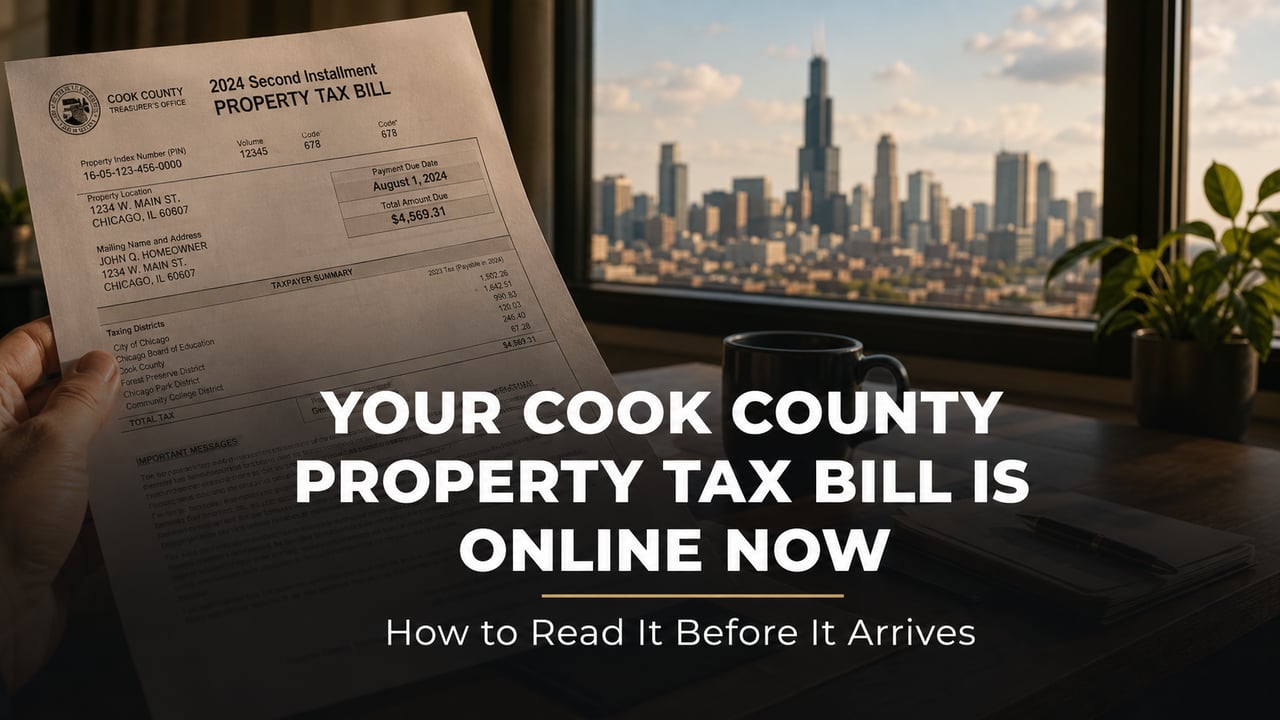
Second-installment bills for Tax Year 2025 went online August 18, 2026. They will be mailed by September 1 and are due October 1. Here is exactly what to look for when… Read more
Neighborhood Guides
What your budget buys, what your commute looks like, and the Uptown pocket most relocating buyers never hear about.
Seller Advice
Pricing, preparation, marketing, negotiation, and the decisions that actually affect your net proceeds when selling a home in Chicago.

Market Updates
Chicago is #1 in appreciation with sales at a 2012 low. Here's what's actually going on beneath the headlines.
Buyer's Advice
Current inventory, pricing by budget tier, architecture, the streets and buildings buyers ask about most, and what serious buyers need to understand before they start … Read more

Neighborhood Guides
Six real pros, five real cons, real prices, and a hidden pocket called Graceland West that most buyers never hear about.
Buyers
The actual numbers on Chicago condo appreciation, HOA fees, reserve fund risk, rental yields, and what Fannie Mae's 2026 changes mean for buyers - so you can decide wh… Read more
Buyer's Advice
A neighborhood-by-neighborhood breakdown of what Chicago condo HOA fees actually cover, what the ranges look like by building type, and how to know if a building's fee… Read more
I'm Dee Savic, your trusted Chicago real estate expert, and I'm here to guide you through your relocation journey. Discover why Chicago is the perfect city for you; from its diverse neighborhoods to its cultural vibrancy, Chicago offers an unmatched urban experience. Together, we'll find a community and home that fits your lifestyle and aspirations.