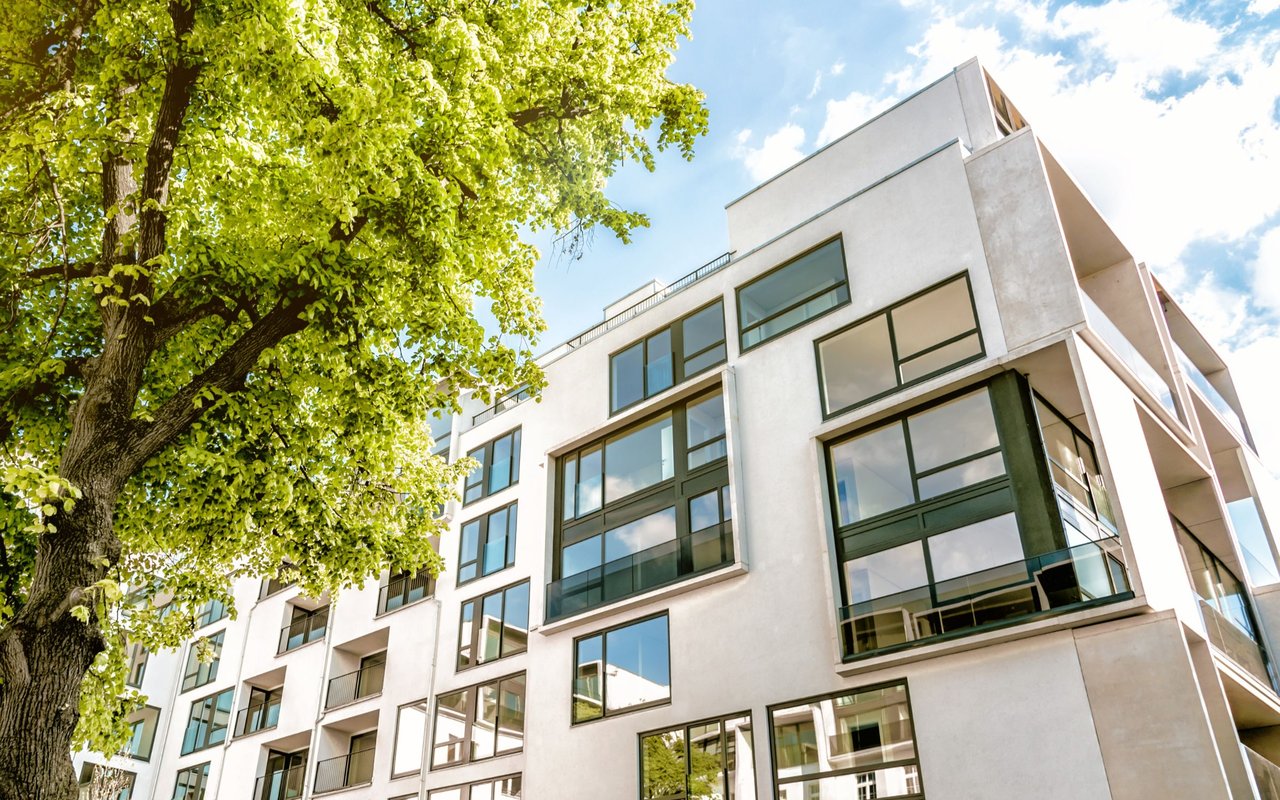
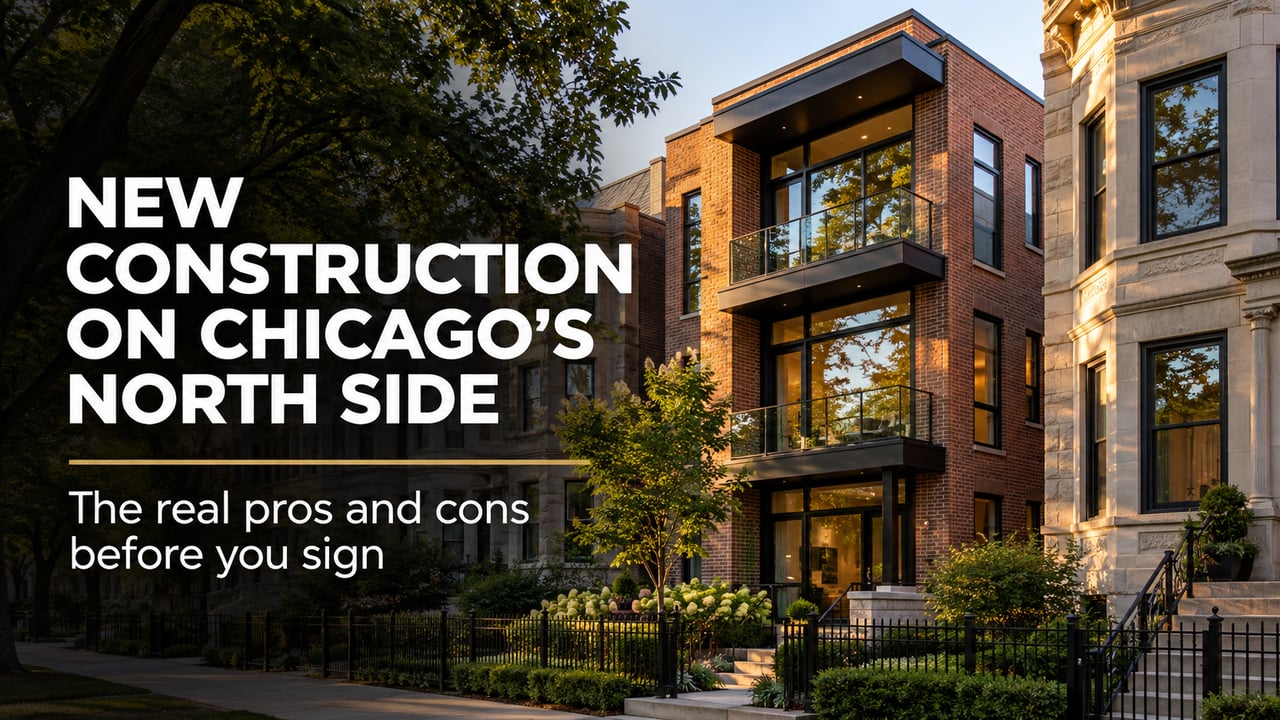
What are the pros and cons of buying new construction on Chicago's North Side? The pros are modern systems, no renovation work at the start, and a builder warranty. The cons are a much higher price than a comparable resale home, a first property tax bill that is often not the real one, a brand-new condo association with no track record, and a builder contract written to protect the builder. You may also be asked to give up legal protections you did not know you had, so you should know all of this before you sign.
Picture two homes a few blocks apart in Lakeview. One is a brand-new condo with quartz counters, heated bathroom floors, and new mechanical systems. The other is a vintage greystone with original hardwood floors and a deep backyard, listed for far less. Both can be the right home, and after more than 24 years of helping buyers with this exact choice, I can tell you the answer depends on the buyer, the neighborhood, and the builder.
This guide covers the real pros and cons of buying new construction on Chicago's North and Northwest Sides, what new homes are actually selling for compared with resale, and what to check before you sign anything. If you want the short version of how I help buyers with new builds, start with my new construction homes in Chicago page.
New construction makes the most sense for buyers who want new systems, no big repairs in the first years, and a home they can move right into. The risks are different from a resale home, and most of them live in the paperwork. Before you sign, you need to understand the builder's contract, the warranty, the real property tax estimate, the inspection and punch list process, the closing timeline, and for a condo, the first-year HOA budget and reserve plan.
Open floor plans, high-efficiency heating and cooling, updated electrical panels, and new plumbing are not small upgrades. In a new home, all of it starts its life on the day you move in. Much of the resale housing in Lakeview, Lincoln Park, Lincoln Square, Ravenswood, and North Center is beautiful, but a lot of it has older plumbing, electrical, heating, masonry, or roofing behind the character. That does not make resale a bad choice, and a good inspection will show you where those systems stand.
With a newly built home, what you see is what you get. You are not moving in and budgeting right away for a kitchen remodel, a new furnace, or an updated electrical panel. You will still likely work through a punch list of small items, such as paint touch-ups, cabinet and door adjustments, caulking, and drywall fixes, because new does not mean perfect.
For buyers relocating from another state, that predictability matters, because a new build removes many of the unknowns that can make a resale purchase from a distance feel like a gamble. It can also help if you are starting a new job or simply do not want to spend your first year in the home managing contractors.
Most builders include a written warranty. A common setup is one year on workmanship and materials, two years on systems like plumbing, electrical, and heating and cooling, and ten years on major structural defects. The coverage comes from the builder or a warranty company, not from Illinois law, so the details change from builder to builder. I cover what to look for in those documents further down.
Permits, winter weather, material delays, design changes, and inspections can all push a closing date back. A building marketed as finishing in the spring can easily finish in the fall. If you are also selling a home, a delay can leave you paying for two places at once, so ask the builder how their last few Chicago projects did against their promised dates, and plan for a later closing than the one on the brochure.
A brand-new condo association has no history of budgets, no record of how it handles repairs, and a reserve fund that starts at or near zero. The first-year dues are an estimate, usually set by the developer, and they can rise once the owners take over the board and see the real costs of insurance, maintenance, and management. Read the declaration and the proposed budget before you sign, not after.
My guide to Chicago condo HOA fees explains what dues usually cover, and my guide to condo special assessments explains what happens when the reserves come up short. It is also worth asking early whether lenders are approving loans in the building, because a new building with few units sold can have trouble with some loan programs. My guide to non-warrantable condos in Chicago explains why.
Builders protect their list prices, because every sale sets the price for the next unit in the building. That does not mean there is no room to negotiate. It usually means the negotiation happens somewhere other than the price, on items like these:
Knowing which of these a builder will actually move on is where an agent who works with builder contracts earns their keep. Get every promise in the contract, not in an email or a conversation in the model unit.
I pulled every sale from the past 12 months in four neighborhoods and compared homes built the year they sold, or the year before, with everything else. New homes sold for far more than resale in every neighborhood, often more than twice as much for condos. Part of that gap is size, because many new condos are large duplex units, but the price difference is real money either way.
Neighborhood and Home Type | New Construction Median Sale Price | Resale Median Sale Price | New Construction Sales in 12 Months |
|---|---|---|---|
Lincoln Park condos | $1,597,000 | $620,000 | 64 |
Lincoln Park single-family homes | $4,100,000 | $2,325,000 | 10 |
Lakeview condos | $1,312,938 | $455,000 | 52 |
Lakeview single-family homes | $2,000,000 | $1,700,000 | 9 |
Edgewater condos | $799,000 | $285,000 | 12 |
Logan Square condos | $957,000 | $530,000 | 15 |
Logan Square single-family homes | $1,475,000 | $900,000 | 11 |
Source: MRED closed sales, October 1, 2025 to September 30, 2026. Lincoln Park is the 60614 ZIP code. Lakeview is Diversey Parkway to Irving Park Road, east of Ravenswood Avenue. Edgewater is Foster Avenue to Devon Avenue, east of Ravenswood Avenue. Logan Square is North Avenue to Diversey Avenue, from Western Avenue to about Pulaski Road. "New construction" means a home built in the year it sold or the year before. At the time of research, deemed reliable but not guaranteed.
In Lincoln Park, new condos sold at a median of about $1.6 million, and most new condos for sale as I write this are listed between about $1.4 million and $2.15 million. Resale condos sold at a median of $620,000, and resale townhomes at about $960,000. Measured by price per square foot, new Lincoln Park condos sold for roughly 80 percent more than resale condos, while new single-family homes sold for roughly 14 percent more per square foot than resale houses.
In Lakeview, new condos sold at a median of about $1.31 million, compared with $455,000 for resale condos. The gap was much smaller for single-family homes, where new houses sold at a median of $2 million and resale houses at $1.7 million, and the price per square foot was about the same. In both neighborhoods, resale gives you far more choices, with more than a thousand resale condo sales in Lakeview alone over the same 12 months.
New construction exists in Edgewater and Logan Square, but there is not much of it, and it still comes at a large premium. Only 12 new condos sold in Edgewater over the past 12 months, at a median of $799,000, while resale condos there sold at a median of $285,000. In Logan Square, new single-family homes sold at a median of about $1.48 million, compared with $900,000 for resale houses.
If you have your heart set on a new build in one of these neighborhoods, expect a short list of options and be ready to move quickly when the right one comes up. You can see what is for sale right now on my Chicago home search.
Cook County property taxes are billed a year behind. That means your first tax bill on a new home may be based on the land alone, or on a home that was only partly built on the date it was assessed. Once the finished home is fully on the tax rolls, the bill can go up by a large amount.
Ask the builder or your attorney what the taxes are expected to be once the home is fully assessed, and use that number, not the current bill, when you figure out your monthly payment. My guide to how Chicago property taxes work explains how the assessment and the bill fit together.
Illinois courts recognize an implied warranty of habitability on new homes, which protects buyers from serious hidden defects even when the contract does not mention it. Many builder contracts ask the buyer to waive that implied warranty in exchange for the builder's own written warranty. The Illinois Supreme Court has upheld these waivers, and a waiver signed by the first owner can also bind the people who buy the home later.
That is why your real estate attorney should read the warranty section of the contract before you sign. If you do sign a waiver, the written warranty becomes your main protection, so the details in that document matter a lot.
Not all builder warranties are equal. Before you sign, check each of these:
A warranty from a small builder with no outside backing is only as strong as that builder's finances. That is why the last two items on this list matter as much as the coverage itself.
Once you move in, write down every problem with a date and a photo, and submit every claim in writing before the deadline in your warranty. That paper trail is what makes the coverage work.
Many buyers skip the home inspection on new construction because they assume the city inspection covers everything. It does not. A city inspection checks that the work meets code, while an independent inspector works for you and looks for problems before your warranty clock starts. Construction is complicated and the last stretch of a project can be rushed, so even a well-built new home can have issues like these:
None of that means the home is a bad purchase. It means you need an inspection, a real final walk-through, and a written punch list before closing.
Illinois law requires radon-resistant construction in new single-family homes and in buildings with two or fewer units, so ask your inspector to confirm the system is there. Skipping the inspection to save a few hundred dollars on a home this expensive is not a trade I would make.
When you buy a new home from a builder, you usually close with a regular purchase mortgage once the home is finished. The challenge is timing. If you sign a contract a year before the home is done, a rate quote from today will not hold that long, so talk with your lender early about when to lock your rate and what longer rate locks cost.
If the building is a new condo, ask your lender early whether it can approve the building, because some loan programs have extra rules for new condo projects. A construction loan is a different product, used mainly when you own the land and hire your own builder.
Builders often offer rate buydowns, closing cost credits, or free upgrades. These incentives are often tied to using the builder's preferred lender, and that lender's rate or fees may not be the best you can get. Get a written quote from the preferred lender and from your own lender, and compare the total cost over the years you expect to own the home before you decide.
Chicago's Building Neighborhoods and Affordable Homes program, known as BNAH, offers up to $100,000 in purchase price assistance to qualifying buyers. It applies only to newly built homes with four or fewer units that were built under a City of Chicago land sale agreement. Household income cannot be above 140 percent of the area median income, the largest grants go to households below 80 percent, and you have to live in the home as your main residence for at least ten years.
Model units are designed to make you fall in love with the finishes, so ask the practical questions before you get attached. Make sure you can answer each of these clearly before you commit to a contract, and if the builder cannot give you a straight answer on any of them, treat that as information too.
New construction is the right call for buyers who value new systems and a warranty, can be flexible on their closing date, and are comfortable paying a premium for a home no one has lived in. It also fits buyers who do not want to take on repairs or renovation projects right after closing.
Resale wins when price is the priority, when you want more choices, or when you are happy to update a home over time. In every neighborhood I looked at, resale buyers had many more homes to choose from and paid far less at the median. The right answer comes down to whether the new systems and the warranty are worth that difference to you.
Builder purchase agreements are written by the builder's attorneys to protect the builder. The timelines, deposit rules, change order pricing, and upgrade credit language all favor the builder unless someone pushes back. The salesperson in the model unit is paid to represent the builder, not you.
Bring your agent with you on your first visit, because some builders require your agent to be registered at that first visit. How your agent is paid on a new build depends on the builder and on what you negotiate, so talk about it up front. My guide to who pays the buyer's agent in Chicago walks through how that works.
I have helped buyers with new construction on the North Side for more than two decades, reviewing builder contracts with their attorneys, flagging the clauses that carry risk, and negotiating upgrade credits and closing cost help that buyers on their own often do not know to ask for. You can read more about how I work with new construction buyers on my new construction homes in Chicago page, and if you are leaning toward a condo, my Chicago condo specialist page covers what I check in every building.
Yes, usually by a lot. Over the past 12 months, new condos in Lincoln Park sold at a median of about $1.6 million, compared with $620,000 for resale condos, and new condos in Lakeview sold at a median of about $1.31 million, compared with $455,000 for resale. Part of the difference is that new condos tend to be larger.
Not automatically. New construction may be the better fit if you want modern systems, a builder warranty, and fewer repairs at the start. Resale may be the better fit if you want a lower price, more choices, a building with a history you can review, or the option to update a home over time.
Illinois does not require a specific written builder warranty. Illinois courts do recognize an implied warranty of habitability on new homes, but builders can ask buyers to waive it in the contract, and the Illinois Supreme Court has upheld those waivers. Have a real estate attorney review the warranty section before you sign.
Yes. A city inspection checks that the work meets code, but an independent inspector looks for installation mistakes, drainage problems, and unfinished details before your warranty period starts to run out.
In most cases, yes, and I recommend it. Check the contract for when the builder allows inspections, since some limit the timing. A city inspection is not the same as an independent inspection, because your inspector is looking out for you, not just checking that the work meets code.
Cook County property taxes are billed a year behind, so the first bill on a new home may be based on the land alone or on a partly built home. Once the finished home is fully assessed, the bill can go up by a large amount, so budget for the higher number from the start.
Usually, but not always on price. Builders tend to protect their list prices and are more willing to give closing cost credits, design upgrades, appliance allowances, or help buying down your interest rate.
Ask about the builder's track record on finish dates, deposit and cancellation rules, warranty coverage, the expected property taxes once the home is fully assessed, HOA dues for a condo, and whether your lender can approve the building. Also ask about the punch list process and whether the contract asks you to waive any legal protections.
You are not required to have one, but the builder's sales team represents the builder. Your own agent reviews the contract with your attorney, compares the builder's price with resale homes nearby, and negotiates on your behalf. Some builders require your agent to be registered on your first visit, so bring your agent with you from the start.
If you are weighing a new build against resale homes on the North Side, I would be glad to walk through the numbers with you, look at the builder's track record, and review what the contract really says. Start with my Buyer's Guide or my free Chicago Buyer's Course.
You can also schedule a complimentary and confidential buyer consultation here. It runs about an hour, and we will go through your goals, your budget, and the neighborhoods and homes that fit. You can also call or text me directly at 773.719.0989.
Sale price data comes from MRED closed sales, October 1, 2025 to September 30, 2026. Information about the BNAH program comes from the City of Chicago Department of Housing. At the time of research, deemed reliable but not guaranteed. This article is general information and not legal advice, so please review your contract and warranty with a real estate attorney.
Dee Savic is a Realtor with Baird & Warner, a 24+ year real estate professional, and a 27+ year Chicago resident with 300+ closed transactions. She specializes in helping buyers, sellers, and relocation clients across Chicago's North and Northwest Sides, including Lincoln Square, Ravenswood, North Center, Roscoe Village, Irving Park, Lakeview, Lincoln Park, Andersonville, Uptown, and Edgewater, and she guides buyers through both resale and new construction purchases.

Dee Savic
Realtor® | Baird & Warner
4553 N. Lincoln Ave, Chicago, IL 60625
773.719.0989
[email protected]
deesavic.com

Buyer Guides
Pre-approval, video tours, one focused trip, and a closing you can mostly handle from home

Neighborhood Guides
The pockets, the parks, the Blue Line, and what the 2026 numbers mean for buyers and sellers
Buyer Guides
Real sale prices vs resale, builder warranties, property taxes, and what to check before you sign
Buyer Guides
The free official tools, how to read them, and what to check in person

Buyers
What you sign before you tour, and what is negotiable
Listings
Duplex up vs. duplex down, who it fits, and a first look at a duplex coming soon near Horner Park

Sellers
How to compare a cash offer to a listed sale before you answer

Neighborhood Guides
The pockets, the lake, the Red Line, and what the 2026 numbers mean for buyers and sellers
Buyers
How special assessments get approved, when owners can push back, and who pays when a condo sells
I'm Dee Savic, your trusted Chicago real estate expert, and I'm here to guide you through your relocation journey. Discover why Chicago is the perfect city for you; from its diverse neighborhoods to its cultural vibrancy, Chicago offers an unmatched urban experience. Together, we'll find a community and home that fits your lifestyle and aspirations.