

What does a cash offer on your Chicago home actually cost you? It costs you the difference between one buyer's price and what your home would bring with many buyers competing for it. On Chicago's North Side, where well-priced homes often sell in days, that difference can be a lot of money. The only way to know your number is to put both paths side by side before you sign anything.
If you own a home on Chicago's North Side, you have probably received the letters. Some arrive as postcards. Some arrive as texts from a number you do not recognize, offering to buy your house as-is, close in two weeks, and pay all costs.
Those offers are real, and some of the companies behind them close on schedule. But these companies are looking for bargains, not to pay fair market value. Taking one cash offer is not the same as selling to a cash buyer. Cash buyers shop on the open market too, and when your home is listed, they have to compete with every other buyer who wants it.
I have sat with sellers in Lincoln Square, Ravenswood, and Andersonville who were holding a cash offer and had no idea how it compared to a listed sale. In this post I will show you how to run that comparison yourself, what to ask a cash buyer before you answer, and how listing your home can still get you a cash buyer and a fast closing, at a higher price.
A cash buyer makes money on the spread between what they pay you and what the home is worth after they clean it up and resell it. That spread has to cover their repairs, their carrying costs, their own selling costs, and their profit. Every one of those costs comes out of your price.
This is not a criticism of the model. It is a straightforward business, and the discount is the price of speed and certainty. The problem starts when a seller treats the cash number as if it were comparable to a list price, because the two numbers are not measuring the same thing.
Cash buyers target homes where they expect the spread to be widest. In Chicago that often means vintage two-flats and greystones, homes with deferred maintenance, inherited properties, and homes owned free and clear by longtime owners.
A cash offer is a net number. A list price is a gross number. To compare them honestly, you have to bring the list price down to net by subtracting everything that comes out at closing.
Here is the structure of that comparison. I have left the amounts blank on purpose, because your numbers will not match anyone else's.
Line item | Cash offer | Listed sale |
|---|---|---|
Price offered or expected | Their number | Your agent's pricing opinion |
Repairs and cleanout | Usually none | Varies by condition |
Agent compensation | Often none | Negotiated, comes out at closing |
Transfer taxes and closing costs | Ask who pays | Seller share applies |
Attorney fee | Still applies | Still applies |
Carrying costs while listed | Few or none | Taxes, insurance, utilities, assessments |
Amount you actually keep | Net A | Net B |
Net A against Net B is the only comparison that matters. On the North Side right now, Net B is often the larger number, and getting it does not have to take long.
Your numbers will depend on your home, your mortgage payoff, and your closing costs.
Most sellers reply to these offers with a yes or a no. A better response is a short list of questions, and the answers will tell you quickly whether you are dealing with an end buyer or a middleman.
Some companies put a property under contract and then sell that contract to an investor. That is legal, and it is also why an offer can change after you sign. Ask directly whether they intend to close in their own name.
A buyer who works this way knows the answer. If they will not give you one, that tells you something on its own.
"We pay all costs" means different things to different companies. Chicago sellers have specific transfer tax obligations, and I walk through those in detail in my post on closing costs for home sellers in Chicago.
An offer that can be reduced after an inspection is not really a firm offer. Ask what happens if they find something, and get the answer in writing.
A real cash buyer will send this without hesitation. Your attorney should see it before you sign anything.
When most people hear "cash offer," they picture one investor, a quick close, and a low price. That is one kind of cash. The other kind is a cash buyer who finds your home on the open market and has to compete for it.
I have had cash buyers bid over six other offers on a home I listed. They paid cash and closed without a loan, and they still had to pay what the market said the home was worth, because other buyers wanted it too. A direct cash offer is one buyer setting the price. A listed home lets every qualified buyer, cash and financed, bid against each other.
A home that needs a new roof, new mechanicals, or a full cleanout is exactly the kind of home these letters target. It is also the kind of home that investors, contractors, and buyers who want a project look for on the open market. You can list a home as-is, price it for its condition, and let those buyers compete, instead of accepting the first number from one of them.
The same goes for a building with tenants in place. Investors who buy occupied buildings watch the listings too. Before you spend money on repairs, read my post on whether to renovate before selling. Often the right answer is to sell as-is, just not to a single buyer.
Speed is the main reason sellers take a direct cash offer, and on Chicago's North Side, speed usually does not require it. A correctly priced home in a low-inventory neighborhood can go under contract in days, which I cover in my post on Chicago homes selling above asking.
The closing can be fast too, and not only with cash. I have had a buyer with a mortgage close in 10 days, because the buyer was fully approved by the lender before going under contract and worked with the right lender. Not every financed sale closes that fast, but when a quick closing matters, we can choose the offer that fits your date, cash or financed.
If you have a hard deadline, such as a job transfer, a divorce decree, or a probate matter, say so up front. Your closing date can shape which offer you accept.
The most expensive mistake is accepting a number without knowing what the home is worth. A seller who never got a pricing opinion never learns how big the discount was.
The second is believing the home cannot be listed because of its condition. Vintage Chicago homes with dated kitchens and original bathrooms sell every week on the North Side. Condition affects price, and it rarely makes a home unlistable.
You do not have to list your home to find out what it would sell for. A pricing opinion based on recent closed sales in your specific neighborhood costs you nothing and takes very little of your time.
Once you have that number, subtract your selling costs and compare it to the cash offer in hand. You may find the open market pays more, and you can still sell to a cash buyer if that is what you want.
This is the same work I do with sellers across Lincoln Square, Ravenswood, Andersonville, and the rest of Chicago's North Side. Asking for the number does not obligate you to list.
Generally no. A cash buyer's price has to cover their repairs, carrying costs, resale costs, and profit, and all of that comes out of what they offer you. The discount is the price of speed and certainty, which is why you need a pricing opinion before you can judge whether the trade is worth it.
Not inherently. Many of these companies close exactly as promised. The risks to watch for are contract assignment to a third party, price reductions after an inspection period, and pressure to sign quickly, so have a real estate attorney review anything before you sign it.
A cash sale can close in roughly two to three weeks once the attorney review and title work are complete, because there is no lender underwriting the purchase. A financed sale usually takes longer, although a buyer who is fully approved by the lender before going under contract can close in as little as 10 days with the right lender. I cover typical timelines in my post on how long it takes to sell a home in Chicago.
Yes. Illinois real estate closings involve attorneys on both sides, and a cash sale does not remove that. My post on whether you need a real estate attorney to sell explains what they handle.
Yes. Listing a home as-is on the open market is common, and it lets multiple buyers compete for it rather than accepting the first offer that arrives. Buyers can still inspect the property, and you can decline to make repairs.
If you sell directly to a cash buyer without an agent, there is usually no agent compensation. That saving has to be weighed against what you give up when only one buyer is bidding, which is the comparison in the table above. You can also list your home and still sell to a cash buyer.
It depends on your gain, how long you owned the home, and whether it was your primary residence. I cover the framework in my post on capital gains tax when selling a home in Chicago, and you should confirm your own situation with your tax professional.
Inherited properties draw a lot of these offers, often before the estate is settled. The sale usually cannot close until the estate has authority to sell, and I work with sellers on this through my Chicago estate sale practice.
A cash offer deserves a real comparison, not a quick yes. Before you answer one, find out what your home would bring with every qualified buyer competing for it, cash buyers included.
I help sellers across Chicago's North Side price and market their homes so they reach the most qualified buyers. If you want a cash buyer or a fast closing, we can plan for that too.
Start with a free home value review, or schedule a complimentary consultation here. You can also start with my free Chicago Home Seller Course, or call or text me directly at 773.719.0989.
This post is for general informational purposes only and is not legal, financial, or tax advice. Contract terms, transfer tax obligations, and tax treatment vary by property and by seller. Always review any purchase contract with your attorney and confirm tax questions with your tax professional before making a real estate decision.
Dee Savic is a Realtor with Baird & Warner, a 24+ year real estate professional, and a 27+ year Chicago resident with 300+ closed transactions. She specializes in helping buyers, sellers, downsizers, and relocation clients across Chicago's North Side.

Dee Savic
Realtor® | Baird & Warner
4553 N. Lincoln Ave, Chicago, IL 60625
773.719.0989
[email protected]
deesavic.com

Buyers
What you sign before you tour, and what is negotiable
Listings
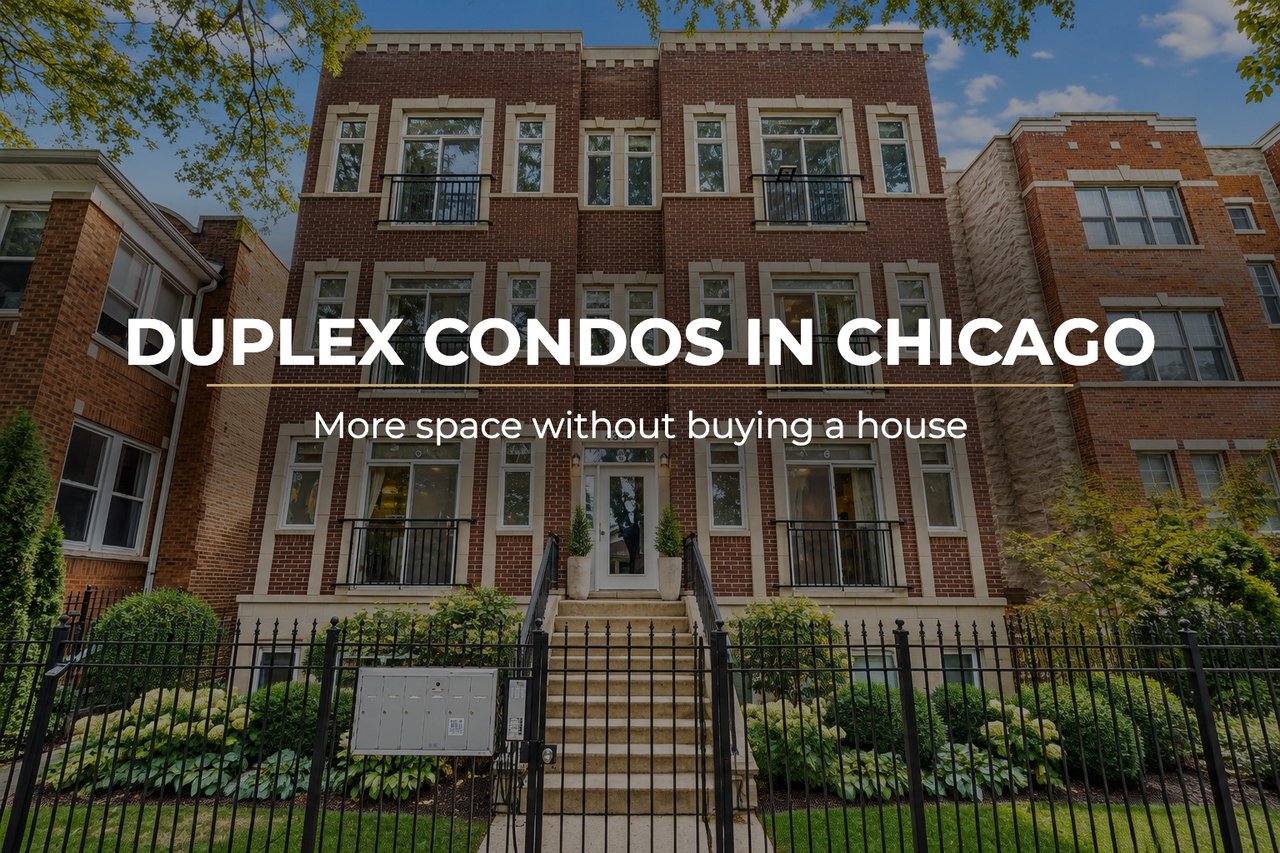
Duplex up vs. duplex down, who it fits, and a first look at a duplex coming soon near Horner Park
Sellers
How to compare a cash offer to a listed sale before you answer

Neighborhood Guides
The pockets, the lake, the Red Line, and what the 2026 numbers mean for buyers and sellers

Buyers
How special assessments get approved, when owners can push back, and who pays when a condo sells

Neighborhood Guides
Beaches, four Red Line stops, historic blocks, and a 2026 housing market where houses and condos are moving in opposite directions

Buyers
How to write a stronger offer in Chicago without blindly overpaying

Seller Advice
The buyers who lost out in spring are still looking, and Chicago still has very few homes for sale.

Buyers
You can qualify as a buyer and still lose the condo if the building fails lender review. Here is what non-warrantable means, what changed in 2026, and what to check be… Read more
I'm Dee Savic, your trusted Chicago real estate expert, and I'm here to guide you through your relocation journey. Discover why Chicago is the perfect city for you; from its diverse neighborhoods to its cultural vibrancy, Chicago offers an unmatched urban experience. Together, we'll find a community and home that fits your lifestyle and aspirations.