

Do you need a real estate attorney to sell a home in Chicago?
Yes. Illinois law effectively requires both buyers and sellers to have a real estate attorney in all residential transactions. In Chicago, the attorney review period begins after contract execution and typically lasts 5 business days.
If you're from out of state - or if this is your first time selling a home in Illinois - you're probably used to a process where your agent handles everything and an attorney is optional. That's not how it works in Chicago.
In Illinois, real estate attorneys are a standard, expected, and practically required part of every residential transaction. Not having one doesn't save you money - it exposes you to risk that an experienced real estate attorney costs $750-$1,500 to protect you from entirely. If you're still figuring out the full picture of what it costs to sell, read our breakdown of closing costs for home sellers in Chicago first.
After a purchase contract is signed by both buyer and seller, a 5-business-day attorney review period begins. During this window, both parties' attorneys can:
This review period is a safety valve for both parties. It's the chance to catch anything that was missed, misunderstood, or needs to be corrected before the contract becomes fully binding. The Chicago Association of Realtors includes attorney review as a default provision in the standard residential purchase contract used across the city.
One important note on timing: attorney review runs on business days, not calendar days. That means weekends and federal holidays don't count. Know your deadline from the moment the contract is signed - and make sure your attorney does too.
| Your Agent | Your Attorney |
|---|---|
| Sets pricing strategy | Reviews and modifies the contract |
| Markets and shows the home | Negotiates attorney rider terms |
| Negotiates offer price and terms | Reviews title commitment |
| Coordinates showings and inspections | Prepares closing documents |
| Advises on inspection response strategy | Attends and conducts the closing |
Your agent and attorney work in parallel - not in opposition. The best transactions happen when both professionals are communicating clearly and operating in their respective lanes. This is especially true in Chicago's current market, where multiple-offer situations require fast, coordinated decision-making.
Attorney review is important for every purchase, but it becomes especially critical when you're buying a condo or townhome in an association. That's because when you buy a Chicago condo, you're not just buying a unit - you're buying into a legal and financial structure: the association, its rules, and its financial health.
A good Illinois real estate attorney handling a condo purchase will review several layers of documents that go well beyond the purchase contract itself. As a Chicago condo specialist, Dee works with attorneys on every condo transaction to make sure nothing is missed.
Your attorney will review use restrictions - whether you can rent the unit, have pets, smoke, list on Airbnb, or run a business from home. They'll check renovation rules, parking and storage rights, and anything that could affect how you actually live in the building. What looks like a great unit on paper can come with restrictions that don't work for your lifestyle.
Your attorney will review the current budget, monthly assessments, and - critically - the reserve fund. A low-reserve building with major upcoming work (roof, elevator, masonry, garage) is a serious red flag. If the association doesn't have adequate reserves, a special assessment could land in your lap shortly after closing. This is one of the most important things to understand before you commit.
Meeting minutes can reveal issues that listing photos never will. Ongoing water intrusion. Disputes between owners and the board. Pending litigation. Discussions about upcoming special assessments or capital projects. Persistent noise complaints from short-term rentals. Your attorney reads these so you don't get surprised after closing.
Any pending or recent lawsuits involving the association - whether against the developer, a contractor, or between owners - can affect your financing and your future. Your attorney will check for litigation and review the building's insurance coverage to make sure you're protected.
If serious issues are discovered in the condo documents, they often become part of attorney review negotiations - leading to requests for credits, additional disclosures, or in some cases a recommendation to walk away entirely. That's exactly why you need an attorney who knows what to look for.
If you start looking for an attorney after your offer is accepted, you may burn 1-2 days out of a 5-day window. Hire your attorney before you go under contract so they can jump in the moment you're accepted.
If the deadline passes with no attorney letter and no written extension, you may be deemed to have accepted the contract as written. You lose the ability to propose changes under the attorney review clause - and potentially your ability to walk away without risking your earnest money. Put the deadline in your calendar the day the contract is accepted.
These two run at the same time but serve different purposes. Attorney review covers legal terms and contract structure. Inspection contingencies cover the physical condition of the property. Using the wrong one for the wrong issue can delay your timeline or cause you to miss critical deadlines entirely.
In Chicago's current multiple-offer environment, asking for extensive changes during attorney review can backfire if the seller has backup offers ready. A good attorney prioritizes the changes that truly affect your risk and cost - not minor cosmetic items that could cause a seller to walk.
Look for an attorney who specializes specifically in residential real estate - not a general practitioner who handles occasional deals on the side. Dee works with some of the best real estate attorneys in Chicago and is happy to connect you with someone who knows the market, moves efficiently, and communicates clearly throughout the process.
Whether you're selling a condo on the North Side or a single-family home in Lincoln Square, Lakeview, or Andersonville, working with an attorney who knows Chicago's specific contract customs makes a real difference. Visit the Chicago sellers guide or the Chicago luxury home seller page for more resources.
🏡 Thinking about selling? Want to learn how to sell your home like a rockstar? Download the free Ultimate Chicago Home Selling Course and get the complete playbook before you list.
Illinois doesn't have a statute that explicitly mandates attorney review, but the standard Chicago Association of Realtors purchase contract includes attorney review as a default provision. In practice, virtually every transaction in Chicago involves attorneys for both buyer and seller. Waiving attorney review is extremely rare and not recommended.
The attorney review period is typically 5 business days from the date the contract is fully executed - and business days means Monday through Friday, excluding federal holidays. Most modifications are resolved within this window. If more time is needed, both parties can agree in writing to extend the period.
If the deadline passes without a written approval, modification request, or disapproval, the attorney review clause is typically deemed satisfied. The contract continues as originally written and your ability to demand changes under that clause is lost. You may still have inspection or financing contingencies, but the leverage of attorney review is gone. If you realize a deadline was missed, contact your attorney immediately.
They often run at the same time but serve different purposes. Attorney review focuses on legal terms, risk allocation, and contract structure. The inspection contingency focuses on the physical condition of the property. Your attorney may use both together strategically, but they remain separate clauses with separate deadlines.
Yes - and condo transactions involve significantly more attorney work than single-family sales. Your attorney will review HOA disclosure documents, meeting minutes, financials, reserve studies, and any pending litigation or special assessments. As a Chicago condo specialist, Dee Savic works closely with attorneys on every condo transaction to make sure nothing is missed.
Yes - either party's attorney can terminate the contract during the attorney review period for attorney-related reasons. This is rare in straightforward transactions but does happen when significant issues are identified - especially in condo purchases where building financials or meeting minutes reveal serious problems. It's one of the reasons having an experienced attorney matters.
Dee Savic will walk you through every step of the process - including what to expect from attorney review - before you ever sign anything.
👉 Book a Free Strategy Call
🏡 Download the Free Ultimate Home Selling Course
Dee Savic | Realtor® | Baird & Warner
773.719.0989 · [email protected] · deesavic.com


Neighborhood Guides
What homes sold for, the 606, the Blue Line, types of homes, and Bucktown vs. Wicker Park

Buying
Real 2026 sales in Lincoln Park, Lakeview, North Center, Roscoe Village, Lincoln Square, Irving Park, Edgewater, and Andersonville

Buying
Where the unit sits, elevators, pets, wind and sound, views, parking, and building rules

Buying
The real monthly cost, yards, winter, parking, competition, long-term value, and choosing the right neighborhood
Neighborhood Guides
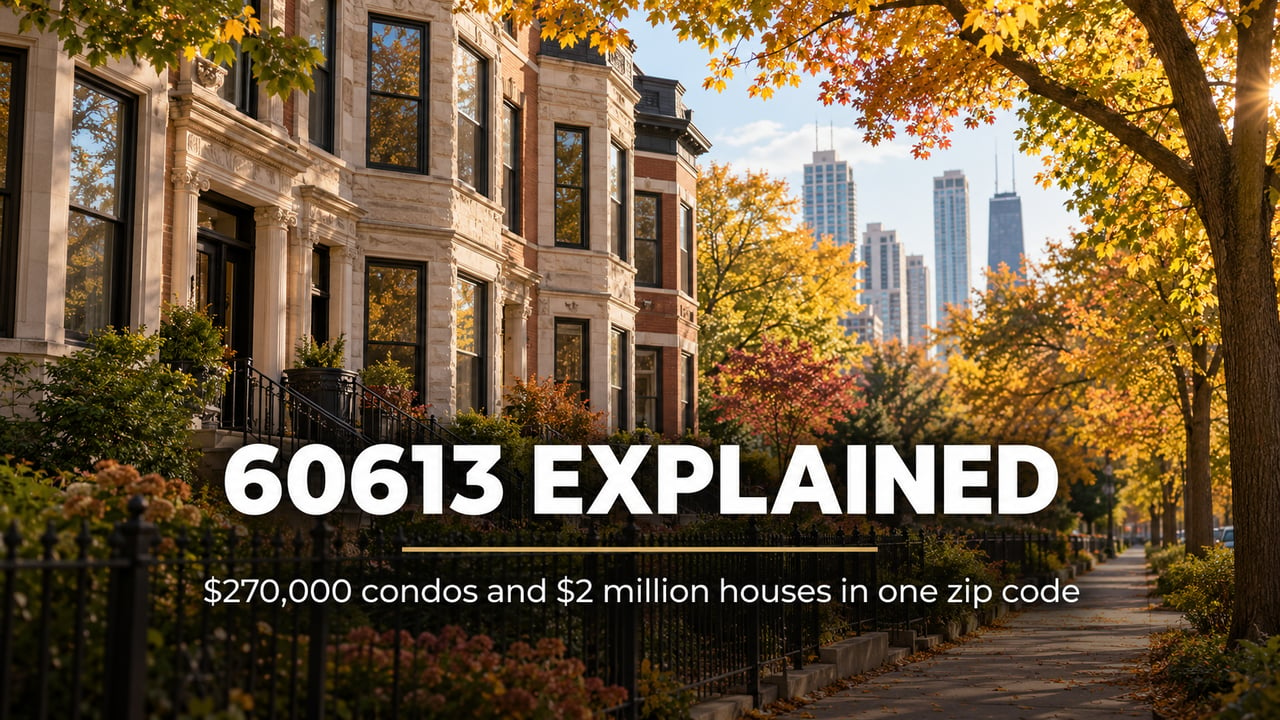
The six parts of 60613, from the lakefront to Damen, and what homes sold for in each in 2026

Neighborhood Guides
Where Buena Park is, what homes sold for in 2026, Hutchinson Street, the lakefront, schools, and safety

Buying
Five years of Chicago prices, where you can and cannot negotiate, and how to handle a 7.40% mortgage rate

Local Events
Dates, times, and exact blocks for Halloween events in Lakeview, Lincoln Park, Lincoln Square, Ravenswood, North Center, Andersonville, and Edgewater

Neighborhood News
The Camry Lot expansion, the 2027 All-Star Game, parking rules, and what homes nearby sold for in 2026
I'm Dee Savic, your trusted Chicago real estate expert, and I'm here to guide you through your relocation journey. Discover why Chicago is the perfect city for you; from its diverse neighborhoods to its cultural vibrancy, Chicago offers an unmatched urban experience. Together, we'll find a community and home that fits your lifestyle and aspirations.