
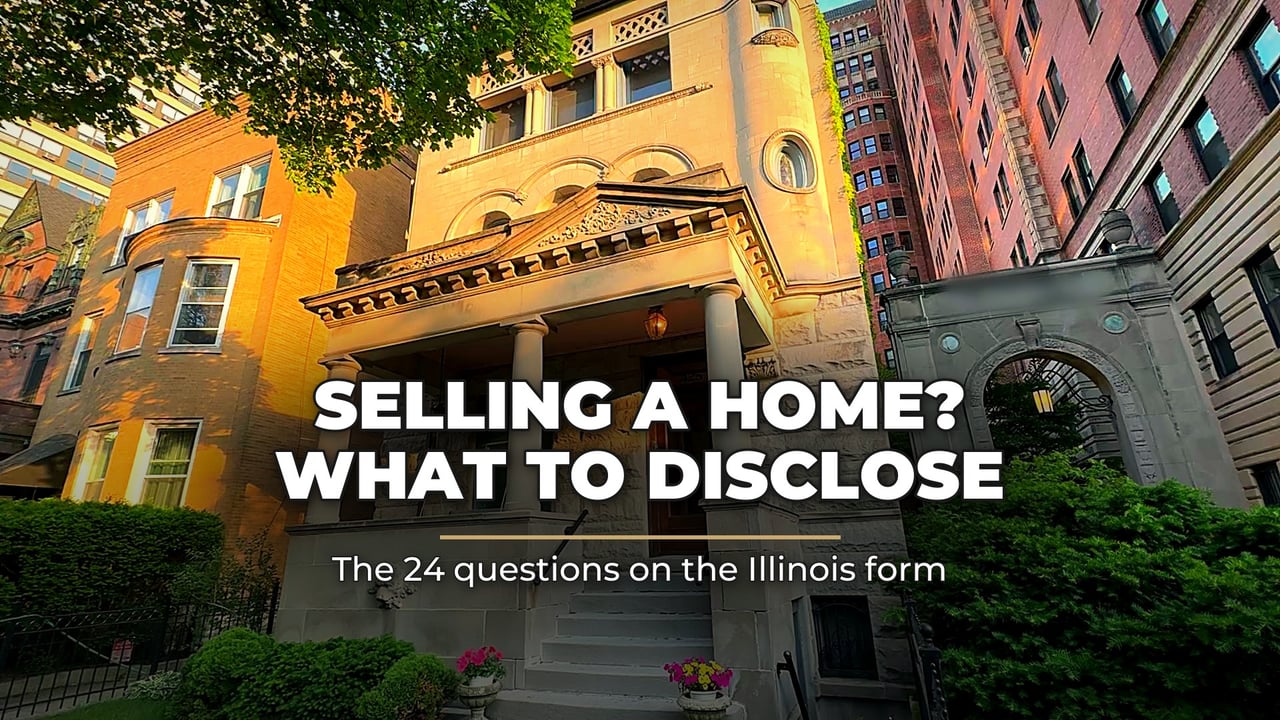
What do you have to disclose when you sell a home in Illinois? Any problem you know about. Illinois has a standard disclosure form with 24 yes-or-no questions, covering things like water in the basement, roof leaks, and the heating, plumbing, and electrical. You do not have to go looking for problems or fix anything. You just have to be honest about what you know.
The disclosure is usually one of the things sellers worry about the most. I get it. You have spent years making this house a home, and now you are asked to write down everything that is wrong with it, for strangers to read. Many sellers are afraid that one "yes" on that form will send buyers running.
My advice is always the same: over-disclose rather than under-disclose. Here is why, and exactly what the form asks, so nothing on it catches you off guard.
Think about it from the buyer's side. A water stain you mentioned on the form is a fact. They can ask about it, get a quote, and decide. The same water stain their inspector finds after you said nothing feels like a secret. And once a buyer feels something was hidden, they start to wonder what else was hidden. That is when a small repair turns into a big negotiation, or a buyer who loved your home walks away.
Honesty also protects you. Illinois law is on the side of the honest seller. You are not responsible for a problem you did not know about, or one you reasonably believed was fixed. The sellers who get into trouble are the ones who knew and stayed quiet. So when you are not sure whether something belongs on the form, the answer is almost always to write it down and explain it, and to check with your attorney.
The official name is the Residential Real Property Disclosure Report. It sounds scary. It is really just 24 questions, and you answer each one "yes," "no," or "not applicable." Every "yes" gets a short explanation. It applies to houses with one to four units, condos, and co-ops.
Here is what the questions cover, grouped so it is easy to read. You can see the full form on the Illinois General Assembly website.
Topic | What the form asks if you know about |
|---|---|
You and the home | Whether you lived there in the last 12 months, and whether you carry flood insurance |
Water | Flooding or leaks that keep coming back in the basement or crawl space, and whether the home is in a floodplain |
The structure | Problems with the foundation, roof, ceilings, chimney, walls, windows, doors, or floors, and settling of the ground |
The systems | Problems with the electrical, plumbing, heating, air conditioning, fireplace, and sewer |
Health and safety | Unsafe drinking water, high radon, asbestos, lead paint or lead pipes, and whether the home was ever used to make meth |
Pests and tanks | Termites today, termite damage that was never repaired, and underground fuel tanks |
Legal issues | Lot line disputes with a neighbor, and code violation notices that were never fixed |
Notice the words "you know about." The form does not ask you to hire an inspector or crawl into the attic. And it is about real problems, the kind that would affect the value of the home or the safety of the people living there, not every scuff on the wall. A problem you fixed and believe is fixed is not a current problem. Still, I like to share the repair receipts. Buyers love paperwork.
Selling a condo? The form covers your unit, not the building's roof or hallways. Those come through the condo documents, which I cover below.
The law says before the contract is signed. I like to have it ready before we even list, so buyers see it early and there are no surprises later.
Here is a detail many websites still get wrong. If the form shows a real problem and the buyer only gets it after the contract is signed, the buyer can cancel within 5 business days and get their earnest money back. Many articles still say 3 days. The law changed in 2022. It is 5 now.
And if something new comes up after you give the form, say the basement takes on water a week before closing, you tell the buyer in writing. That is over-disclosing in action, and it keeps the sale on solid ground.
Not always. Some sales are exempt from the form. The ones I see most in Chicago:
But exempt from the form does not mean free to stay quiet. Other laws still apply, and hiding a known problem is never safe. If you are handling a parent's home or selling during a divorce, my posts on selling an inherited house in Chicago and selling a house during a divorce in Illinois walk you through those sales.
The big form is not the only one. Depending on your home, you may also need these.
Illinois sellers also have to give the buyer a short radon form and the state's radon pamphlet. You say whether you know of high radon levels or had a radon system installed. You do not have to test. The Illinois Emergency Management Agency has the forms.
Good news for high-rise owners: condos on the third floor or higher are exempt from the radon disclosure.
Chicago is full of beautiful vintage homes, which means this one comes up a lot. For a home built before 1978, federal law says you give the buyer the EPA lead pamphlet, share anything you know about lead paint, and include a lead warning in the contract. The buyer can take up to 10 days to test. The EPA explains the rule here.
Condo buyers buy the building, too. When the buyer asks, you provide documents from the association: the rules, the budget and reserves, planned big projects, any lawsuits, the insurance, and what you owe in assessments. The board has 10 business days to get them to you, so I always ask early. A special assessment or a thin reserve fund changes how buyers see your price, and you want to know about it before they do. The full list is in section 22.1 of the Condominium Property Act, and my posts on special assessments and condo fees explain what buyers look for.
This one surprises a lot of sellers. In Chicago, you give the buyer your gas and electric costs for the last 12 months, and say whether the home was lived in during that time. Copies of the bills or the usage history from the utility company work. Some condo buildings where heat is shared are an exception. It is in section 5-16-050 of the Chicago Municipal Code.
Yes. As-is means you are not offering to fix things. It does not mean you get to keep quiet about what you know. The form itself says an as-is sale is fine, and it still has to be filled out. My post on whether to renovate or sell as-is in Chicago shows how well as-is homes are selling right now when the price is right.
This is where under-disclosing gets expensive. A seller who knowingly leaves out a problem, or gives false information, can be sued for the buyer's damages and court costs, and may have to pay attorney fees too. Under the disclosure law, the buyer has one year to bring that claim, counted from when they take possession, move in, or the deed is recorded, whichever comes first. Other claims like fraud can still apply.
Compare that to the honest seller. Under the same law, you are protected for things you did not know about, things you believed were fixed, and wrong information that came from a licensed inspector or contractor. That is the whole case for over-disclosing in one paragraph.
We go through the form together, question by question, before we list. Nothing is guessed or rushed, and if you are not sure how to answer something, we ask your attorney. Then we gather what buyers will ask for anyway: repair receipts, the ages of the roof and the furnace, radon results if you have them, your utility bills, and the condo documents.
When all of that is ready on day one, buyers trust your home faster, and the sale is calmer for everyone. My post on whether you need a real estate attorney to sell a home in Chicago explains the attorney's part, and 7 mistakes first-time sellers make in Chicago covers what else to plan for.
When you choose who will guide your sale, look for numbers you can check. Here are mine:
You work with me directly, from the first walk-through to the closing table.
Yes. Most sellers of houses with one to four units, condos, and co-ops must give buyers the Residential Real Property Disclosure Report before the contract is signed.
In most cases, yes. Over-disclosing protects you and builds trust with buyers. Write it down, explain it, and check with your attorney.
No. The form asks only about problems you actually know of. You do not have to inspect or test anything.
If the form shows a real problem and the buyer gets it after signing the contract, the buyer has 5 business days to cancel and get their earnest money back. Articles that say 3 days are out of date.
The form asks about current problems, and a problem you believe was fixed is not one. Many sellers still share the repair receipts, because buyers trust paperwork.
Most do, but condos on the third floor or higher are exempt from the Illinois radon disclosure.
If you want a sale where nothing comes up as a surprise, I can help. We will walk through your home and your paperwork together, look at the recent sales near you, and make a clear plan.
Start with a free home value review, or schedule a complimentary consultation here. You can also start with my free Chicago Home Seller Course, or call or text me directly at 773.719.0989.
This post is for general information only and is not legal advice. Always confirm your situation with a real estate attorney.
Dee Savic is a Chicago Realtor® with Baird & Warner, a 24+ year real estate professional, and a 27+ year Chicago resident with 300+ closed transactions. She helps buyers, sellers, downsizers, and relocation clients across Chicago, including Lakeview, Lincoln Park, Lincoln Square, Ravenswood, North Center, Roscoe Village, Andersonville, Uptown, Bucktown, Wicker Park, and the Gold Coast.

Dee Savic
Realtor® | Baird & Warner
4553 N. Lincoln Ave, Chicago, IL 60625
773.719.0989
[email protected]
deesavic.com

Seller's Advice
How much Chicago homeowners have gained, and what it can mean for your next move

Buying
Neighborhoods, getting around without a car, parking and dibs, winter, the real cost, schools, lead pipes, and property taxes, from a local since 1998

Seller Advice
What 12 months of MLS sales show for Logan Square condo and house sellers

Seller's Advice
A day-by-day checklist from a Chicago listing agent, one small step at a time

Relocation
ZooLights, Christkindlmarket, the Lights Festival, free museum days and new spots, with dates and prices

Chicago Market
What North Side 2-4 unit buildings sold for, who buys them, and how to handle tenants

Selling
What 12 months of MLS sales show for condos, vintage houses and new construction

Selling
Attorney review, inspection, appraisal, closing paperwork and moving out, step by step
Selling
My room-by-room checklist for listing photos, video and 3D tours
I'm Dee Savic, your trusted Chicago real estate expert, and I'm here to guide you through your relocation journey. Discover why Chicago is the perfect city for you; from its diverse neighborhoods to its cultural vibrancy, Chicago offers an unmatched urban experience. Together, we'll find a community and home that fits your lifestyle and aspirations.