

What should you decide first when selling a house during a divorce in Illinois? When you sell a house during a divorce in Illinois, the first decision is whether the house will be sold at all, or whether one spouse will keep it and buy out the other. If you sell, the next decisions are who chooses the price, how offers are approved, and how the money is divided, and those answers belong in writing before the home goes on the market.
A divorce is hard enough without a home sale that drags on or falls apart. Many of the problems in these sales come from decisions that were never made at the start, such as who can accept an offer or who pays the mortgage until closing. In this post I walk through the choices in the order you will face them, so you and your attorneys can settle them early and the sale can go smoothly.
This post is for general informational purposes only and is not legal, tax, or financial advice. Divorce and property laws are complex, and every situation is different. Always talk with your divorce attorney and a tax professional before making decisions about your home.
Illinois divides marital property, which usually includes a home bought during the marriage, in what the law calls "just proportions". That means a fair division based on many factors, which is not always a 50/50 split. How your home is divided is something you and your attorneys work out, but it usually comes down to one of three paths.
The spouse who stays pays the other spouse their share of the equity. In most cases that means refinancing the mortgage into one name, which requires that spouse to qualify for the loan alone. Before you commit to a buyout, find out what the home is worth today, because the buyout amount is based on it.
Some couples agree to keep the home for a set period and sell it later. If you choose this, put the details in writing: who lives there, who pays the mortgage, taxes, and repairs, and what date or event triggers the sale. Leaving those questions open can cause new disagreements later.
Selling gives both of you a clean break and cash to start over. It also means you need to agree on more than you might expect, which is what the rest of this post covers.
If both spouses are on the title, both usually need to sign the listing agreement, the sales contract, and the closing documents. Even when only one name is on the title, the home may still be marital property, so talk with your attorney before you list. A court order or your settlement agreement may also say how and when the home must be sold.
Before the home goes on the market, agree in writing on these points:
Your agent should send the same updates, showing feedback, and offers to both of you at the same time. When one owner hears news first, trust breaks down quickly, and the sale slows down with it.
Price is where many divorce sales get stuck. One spouse may want to list high and wait, while the other wants a quick sale. The fairest way through it is to start with the facts: recent closed sales from the MLS of homes like yours, close to yours, and what is for sale right now that buyers will compare it to.
A price both of you can see the evidence for is easier to agree on, and a home priced well from the first day usually sells faster and with less back and forth. My post on how to price your home to sell in Chicago explains how buyers react to price in today's market. For a number based on your home, start with a free home value review.
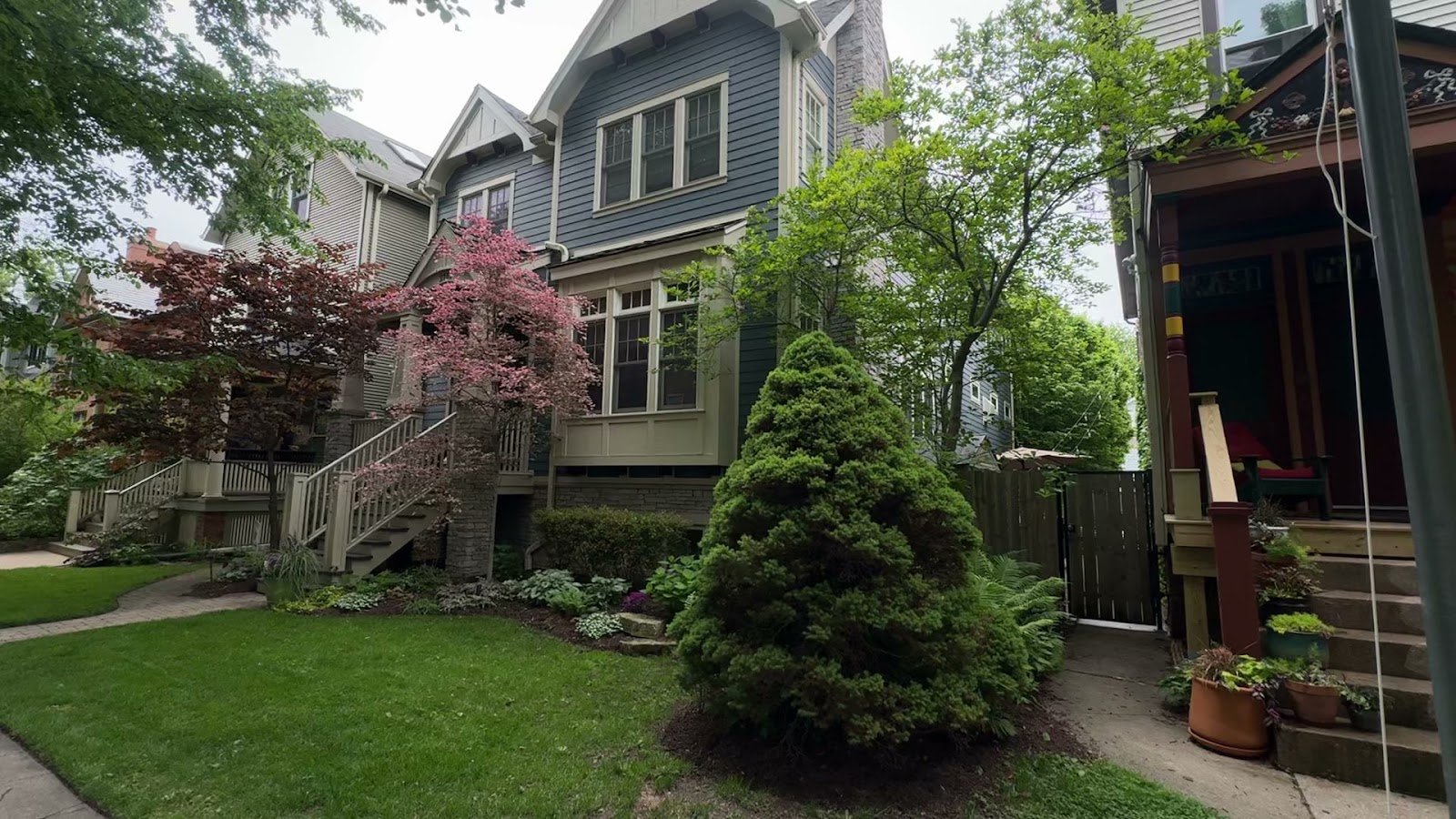
During a divorce, a home often shows signs of the change. One spouse may have moved out, rooms may be half empty, or repairs may have been put off. Buyers notice all of it, and an empty or cluttered home can cost you money.
Agree on a short list of work that pays off: decluttering, a deep clean, fresh neutral paint where it is needed, and brighter lighting. Staging can make a half-furnished home feel complete again. If the house needs bigger repairs, my post on whether to renovate or sell as-is in Chicago can help you decide what is worth doing.
Taxes are one of the biggest questions in a divorce sale, so confirm your situation with a tax professional. According to IRS Publication 523, a single filer may be able to exclude up to $250,000 of gain on the sale of a main home, and a married couple filing jointly up to $500,000, if they meet the ownership and use rules. Whether you sell before or after the divorce is final can affect how much of the gain you can exclude.
The same IRS publication covers two situations that come up often in divorce. A transfer of the home from one spouse to the other as part of a divorce settlement is generally treated as having no gain or loss. And if your former spouse lives in the home under a divorce or separation agreement, that time may count toward your own use of the home. My post on capital gains tax on Chicago home sales explains the basic rules, and my post on selling your home after 2 years covers the ownership and use test.
The costs of selling are usually paid from the sale proceeds before the money is divided. In Chicago, sellers typically pay their attorney, title charges, transfer taxes, their share of property taxes, and real estate commissions. My post on closing costs for home sellers in Chicago lists each one, so you can estimate what each of you will take home.
Each spouse will usually have their own divorce attorney, and the sale itself also needs a real estate attorney. My post on whether you need a real estate attorney to sell a home in Chicago explains that role.
Many people selling during a divorce also need a new place to live. If you plan to buy, talk with a lender early about what you qualify for on one income, and about how the divorce terms affect your application. If you want to time the sale of your current home with the purchase of your next one, my page on selling and buying a home at the same time in Chicago explains the options. If you are moving to a smaller home, my Chicago downsizing page may also help.
Yes. Many couples sell before the divorce is final, as long as both owners agree or a court order allows it. Talk with your attorney first, because a pending divorce case may limit what either spouse can do with marital property.
Usually, yes, if both are on the title. If you cannot agree, the court can decide what happens to the home as part of the divorce. Your attorney can explain your options.
It depends on your finances, your taxes, and how quickly you both want to move on. Selling before the divorce is final can simplify the division of money, while selling after may give one spouse more time in the home. Ask your attorney and a tax professional to compare both for your situation.
The split is set by your settlement agreement or by the court. In Illinois it is a fair division based on many factors, so it is not always 50/50. The proceeds are often held or paid out at closing exactly as the agreement says.
Agree on the price and the decision rules before you list, get the home clean and ready, and price it to the recent sales from the MLS. A home that is priced well and prepared well from the first day draws the most buyers in the first week. Delays usually come from disagreements, not from the market.
It can. A home that looks half empty, needs repairs, or sits on the market while the owners disagree on price often sells for less. Planning the sale together and preparing the home well protects the value for both of you.
This is a stressful time, and the home sale should not add to it. I keep both owners informed equally, give you the MLS numbers behind every recommendation, and work alongside your attorneys so the sale stays on track.
Start with a free home value review, or schedule a complimentary and confidential consultation here. You can also start with my free Chicago Home Seller Course, or call or text me directly at 773.719.0989.
Dee Savic is a Realtor with Baird & Warner, a 24+ year real estate professional, and a 27+ year Chicago resident with 300+ closed transactions. She specializes in helping buyers, sellers, downsizers, and relocation clients across Chicago's North Side.

Dee Savic
Realtor® | Baird & Warner
4553 N. Lincoln Ave, Chicago, IL 60625
773.719.0989
[email protected]
deesavic.com
Selling
Keep, buy out, or sell, who signs, how offers are approved, and what to know about taxes

Selling
10 questions to ask, what a strong answer sounds like, and the red flags to watch for

Selling
What North Center condos and houses sold for in 2026, who is buying, and how to price yours

Selling
What older homes sold as-is went for in 2026, who buys them, and when a few light updates pay off

Selling
What 2026 sales show about winter buyers, competition, and price

Neighborhood Guides
What homes sold for, the 606, the Blue Line, types of homes, and Bucktown vs. Wicker Park

Buying
Real 2026 sales in Lincoln Park, Lakeview, North Center, Roscoe Village, Lincoln Square, Irving Park, Edgewater, and Andersonville

Buying
Where the unit sits, elevators, pets, wind and sound, views, parking, and building rules

Buying
The real monthly cost, yards, winter, parking, competition, long-term value, and choosing the right neighborhood
I'm Dee Savic, your trusted Chicago real estate expert, and I'm here to guide you through your relocation journey. Discover why Chicago is the perfect city for you; from its diverse neighborhoods to its cultural vibrancy, Chicago offers an unmatched urban experience. Together, we'll find a community and home that fits your lifestyle and aspirations.