
Will Chicago home prices go down in 2027? I don't think so. Across the country, there are more homes for sale than a year ago. Inside the city of Chicago, there are almost 20% fewer, and prices here are rising faster than in any other major metro area tracked by the Case-Shiller index. If you're waiting for prices to come down or for more homes to hit the market, here's what I'm seeing and my three predictions for the Chicago housing market in 2027.
I've sold homes here through the 2008 housing crash, the pandemic, and mortgage rates close to 8%, and this market doesn't look like any of them. You can also watch the video version of these predictions on my YouTube channel.
You've probably seen the headlines saying inventory is going up, prices are flattening, and sellers are cutting prices. Nationally, that's true. Realtor.com's September 2026 report showed 5.4% more homes for sale across the country than a year earlier, and 20.8% of listings had a price cut, the highest share for a September since 2018.
Much of that change is happening far from here. Nineteen states now have more homes for sale than they did before the pandemic, including Florida and Arizona, and Illinois isn't one of them. Reading national headlines to understand Chicago is like checking the weather in Miami before you walk outside here in January.
Right now there are about 3,900 homes for sale inside the city of Chicago. This time last year there were about 4,850, which is a drop of roughly 19%. The drop isn't limited to one type of home.
City of Chicago | Change From a Year Ago |
|---|---|
All homes for sale | About 3,900, down from about 4,850 (down 19%) |
Single-family homes for sale | Down 21% |
Condos and townhomes for sale | Down 18% |
Homes that actually sold | Down only about 6% |
The last row is the one I find most interesting. Fewer homes are coming up for sale, but closed sales only dropped about 6%, so buyers haven't disappeared. They're still out there, competing for fewer homes.
Here's what that looks like in real life. One of my buyers offered $75,000 over asking on a home this year and still lost it. She ended up buying the next home she went after, and there were 19 other offers on that one too.
In Lincoln Park and Lakeview, there are about 20% fewer homes for sale than last year. North Center is down 12%, and plenty of other Chicago neighborhoods are seeing double-digit drops too. The bigger story shows up when you compare today with 2019, before the pandemic.
Homes for Sale | Compared With Last Year | Compared With 2019 |
|---|---|---|
Lincoln Park | About 20% fewer | About 80% fewer |
Lakeview | About 20% fewer | About 80% fewer |
City of Chicago | About 19% fewer | About 60% fewer |
Think about what that means if you're shopping in Lincoln Park or Lakeview. If you had 100 homes to choose from in 2019, today you'd have about 20. There simply aren't enough homes for everyone who wants to buy one, and that's why buyers are still competing so hard.
With so little to buy, it's no surprise Chicago home prices keep climbing. The median sale price in the city is now around $405,000, up about 8% from last year.
The S&P Cotality Case-Shiller index tracks home prices in 20 major metro areas, and Chicago is number one. Its latest report, released October 27, 2026, shows Chicago-area prices up 6.7% from a year earlier, the sixth month in a row Chicago has led the country. The index for all 20 cities combined rose only 2.7%, and the national index rose 2.1%.
That's pretty remarkable for a city where people keep saying everyone is leaving. I looked at that question with real numbers in my post Is Everyone Leaving Chicago?
I think a year from now, Chicago is still going to be number one on Case-Shiller. Could another city pass us? Sure, New York is right behind at 6.2%. I'm still betting on Chicago, and here's why.
I don't see a housing crash coming, especially in the neighborhoods where most of my buyers are looking. A crash needs a flood of homes hitting the market and a lot of sellers who are forced to sell. Right now we have the opposite: homeowners who don't want to sell, buyers who are still competing, and prices that keep going up. If you want the longer answer, my post on whether the Chicago housing market is crashing walks through the numbers.
A lot of Chicago homeowners bought or refinanced in 2020 and 2021 and are sitting on mortgage rates around 3%. Say a couple bought a two-bedroom condo in Lakeview back then. They've had a baby, they're running out of space, and they'd love to move into a house, but that means giving up their 3% mortgage and buying again at today's rates. Depending on what they buy, their monthly payment could go up by hundreds of dollars, maybe more than $1,000, so they stay put.
Research from the Federal Housing Finance Agency found that for every percentage point today's mortgage rate sits above a homeowner's current rate, the chance that homeowner sells drops by about 18%. Unless someone has a strong reason to move, like a new job, a growing family, or a divorce, many owners are choosing not to sell. That keeps inventory low.
Not every neighborhood or type of home will rise in value at the same rate. A single-family home in Lincoln Park, where the median sale price for houses is around $2.6 million, is a completely different market from a $425,000 condo in the Loop. When I look at Chicago overall, though, I don't see the conditions for prices to suddenly start falling.
When I say downtown, I mean the Loop plus the Gold Coast, Streeterville, and River North. The numbers below cover that whole area together.
During the pandemic, downtown was a completely different market. Many people were working from home, more space suddenly looked a lot more appealing than a high-rise condo, and people were leaving downtown buildings. By the fall of 2020 there was more than a year's worth of condos for sale. In other words, if not one more condo had come on the market, it would have taken over a year to sell everything that was already listed.
Downtown Chicago Condos | Months of Supply for Sale |
|---|---|
Before the pandemic | About 7 months |
Fall 2020 | More than 12 months |
Today | About 3 months |
Downtown actually has a tighter supply of condos today than it did before COVID. There are about 70% fewer condos for sale today than in the fall of 2020.
Downtown is still a very different market from the North Side neighborhoods, though. North Center has around 30 condos for sale, and downtown has about 600. Those 600 condos aren't all competing for the same buyer. You'll find everything from smaller one-bedrooms to multimillion-dollar penthouses, newer buildings with great amenities, older buildings with high assessments, and buildings where special assessments or financing restrictions make selling harder.
That's why downtown buyers need to look at the individual building, not just the neighborhood. My post on buying a Chicago high-rise condo covers what to check, and my posts on special assessments and non-warrantable condos explain two of the biggest building issues.
I think downtown keeps getting stronger in 2027. More companies are bringing employees back to the office, and as more people spend their days downtown again, I expect more buyers to consider living there. Right now you still have more choices downtown than in most North Side neighborhoods.
In certain buildings you also have room to negotiate, especially on a condo that has been sitting on the market for a while. My prediction is that downtown keeps recovering, but not every building will benefit equally. Buyers who do their homework now could find opportunities that may not be there a year from now.
This is the prediction that matters most if you're deciding when to buy. Every year, buyers tell me they're going to wait until spring because that's when more homes usually come on the market. Normally they're right, because spring is our busiest listing season. I just don't think there will be enough homes next spring for all the buyers who want them.
Here's what happened this year. In April 2026 there were about 3,300 homes for sale in the entire city of Chicago, already down almost 30% from the April before. In September, the number of new listings dropped another 13% compared with last year.
So where are all the extra homes supposed to come from next spring? The homeowners with 3% mortgages still aren't selling, and with the 30-year fixed rate at 7.24% in Freddie Mac's survey on October 29, 2026, they have even less reason to move. My prediction is that next April, Chicago will have even fewer homes for sale than it did this past April.
If I'm right, buyers who wait until spring will be competing for the same short list of homes. Spring is when families want to move before the next school year starts and when everyone who waited all winter starts looking, so a lot of buyers end up shopping at the same time.
I know a lot of buyers are waiting for lower rates. Back in March 2026, the 30-year fixed rate was around 6%, and that makes a real difference in your monthly payment. Here's an example on a $700,000 Chicago home with 20% down.
$700,000 Home, 20% Down | Monthly Principal and Interest |
|---|---|
At 7.24% | About $3,816 |
At 6.00% | About $3,357 |
Monthly difference | About $459 |
Estimate based on a $560,000 loan on a 30-year fixed mortgage. Principal and interest only, before property taxes, insurance, and any HOA assessments.
Of course buyers want lower rates. But what happens if rates drop to 6% and that $700,000 home now costs $750,000 because more buyers are competing for it? You'd have a lower rate, but you'd be paying $50,000 more for the same home. At 6% on a $750,000 home with 20% down, your payment is about $3,597. That's only about $219 a month less than buying the $700,000 home today at 7.24%, and you'd need $10,000 more for your down payment.
You also aren't the only person who will notice that rates dropped. Every other buyer who has been waiting will notice too, so instead of competing with one or two buyers, you might be competing with five or ten.
My buyer who offered $75,000 over asking and still lost was competing at today's rates. Imagine what could happen if rates come down and inventory stays this low. My post on waiting for mortgage rates to drop in Chicago goes deeper into why inventory matters more than rates here, and my mortgage payment post shows payments at other prices.
If you're waiting for the Chicago housing market to cool off before you buy, I don't think that's coming in 2027. I think Chicago will remain one of the strongest housing markets in the country, downtown will keep recovering, and next spring will bring even more competition for the homes that are available. The one thing that could change that is rates climbing high enough to put homes out of reach for most buyers, which wouldn't be good for anyone.
So if you find the right home this fall or winter and the monthly payment works for you, I wouldn't wait just because you're hoping for lower rates next spring. Fall and winter can be a great time to buy in Chicago. There are usually fewer buyers out looking, and sellers who list in November or December often have a reason they need to move, such as a job relocation or a home they've already bought.
On homes that aren't drawing multiple offers, that can give you more room to negotiate than you'd have in the middle of the spring market. If rates come down later, you can look into refinancing, but you can't go back and buy a home at yesterday's price. My post on the best time to buy a house in Chicago shows how fall prices have compared with spring prices over the last five years.
These are my predictions based on what I'm seeing in the Chicago market today, and the housing market can always surprise you. If I had to bet on where Chicago is heading in 2027, though, this is where I'd put my money.
When you choose an agent to help you buy in a competitive market, look for numbers you can check. Here are mine:
You'll work with me directly from your first showing to closing. Along with what's on the market, I send my buyers private and coming-soon listings, which matters a lot when there are this few homes for sale.
I don't expect them to. Chicago has about 19% fewer homes for sale than a year ago, buyers are still competing, and the October 2026 Case-Shiller report showed Chicago-area prices up 6.7%, the biggest gain of the 20 cities tracked. Prices could rise more slowly in some neighborhoods or buildings, but I don't see the conditions for a citywide drop.
I don't think so. A crash needs a flood of homes for sale and a lot of forced sellers, and Chicago has the opposite. Many owners are holding on to mortgage rates around 3% and choosing not to sell, which keeps inventory low.
If you find the right home and the monthly payment works for you, I wouldn't wait for rates alone. When rates drop, more buyers come back at the same time, and with so few homes for sale, prices can rise. If rates fall after you buy, you can look into refinancing.
Spring brings the most new listings, but it also brings the most buyers. I expect spring 2027 to be even more competitive than spring 2026, because fewer owners are selling. Fall and winter usually have fewer buyers, which can mean less competition.
Downtown has recovered a lot since 2020, with about three months of condos for sale today compared with more than a year's worth in the fall of 2020. You still have more choices downtown than in most North Side neighborhoods, and some buildings leave room to negotiate. Check the building's finances, assessments, and whether lenders will approve loans there before you make an offer.
I'm Dee Savic, a Chicago Realtor® with Baird & Warner. I have more than 24 years of experience, more than 300 closed transactions, and more than 190 five-star reviews across Google, Zillow, Realtor.com, and FastExpert. You can reach me directly at 773.719.0989.
If you're planning to buy in Chicago in the next year, start with my free Chicago Buyer's Course. It's a video series with guides and downloads that walks you through the whole buying process here. You can also read my Buyer's Guide, or watch Where to Live in Chicago: North Side Neighborhoods Ranked if you're still choosing a neighborhood.
When you're ready, schedule a complimentary and confidential buyer consultation here. It runs about an hour, and we'll go through your timeline, your budget, and the neighborhoods that fit. You can also call or text me directly at 773.719.0989.
Chicago, neighborhood, and downtown inventory and price figures are from my market research in October 2026. National inventory and price reduction figures are from Realtor.com's September 2026 report. Home price index figures are from the S&P Cotality Case-Shiller report released October 27, 2026. Mortgage rates are from Freddie Mac's Primary Mortgage Market Survey. Accurate at the time of research, deemed reliable but not guaranteed.
Dee Savic is a Chicago Realtor® with Baird & Warner, working out of 4553 N. Lincoln Ave. She helps buyers, sellers, and relocation clients across Chicago, including Lakeview, Lincoln Park, Lincoln Square, Ravenswood, North Center, Roscoe Village, Andersonville, Uptown, Bucktown, Wicker Park, the Gold Coast, and Streeterville.

Dee Savic
Realtor® | Baird & Warner
4553 N. Lincoln Ave, Chicago, IL 60625
773.719.0989
[email protected]
deesavic.com

Seller's Advice
Who pays the gap, when a buyer can walk away, and how to protect your price
Seller's Advice
What 12 months of MLS sales show for condos, houses and new construction
Seller's Advice
What the 2026 MLS numbers say about prices, speed and over-asking sales
Buyers
North Center, Bucktown, Lakeview, Logan Square and Lincoln Square, with real MLS prices
Selling
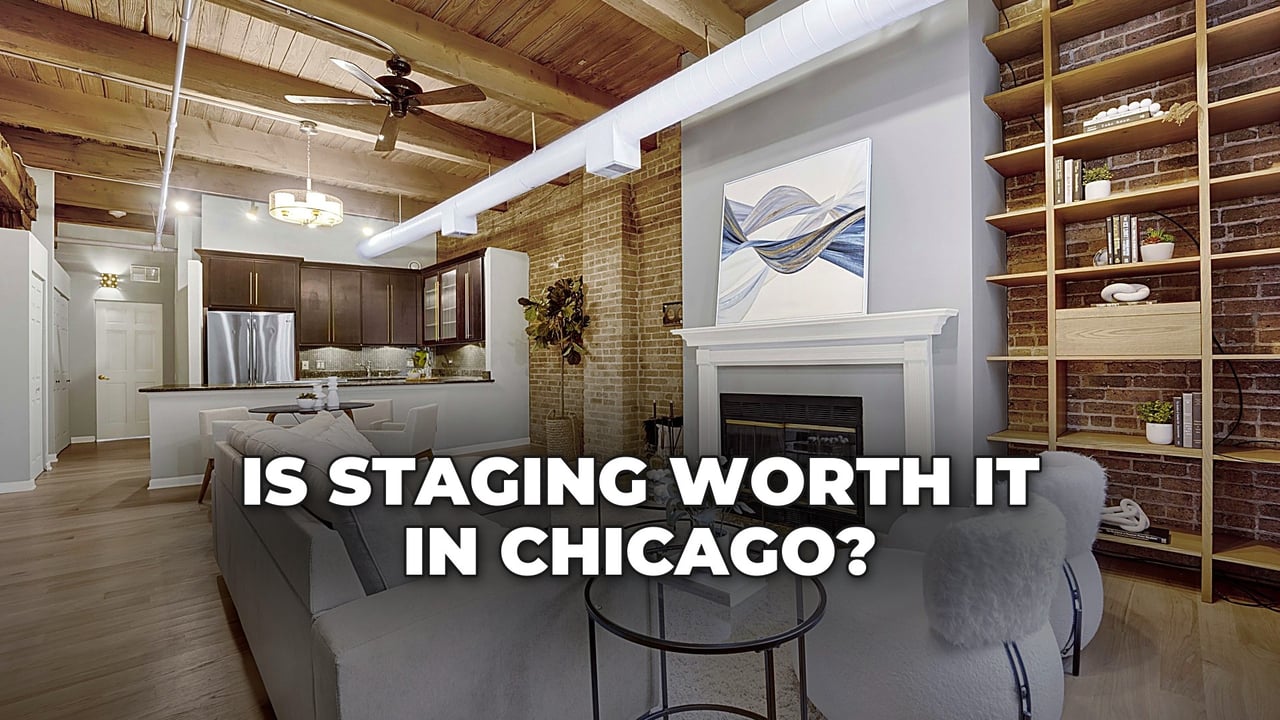
What the 2025 research says, which rooms matter most, and when your own furniture is enough

Sellers
How private listings work in Chicago's MLS, when they help, and when they cost you buyers

Seller Tips
What Chicago sellers gain when their agent is in the room, and how to prepare for showings
Buying
My 3 predictions for the Chicago housing market in 2027, and what they mean if you are planning to buy

Selling
It is almost never the market. How to find what is holding back offers, and fix it
I'm Dee Savic, your trusted Chicago real estate expert, and I'm here to guide you through your relocation journey. Discover why Chicago is the perfect city for you; from its diverse neighborhoods to its cultural vibrancy, Chicago offers an unmatched urban experience. Together, we'll find a community and home that fits your lifestyle and aspirations.