
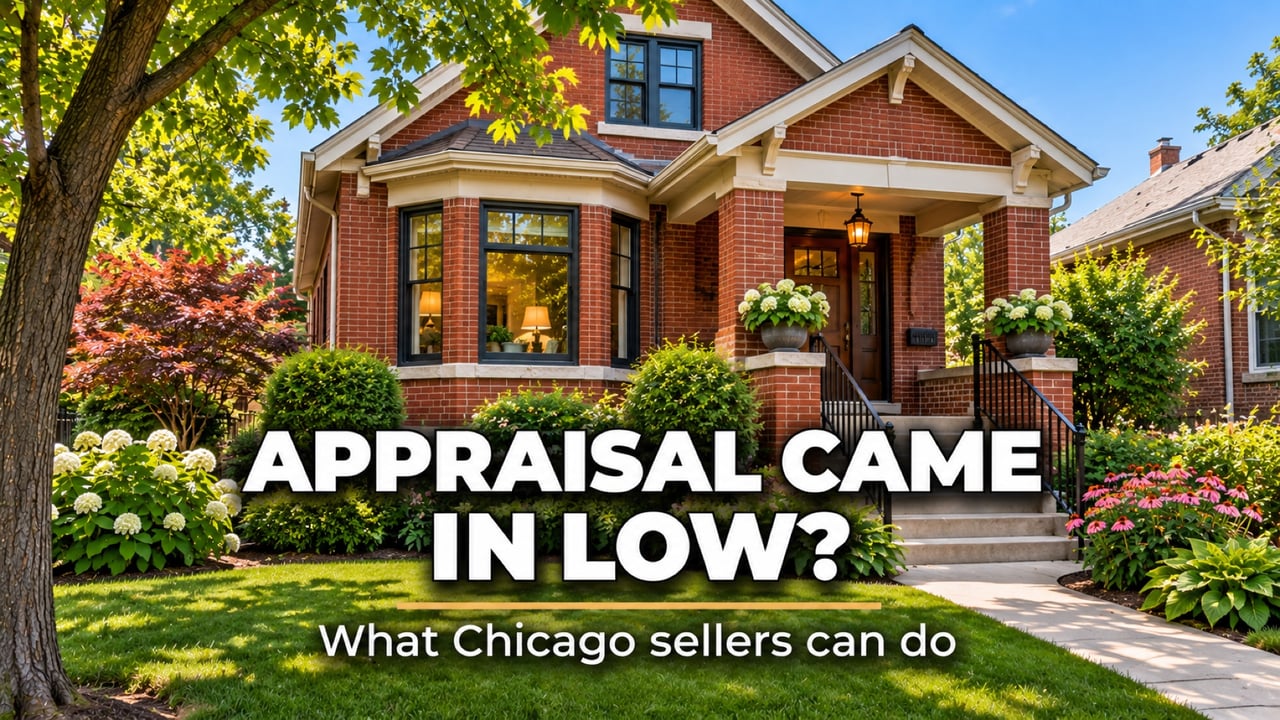
What happens if the appraisal comes in low on your Chicago home? If your buyer is getting a mortgage, the lender generally bases the loan on the lower of the purchase price or appraised value. If the appraisal comes in below the price you agreed on, the difference is called an appraisal gap. The buyer may need additional cash, you may be asked to lower the price, or the sale could be at risk, depending on your contract.
Here is what I want every Chicago seller to know: you do not automatically have to lower your price because an appraisal comes in low. You have options, and the contract determines what happens next.
I pay particular attention to this when my sellers receive multiple offers. An offer $50,000 over asking sounds wonderful, but what happens if the appraisal does not support that price? Before you accept an offer, I want you to understand not just what the buyer is offering, but how likely that price is to hold through closing.
Let me walk you through what appraisal gaps mean, how Chicago contracts handle them, and what I do to help my sellers protect their sale price.
An appraisal gap is the difference between the price a buyer agrees to pay and the value the lender's appraiser assigns to the home. It becomes an issue when the appraised value is lower than the contract price.
For example, say you accept an offer of $650,000 for your Chicago home, but the appraisal comes back at $620,000. That creates a $30,000 appraisal gap.
The lender generally uses the $620,000 value when calculating the mortgage. Depending on the loan and the buyer's financing, the buyer may need to bring additional cash to closing, ask you to reduce the price, or explore whether the appraisal can be reviewed.
And if neither side can resolve the difference, the transaction may not close. Whether the buyer can cancel and what happens to the earnest money depends on the financing and appraisal terms in the contract.
Why does this happen? Appraisal gaps can become an issue when buyers compete for homes and offer more than the asking price. Appraisers rely heavily on comparable closed sales, and those sales may not fully reflect what buyers are currently willing to pay.
That does not automatically mean the buyer offered too much or that the appraiser made a mistake. It means the lender's valuation and the agreed purchase price are different, and that difference needs to be addressed.
This is one of the first questions sellers ask me. The answer is that neither side automatically has to cover the difference. It depends on the buyer's financing, the contract language, and what both parties agreed to when the offer was accepted.
Here is how different offers can affect what happens if the appraisal comes in low.
What the offer includes | If the appraisal comes in low |
|---|---|
Cash, no loan | There is usually no lender appraisal, so there is no gap to negotiate. |
Buyer agrees to cover a gap up to a set amount | The buyer pays the difference in cash, up to that amount, and the deal closes at your price. |
Appraisal contingency, no gap coverage (any loan type) | The buyer can walk away and get the earnest money back, or ask you to lower the price. |
FHA or VA loan | Federal rules give the buyer the same right to walk away, and it cannot be waived. |
The table is a starting point. The actual outcome depends on your signed contract, any riders, and the buyer's loan terms. Your attorney should review those details before anyone assumes a buyer can cancel or a seller must accept a different price.
Here is why this matters when you have multiple offers. A buyer offering the highest price is not necessarily bringing you the strongest offer. I also want to know whether that buyer can handle a low appraisal without coming back to renegotiate.
Sometimes I would rather see a slightly lower offer with strong appraisal protection than a much higher offer with none. That does not mean I would make the decision for you. I would explain the differences and the risks so you can choose the offer that makes the most sense.
I explain this further in my article on how to compare multiple offers on your Chicago home.
Now let me get into something that matters specifically when you are selling in Chicago. Most Chicago home sales use the Multi-Board Residential Real Estate Contract 8.0, and the wording of your contract makes a difference when an appraisal comes in low.
Here is the part many sellers do not realize. When a Chicago contract includes an appraisal contingency, the buyer can walk away if the appraisal comes in below the price, no matter what kind of loan they have. It is not only FHA and VA buyers. A conventional buyer with 20% down has the same way out.
That is why I look closely at every financed offer over asking. Without an appraisal gap waiver or written gap coverage, a high price can turn into a renegotiation, or a canceled deal, a few weeks later.
That is why I never want a seller making assumptions about what a buyer can or cannot do. I work with the seller's real estate attorney to understand the contract, the deadlines, and the available options.
Your attorney will confirm which provisions apply to your transaction. I explain why that role is so important in my article on do you need a real estate attorney to sell a home in Chicago.
This is one of the tools I pay close attention to when reviewing financed offers, especially offers above asking price. Chicago REALTORS has an Appraisal Gap Rider that allows a buyer to agree in writing to cover a specified amount if the property appraises below the purchase price.
The rider also requires the buyer to provide proof that the funds are available. That matters because a promise to cover an appraisal gap is only useful if the buyer has the financial ability to follow through.
If the gap is within the amount the buyer agreed to cover, the rider requires the buyer to bring the additional cash needed under its terms. If the gap is larger than the agreed amount and the buyer and seller cannot agree on a new price and loan amount, either side can declare the contract null and void under the rider.
For my sellers, this is an important part of evaluating an offer. I want to know exactly what protection is in writing and whether the buyer has documented the funds to support it.
And remember, the appraisal gap coverage is not the same as the purchase price. We need to look at both before deciding how strong an offer really is.
FHA and VA loans add one more layer. Their appraisal protection is required by federal rules, so it stays in the contract even if the buyer would like to waive it.
For an FHA purchase, the contract must include the HUD amendatory clause. This protects the buyer from being required to complete the purchase or lose the earnest money solely because the appraised value is below the contract price.
A VA purchase has a similar escape clause. The buyer can still choose to complete the purchase at the agreed price, but the required protection gives the buyer the option not to proceed because of the low appraisal.
Does that mean I would tell a seller to reject an FHA or VA offer? Absolutely not. There are strong buyers using both types of financing, and I would evaluate the entire offer before making a recommendation.
What I would want to know is how the buyer plans to handle a potential appraisal gap, especially if the offer is well above asking. I would also want proof of any additional funds the buyer says are available.
That way, you understand the financing and appraisal risks before you accept the offer, rather than finding out after the appraisal comes back.
Sometimes a buyer getting a conventional mortgage can qualify for a loan without a traditional appraisal. Fannie Mae calls this value acceptance.
This is determined through the lender's underwriting process. The buyer cannot simply promise to skip the appraisal, and the lender must confirm that the loan qualifies.
There are also important restrictions. Under Fannie Mae's rules, value acceptance is not available when the purchase price or estimated value is $1,000,000 or more, or for 2 to 4 unit properties.
So if you are selling a Chicago two-flat or a higher-priced single-family home, I would plan for an appraisal rather than assume the lender will waive it.
When reviewing an offer, I would want confirmation from the lender before treating value acceptance as a benefit of that offer.
First, do not assume the deal is over. A low appraisal is frustrating, especially when you thought the sale price was settled, but there may still be ways to move forward.
These are the options I would discuss with you before making any decision.
Before recommending any of those options, I would look at the bigger picture. How much is the gap? What does the appraisal report actually say? Can the buyer obtain the financing, and what protection did you negotiate in the contract?
I would also consider what it means to put your home back on the market. Another buyer with a different lender could receive a different appraisal, but a new appraisal is not guaranteed to solve the problem.
Most importantly, you decide whether to accept a lower price. My job is to explain the situation, show you the options, and help you make an informed decision.
I would much rather address appraisal risk before you accept an offer than try to resolve a problem right before closing. That is why I pay attention to the comparable sales, the buyer's financing, and the appraisal terms from the beginning.
Here is how I approach it when representing a Chicago seller.
Meeting the appraiser does not mean I get to determine the value. The appraiser is independent, and the final valuation is their responsibility. My role is to make sure the information I provide is accurate, relevant, and available for consideration.
One of my clients shared this after closing: "our house was even appraised for over value." I always appreciate hearing that a client had a positive experience, but every appraisal is different and no agent can promise a particular result.
What I can promise is that I will come prepared, communicate clearly, and pay attention to the details that matter to your sale.
An appraisal gap is the difference between the contract price and the appraised value of the home. If a buyer agrees to pay $650,000 and the home appraises at $620,000, the gap is $30,000. The lender bases the loan on the lower number.
It depends on the contract. If the buyer agreed in writing to cover a gap, the buyer pays it in cash up to the agreed amount. If not, the buyer will often ask the seller to lower the price, and the seller decides whether to agree.
Yes, if the contract includes an appraisal contingency. The buyer can cancel and get the earnest money back if the appraisal comes in below the price, with any type of loan. Sellers protect themselves by asking for an appraisal gap waiver or written gap coverage with proof of funds.
It depends on the terms. With the Chicago REALTORS Appraisal Gap Rider, if the gap is larger than the amount the buyer agreed to cover and the two sides cannot agree on a new price, either side can cancel. Your real estate attorney will confirm what your contract allows.
It is an add-on to the contract, published by Chicago REALTORS, where the buyer agrees to pay up to a set amount above the appraised value and shows proof of those funds. It gives the seller more confidence that an over-asking price will hold.
Yes. Federal rules require an FHA amendatory clause and a VA escape clause that let the buyer cancel without losing the earnest money if the appraised value is below the contract price. The buyer can still choose to go ahead at the full price.
If you are getting ready to sell your Chicago home, I want you to understand what buyers are likely to offer and what could affect your final sale price. That means reviewing comparable sales, evaluating the financing behind each offer, and thinking about appraisal risk before you sign a contract.
And if you receive an offer above asking, I want you to know exactly what that number means. Does the buyer have the funds to support it? Is there appraisal protection in writing? What happens if the lender's appraisal comes in below the agreed price?
These are the conversations I have with my sellers because a successful sale is not just about getting an attractive offer. It is about making informed decisions and getting the transaction to closing on terms you are comfortable with.
Ultimately, you decide your asking price, which offer to accept, and whether to agree to any changes. I am here to give you the market information, experience, and guidance to make those decisions.
If you are thinking about selling, start with a free home value review or schedule a complimentary consultation. We can talk about your property, your plans, and how I would approach your sale.
You can also take my free Chicago Home Seller Course, or call or text me at 773.719.0989.
I am Dee Savic, a Chicago Realtor® with Baird & Warner. I have more than 24 years of real estate experience, have lived in Chicago for more than 27 years, and have closed more than 300 transactions. I help buyers, sellers, downsizers, and relocation clients across Chicago, including Lincoln Park, Lakeview, Lincoln Square, Ravenswood, North Center, Roscoe Village, Andersonville, Uptown, Bucktown, Wicker Park, and the Gold Coast.
Dee Savic
Realtor® | Baird & Warner
4553 N. Lincoln Ave, Chicago, IL 60625
773.719.0989
[email protected]
deesavic.com
Seller's Advice
Who pays the gap, when a buyer can walk away, and how to protect your price
Seller's Advice
What 12 months of MLS sales show for condos, houses and new construction
Seller's Advice
What the 2026 MLS numbers say about prices, speed and over-asking sales

Buyers
North Center, Bucktown, Lakeview, Logan Square and Lincoln Square, with real MLS prices
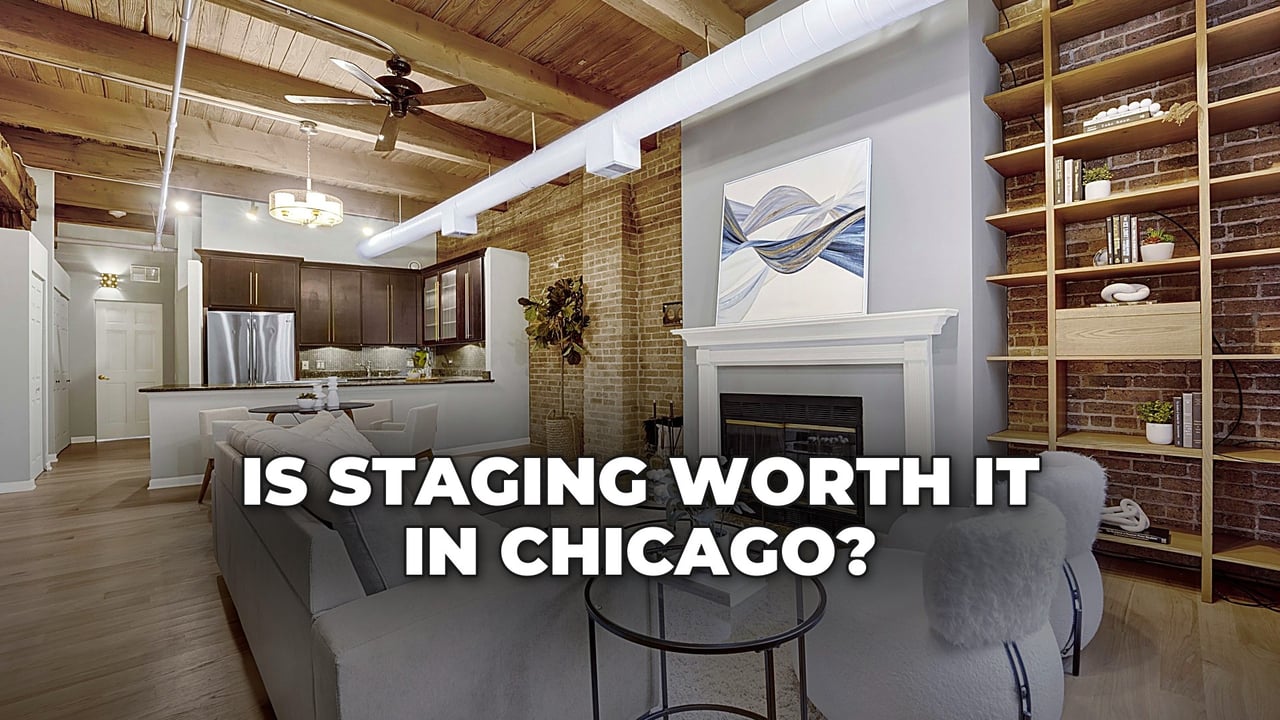
Selling
What the 2025 research says, which rooms matter most, and when your own furniture is enough

Sellers
How private listings work in Chicago's MLS, when they help, and when they cost you buyers

Seller Tips
What Chicago sellers gain when their agent is in the room, and how to prepare for showings

Buying
My 3 predictions for the Chicago housing market in 2027, and what they mean if you are planning to buy

Selling
It is almost never the market. How to find what is holding back offers, and fix it
I'm Dee Savic, your trusted Chicago real estate expert, and I'm here to guide you through your relocation journey. Discover why Chicago is the perfect city for you; from its diverse neighborhoods to its cultural vibrancy, Chicago offers an unmatched urban experience. Together, we'll find a community and home that fits your lifestyle and aspirations.