

How do you compare multiple offers on a Chicago home? Compare multiple offers by asking which one is most likely to close at the price it promises. Look at the buyer's financing, how much of the price survives the appraisal, the inspection terms, the earnest money, and the closing date. The highest number on paper is not always the best offer.
Multiple offers feel like the finish line. They are not. The offer you accept decides whether you close in 30 days at the price you agreed to, or spend the next month renegotiating with a buyer who has an easy way out.

Every offer is a price plus a list of conditions. The conditions decide how much of that price you actually keep.
A buyer can offer $50,000 over asking with a small down payment, no protection against a low appraisal, and a full inspection contingency. Another buyer can offer $20,000 less with a large down payment and a promise to cover an appraisal gap. On paper the first offer wins. At the closing table the second one often does.
That is why I never show my sellers offers sorted only by price. I show them side by side, term by term, and we talk about the risk in each one.
Cash is the strongest. Next is a buyer with 20 percent or more down and a real pre-approval from a lender with a track record of closing on time, not a quick online letter. A buyer putting 3 or 5 percent down can still be a great buyer, but there is less room in their budget if anything changes before closing.
For a condo, I also ask whether the buyer's loan needs the building to be approved by the lender. Some loan types have extra building requirements, and that can add time or risk to the sale.
This is the part most sellers do not see coming. When a buyer uses a mortgage, the lender lends based on the appraised value, not the contract price. If the home appraises below the price, someone has to cover the difference. Without a written promise from the buyer, that someone is usually you, through a lower price.
So I look for offers where the buyer agrees to cover an appraisal gap, and how much. An offer $40,000 over asking with no appraisal protection can be worth less than an offer $20,000 over asking where the buyer covers the gap.
Some buyers keep a full inspection contingency, which lets them ask for repairs or credits on almost anything. Others limit it to major issues, or inspect for information only and buy the home as-is. The fewer ways a buyer can reopen the price, the stronger the offer.
Earnest money is the deposit the buyer puts down after the contract is accepted. A larger deposit shows a buyer who is committed. Once we are under contract, I confirm the earnest money arrives on time, because a late deposit is often the first sign of a buyer who is not ready.
The best closing date is the one that fits your life. If you are buying your next home, a quick close may leave you without a place to live. In that case, a buyer who offers a rent-back, where you stay in the home for a short time after closing, can be worth more than a slightly higher price. My post on whether to buy first or sell first when moving up covers that timing in detail.
Here is an example of how this plays out. Picture a home listed at $750,000 that receives three offers. The appraisal later comes in at $760,000. The numbers are for illustration only, but the pattern is one I see in real negotiations.
Terms | Offer A | Offer B | Offer C |
|---|---|---|---|
Price | $800,000 | $780,000 | $765,000 |
Financing | Mortgage, 5% down | Mortgage, 25% down | Cash |
Appraisal gap | Not covered | Covered up to $30,000 | No appraisal needed |
Inspection | Full inspection contingency | Major issues only | For information, as-is |
Closing | 60 days | 30 days, 2-week rent-back | 21 days |
Likely final price after a $760,000 appraisal | About $760,000, if the buyer asks to lower the price to the appraisal | $780,000, because the buyer covers the $20,000 gap | $765,000 |
Offer A looks like the winner at $800,000. But the buyer has only 5 percent down and no appraisal protection, so after a $760,000 appraisal they would need $40,000 more in cash to keep that price. Most buyers in that position ask the seller to lower the price. Add a full inspection contingency and a 60-day close, and Offer A has the most ways to fall apart.
Offer B is $20,000 lower on paper, but it is the one most likely to close at its price. Offer C is the safest and the fastest, which makes it the right choice for a seller who values certainty over the last $15,000.
That is the real question with multiple offers. Not "which number is highest," but "which offer gets you to the closing table with the most money and the least risk, on a timeline that works for you."
Highest and best. When several offers come in, I may ask every buyer for their highest and best offer by a set deadline. This gives each buyer one fair chance to improve both the price and the terms, and it gives you a clean set of offers to compare.
Escalation clauses. Some buyers write an offer that automatically goes up to beat other offers, by a set amount, up to a limit. It can push the price up, but it needs care. The buyer will usually ask to see the competing offer, and a high escalated price makes the appraisal question even more important.
Backup offers. When you accept one offer, a second buyer can stay in line as a backup. If the first deal falls apart during inspection or financing, you move to the backup without going back on the market.
Accepting an offer is the start of the contract, not the end. Most Chicago sales use the Multi-Board Residential Real Estate Contract, which gives both sides an attorney review period and an inspection period, usually five business days after acceptance. During that time either attorney can propose changes, so the strength of the offer you picked matters right away. My post on whether you need a real estate attorney to sell a home in Chicago explains the attorney's role.
After that, I stay on top of the attorneys, the lender, and the buyer's agent. When the appraisal is ordered, I meet the appraiser at the home with the comparable sales that support the price, so the appraisal does not become a problem. Then I track the buyer's loan all the way to closing and send you an update every week.
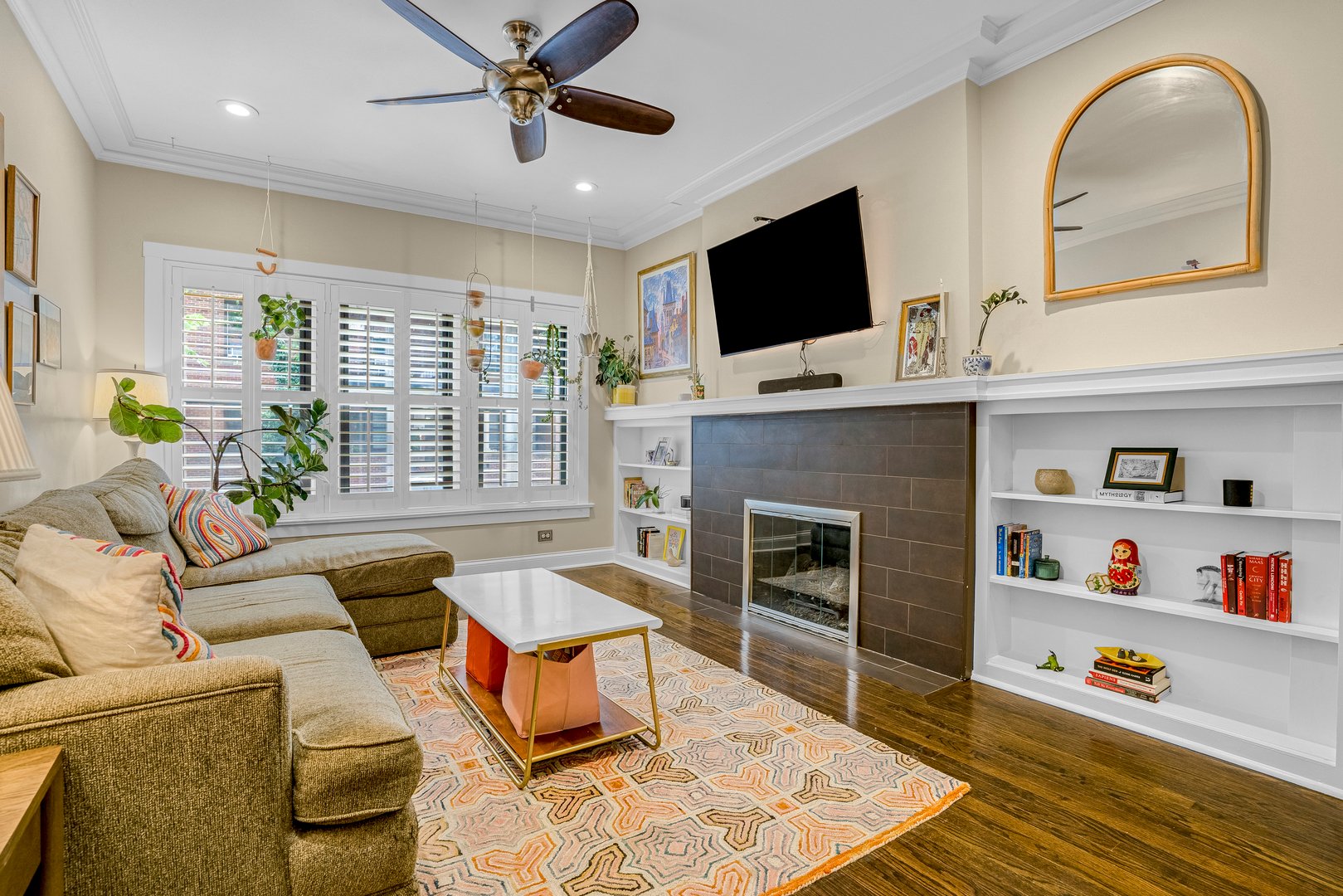
Multiple offers come from a home that is prepared well, priced to the right buyer, and marketed so that buyers see it at its best online before their first visit. In 2026, my listings have sold for an average of 105.07 percent of the original asking price, in an average of 9 days on the market.
One seller who lived out of state wrote that my marketing "attracted multiple offers and put me in a strong position as a seller." You can read more on my testimonials page.
If you are getting ready to sell, start with my posts on how to price your Chicago home to sell and how to get top dollar for your Chicago home. If you are still choosing who will represent you, these are the questions to ask a listing agent before you sign.
When you choose who will negotiate your offers, look for numbers you can check. Here are mine:
You work with me directly, from pricing to the closing table, and I negotiate every offer myself.
No. The best offer is the one most likely to close at its price on a timeline that works for you. Compare the financing, appraisal gap coverage, inspection terms, earnest money, and closing date before you choose.
An appraisal gap is the difference between the contract price and a lower appraised value. A buyer with a mortgage can only borrow against the appraised value, so the gap must be covered by the buyer in cash or by the seller lowering the price. Some buyers agree in their offer to cover a gap up to a set amount.
Not always, but it removes financing and appraisal risk and usually closes faster. A strong mortgage offer with a large down payment and appraisal gap coverage can be just as safe and bring a higher price.
You can ask all buyers for their highest and best offer by a deadline, which is common when there are several offers. Making formal counteroffers to more than one buyer at once can create problems if two buyers accept, so talk with your attorney before you do it.
A backup offer is a second accepted offer that only takes effect if the first contract falls apart. It protects you from starting over if the first buyer cannot close.
Yes, during certain periods in the contract, such as attorney review, inspection, and the financing contingency. That is why the terms of the offer matter as much as the price.
If you want to know how many buyers your home could attract and what a strong offer would look like, I can help. I will show you the recent sales in your area, what buyers are paying for homes like yours, and the plan to bring in the right offers.
Start with a free home value review, or schedule a complimentary consultation here. You can also start with my free Chicago Home Seller Course, or call or text me directly at 773.719.0989.
Dee Savic is a Chicago Realtor® with Baird & Warner, a 24+ year real estate professional, and a 27+ year Chicago resident with 300+ closed transactions. She helps buyers, sellers, downsizers, and relocation clients across Chicago, including Lakeview, Lincoln Park, Lincoln Square, Ravenswood, North Center, Roscoe Village, Andersonville, Uptown, Bucktown, Wicker Park, and the Gold Coast.

Dee Savic
Realtor® | Baird & Warner
4553 N. Lincoln Ave, Chicago, IL 60625
773.719.0989
[email protected]
deesavic.com
Seller's Advice
Who pays the gap, when a buyer can walk away, and how to protect your price
Seller's Advice
What 12 months of MLS sales show for condos, houses and new construction
Seller's Advice
What the 2026 MLS numbers say about prices, speed and over-asking sales
Buyers
North Center, Bucktown, Lakeview, Logan Square and Lincoln Square, with real MLS prices
Selling
What the 2025 research says, which rooms matter most, and when your own furniture is enough
Sellers
How private listings work in Chicago's MLS, when they help, and when they cost you buyers

Seller Tips
What Chicago sellers gain when their agent is in the room, and how to prepare for showings

Buying
My 3 predictions for the Chicago housing market in 2027, and what they mean if you are planning to buy
Selling
It is almost never the market. How to find what is holding back offers, and fix it
I'm Dee Savic, your trusted Chicago real estate expert, and I'm here to guide you through your relocation journey. Discover why Chicago is the perfect city for you; from its diverse neighborhoods to its cultural vibrancy, Chicago offers an unmatched urban experience. Together, we'll find a community and home that fits your lifestyle and aspirations.