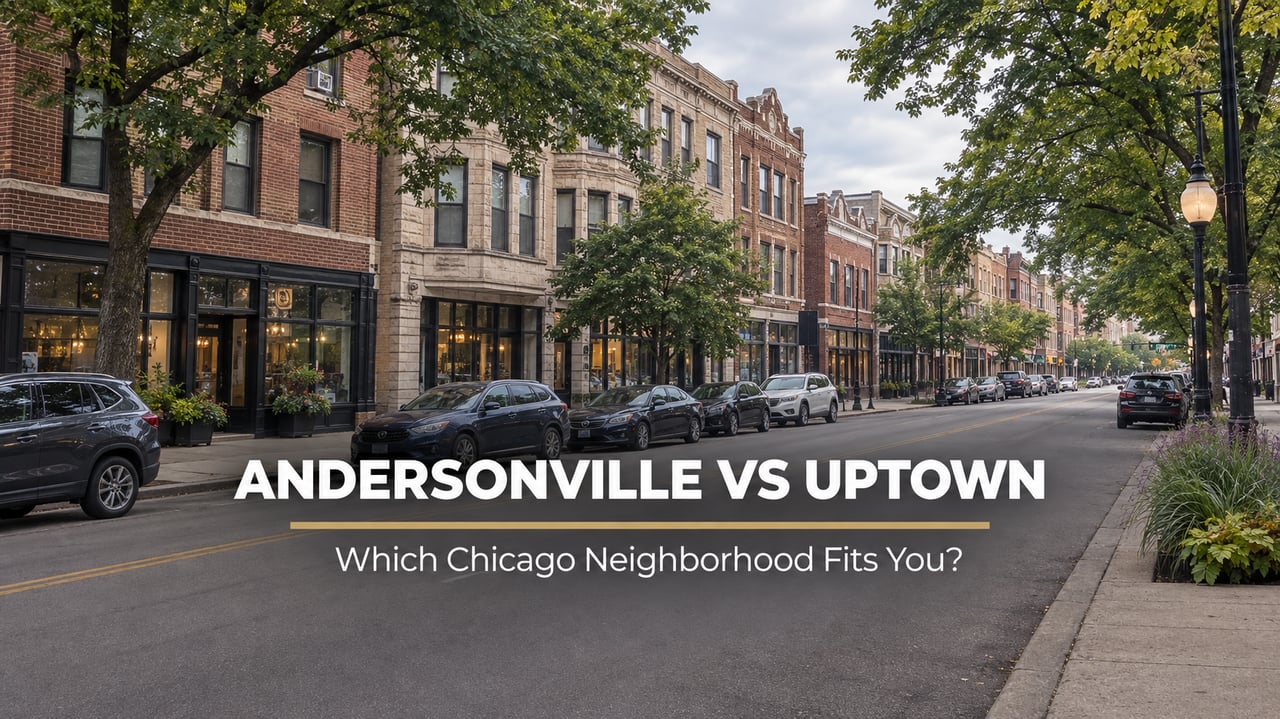
What is the difference between Andersonville and Uptown in Chicago?
Andersonville is a low-rise neighborhood built around Clark Street, with vintage two-flats, greystones, and independent shops. Uptown is larger and sits on the lake, with several distinct pockets and everything from vintage courtyard buildings to full-amenity high-rises.
These two neighborhoods sit close enough together that a lot of buyers look at both. Living in them can feel completely different. Your commute can be different. The type of home you buy can be different. What sits within a few blocks of your front door is different. And in Uptown especially, moving a few blocks can change the whole experience.
There is also one pocket of Uptown that relocating buyers overlook constantly, and if you are torn between these two neighborhoods, it may be the answer for you. I will get to it below.
Here is what it is actually like to live in Andersonville versus Uptown: what your budget buys, transportation, the lake, housing, parking, and the everyday things you do not think about until you live here.
Prefer to watch? Here is the full comparison on video.
When buyers are deciding between Andersonville and Uptown, I usually start with the same question: what matters most in your everyday life?
Once you actually live here, things like how close you are to the train, whether you use the lake regularly, what your immediate block feels like, and where you run errands will matter far more than what looked good during a weekend visit. That is where these two neighborhoods separate.
A lot of daily life in Andersonville happens on Clark Street. Coffee shops, bakeries, restaurants, home stores, specialty markets, and a long run of independent businesses sit along one walkable stretch. Depending on where you live, you could go out for brunch, pick up groceries, stop at a bookstore, and meet someone for dinner without moving your car.
Andersonville is not only Clark Street, though. Once you step off it, you are on residential blocks with vintage two-flats and three-flats, courtyard buildings, greystone condos, and single-family homes. Many of those streets are quiet considering how close they are to all that activity.
On the east side of Andersonville you also have Lakewood Balmoral, one of the neighborhood's historic pockets, with larger historic homes, mature trees, and beautiful residential streets. That contrast is part of what people like about living here. You can have Clark Street a few minutes away and still feel removed from it at home.
Uptown is laid out differently. Instead of centering on one commercial street, it has several areas that each have their own feel. When someone tells me they want Uptown, my first question is which part.
Then there is Sheridan Park, between Clark and Broadway. This is the one I promised you. Sheridan Park has residential streets lined with vintage brick buildings, courtyard condos, and easy access to both Clark Street and the Red Line.
If you are drawn to Andersonville but want better train access or a wider range of prices to choose from, Sheridan Park is worth looking at.
This is also why the exact block matters so much in Uptown. Living near Argyle is not the same as living in Buena Park. Living near one of the entertainment venues is not the same as living on a residential block in Sheridan Park. Even the noise and foot traffic at night can be completely different. Do not just tour the property. See the block during the day, then come back in the evening.
Andersonville is predominantly low-rise. You will see vintage walk-ups, two-flats, three-flats, greystones, courtyard buildings, single-family homes, and some newer boutique condo developments. What you will generally not find are full-amenity high-rises. If you need an elevator, door staff, attached garage parking, a pool, or a lake view, Andersonville is not going to be your neighborhood.
Uptown gives you far more variety. In Sheridan Park or Buena Park you can still find vintage three-flat, six-flat, and courtyard buildings. Move east toward Marine Drive and Sheridan Road and you are looking at a different type of housing entirely: mid-century and modern high-rises with elevators, door staff, fitness rooms, pools, on-site management, attached garages, and lake views.
And this is where something catches a lot of buyers off guard. The condo with the lower price tag is not necessarily the one that costs you less every month.
Whenever I compare condos with a buyer, there are three things I want to look at together:
You can find a lakefront condo in Uptown at an attractive price, then open the listing details and see a substantial monthly assessment. That does not automatically make it a bad deal. The assessment may include heat, air conditioning, cable, internet, door staff, and building amenities. You have to look at what you are getting for the money. A $900 assessment that covers several things you would otherwise pay for separately is not the same as a $900 assessment that covers very little.
Now compare that with a vintage six-unit building in Andersonville or Sheridan Park. No elevator, no door staff, no pool, no on-site management, so the monthly assessment can be a lot lower.
Lower assessments do not automatically mean a healthier building. Say that six-unit building suddenly needs a roof for $30,000. If there is not enough in reserves, each owner could be responsible for roughly $5,000. Now take a 200-unit high-rise. Costs get spread across far more owners, but the projects are bigger: elevator modernization, facade work, plumbing risers, windows, concrete restoration. Those can run into the millions.
That is why I look at the budget, reserves, meeting minutes, special assessment history, recent capital projects, insurance information, and any planned work. For a full breakdown of what Chicago condo HOA fees cover and what to watch for by building type see my Chicago condo HOA fees guide.ce on a listing sheet.
And before you decide to simply pick the building with the lowest monthly fee, be careful with that too. A building that keeps assessments artificially low and defers maintenance can cost you more than a building that charges what it actually needs and takes care of the property.
Here is roughly where prices sit in both neighborhoods right now.
Property type | Andersonville | Uptown |
|---|---|---|
Updated 2-bedroom, 2-bath condo | Mid-$400s to the $600s. Newer construction, elevator access, larger floor plans, and higher-end finishes push higher. | Wider range. Some high-rise two-bedrooms start in the $300s, while renovated vintage condos in Sheridan Park or Buena Park run in the $400s and $500s or higher. |
3-bedroom condo | Harder to find. When a good one comes up, especially with parking and outdoor space, $600,000 well into $800,000 or $900,000. | More options and more variety in building type, from the $500,000s into the $700,000s and beyond. |
Single-family home | Often starting well above $1.2 million, with renovated homes going beyond $2 million. | Exceptional historic homes, including around Hutchinson Street, command premium prices as well. |
Uptown is a significantly larger area than Andersonville, which is a big part of why its range is so much wider.
Buyers leave parking out of the math constantly.
In Andersonville's vintage buildings, attached garage parking is limited. You will find outdoor deeded spaces, tandem parking, detached garage spaces, and sometimes just street parking. When a condo does include a secure garage space, that can carry a noticeable premium.
In Uptown, a lot of the larger buildings closer to the lake have attached garages, but plenty do not. Do not assume garage parking is included. Even when you see it on a listing, you still need to know whether the space is owned or leased, and whether it can be deeded and sold separately or has to be leased from the building. If it is deeded and separately sellable, it can carry its own monthly assessment and taxes. Depending on the building and the market, a space can cost another $25,000 to $40,000 or more.
If you drive every day, find all of this out before you fall in love with a condo. Know the cost, the monthly fee, the guest parking situation, the permit rules, and the winter restrictions.
Less exciting than parking, and you will use it far more often.
In Andersonville you have Jewel on Clark Street, Edgewater Produce right across the street, Middle East Bakery and Grocery, and smaller specialty markets nearby. Depending on where you live, most of your everyday errands happen within a few blocks.
Uptown gives you a different mix. Larger stores like Mariano's on Sheridan and Jewel on Broadway, plus specialty Asian grocers around Argyle and Broadway carrying ingredients and products you will not find in a regular supermarket.
Andersonville's dining and nightlife are mostly concentrated on Clark Street: Hopleaf, Little Bad Wolf, Lost Larson, and a long list of other independent restaurants, cafes, and shops.
Uptown offers something different culturally. The Aragon, the Riviera, and the Green Mill give you a live entertainment scene Andersonville does not have at the same scale. Argyle adds another layer with its restaurants, bakeries, markets, and annual Lunar New Year celebrations.
This comes down to what you actually use. If you want independent restaurants, cafes, and shops centered along one walkable street, Andersonville has a lot going for it. If you want more variety in the kind of entertainment around you, Uptown gives you that, spread out over a larger area.
Uptown sits directly on Lake Michigan. Depending on where you live, you can be within easy reach of Montrose Beach, the Lakefront Trail, and Montrose Dog Beach. If you run, bike, sail, play volleyball, have a dog who loves the beach, or just want to walk by the water a few times a week, that is hard to beat.
Andersonville is close to the lake, but it is not a lakefront neighborhood.
If you are commuting downtown by train, Uptown usually gives you the easier CTA option. The Red Line runs 24 hours, and Uptown is served by Wilson, Lawrence, and Argyle, which were rebuilt as fully accessible stations and reopened in 2025 as part of the CTA's Red and Purple Modernization project. Depending on where you live, you may also have express bus options along Lake Shore Drive.
Andersonville is more address-specific. From some homes the walk east to the Red Line is completely reasonable. From others, especially farther west, that walk gets old in February, or any time you are carrying groceries.
There is another option relocating buyers rarely think about: the Ravenswood Metra station on the Union Pacific North line, which takes you into Ogilvie Transportation Center. Depending on the schedule, where you are starting from, and where your office is, it can be a great commute, especially if you work on the west side of the Loop.
Do not decide this from a generic commute estimate online. Test it. Walk from the property to the station at the time you would normally leave for work, and factor in the wait, any transfer, and the walk on the other end. Ten extra minutes on paper feels very different when you are doing it five days a week.
Even if you do not have kids right now, school boundaries are worth paying attention to if you plan to own the home for five, seven, or ten years.
CPS attendance boundaries in Chicago are address-specific. Two properties a few blocks apart can be assigned to completely different neighborhood schools. Around Andersonville you would be associated with schools like Peirce. In Uptown, depending on the address, you could be at Brenneman or McCutcheon. Disney Magnet School is also nearby, but it has a different admission structure, so living close to it does not mean guaranteed admission, because it is a selective enrollment school.
Always check the exact address through the CPS School Locator and confirm current admission rules directly with CPS. Do not rely on whatever school shows up on a real estate website. And even if schools are not part of your own plan, they affect the future buyer pool when you eventually sell, so it is information worth having.
If I had to simplify it: if Clark Street, locally owned businesses, and low-rise vintage housing sound like the way you want to live, start with Andersonville. If the lake, easier Red Line access, and having more types of homes to choose from matter more to you, start with Uptown.
And if you are sitting there thinking you want a little of both, that is exactly why I told you to remember Sheridan Park.
What matters most is which neighborhood works for your actual life: your weekday commute, what you want to spend every month, and whether you will use the lake three times a week or three times a year. Those are the things that still matter long after the excitement of moving wears off.
Neither is automatically cheaper. Andersonville has a narrower range, with updated two-bedroom condos running from the mid-$400s into the $600s. Uptown spans a much wider range, from high-rise two-bedrooms starting in the $300s up through premium historic homes. Limited inventory in Andersonville can push prices up quickly.
Sheridan Park, between Clark and Broadway. It has vintage brick buildings and courtyard condos on residential streets, with easy access to both Clark Street and the Red Line. Buyers drawn to Andersonville who want better train access or more price options tend to like it.
Uptown usually has the easier CTA commute, with 24-hour Red Line service at Wilson, Lawrence, and Argyle. Andersonville depends heavily on the specific address and how far you are from the Red Line. Both neighborhoods are near the Ravenswood Metra station on the Union Pacific North line, which runs into Ogilvie.
Look at the purchase price, the full monthly assessment and what it includes, and the association's financial health together. That means the budget, reserves, meeting minutes, special assessment history, recent capital projects, insurance, and any planned work. A low monthly fee can signal deferred maintenance rather than a well-run building. For more on evaluating Chicago condos as a financial decision see my guide to buying a Chicago condo as an investment in 2026.
If you want someone to sit down with you and compare the actual homes, buildings, inventory, and what they will really cost you every month, that is exactly what I do. I work directly with my clients. I am not going to hand you off to someone else. And if you are moving somewhere outside Chicago, I have a network of agents around the country and I am happy to connect you with the right one.
Want to go deeper on either neighborhood? Read my full Andersonville neighborhood guide, browse Andersonville homes for sale and market data, see which Chicago neighborhoods relocating buyers get wrong, or start with my overview of the best Chicago neighborhoods for buyers and relocators.
Dee Savic is a Realtor® with Baird & Warner, a 24+ year real estate professional, and a 27+ year Chicago resident with 300+ closed transactions. She specializes in helping buyers, sellers, and relocation clients across Chicago's North Side, including Andersonville, Uptown, Buena Park, Ravenswood, Lincoln Square, Lakeview, Lincoln Park, North Center, and Roscoe Village.
Dee Savic
Realtor® | Baird & Warner
4553 N. Lincoln Ave, Chicago, IL 60625
773.719.0989
[email protected]
deesavic.com
Market Updates
If you own property in Rogers Park Township - which covers Rogers Park and Edgewater - your Board of Review appeal window is open now and closes September 1, 2026. Evi… Read more

Buyer's Advice
Second-installment bills for Tax Year 2025 went online August 18, 2026. They will be mailed by September 1 and are due October 1. Here is exactly what to look for when… Read more
Neighborhood Guides
What your budget buys, what your commute looks like, and the Uptown pocket most relocating buyers never hear about.
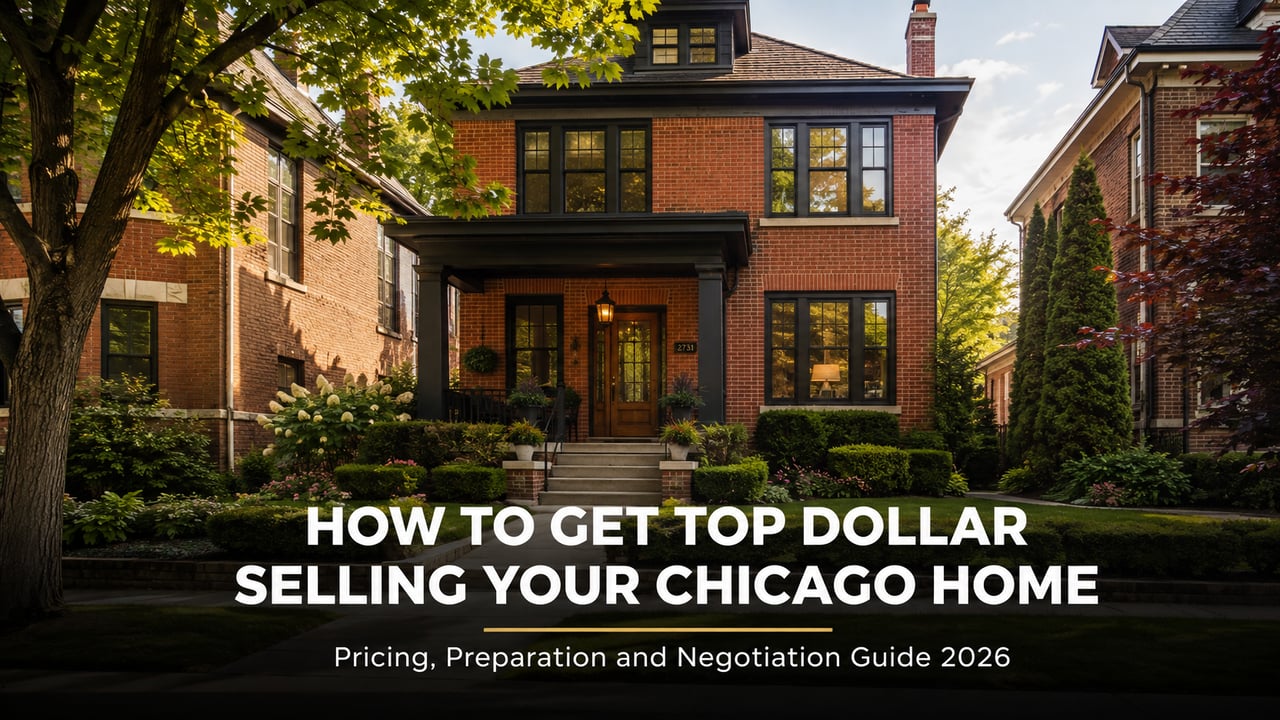
Seller Advice
Pricing, preparation, marketing, negotiation, and the decisions that actually affect your net proceeds when selling a home in Chicago.

Market Updates
Chicago is #1 in appreciation with sales at a 2012 low. Here's what's actually going on beneath the headlines.
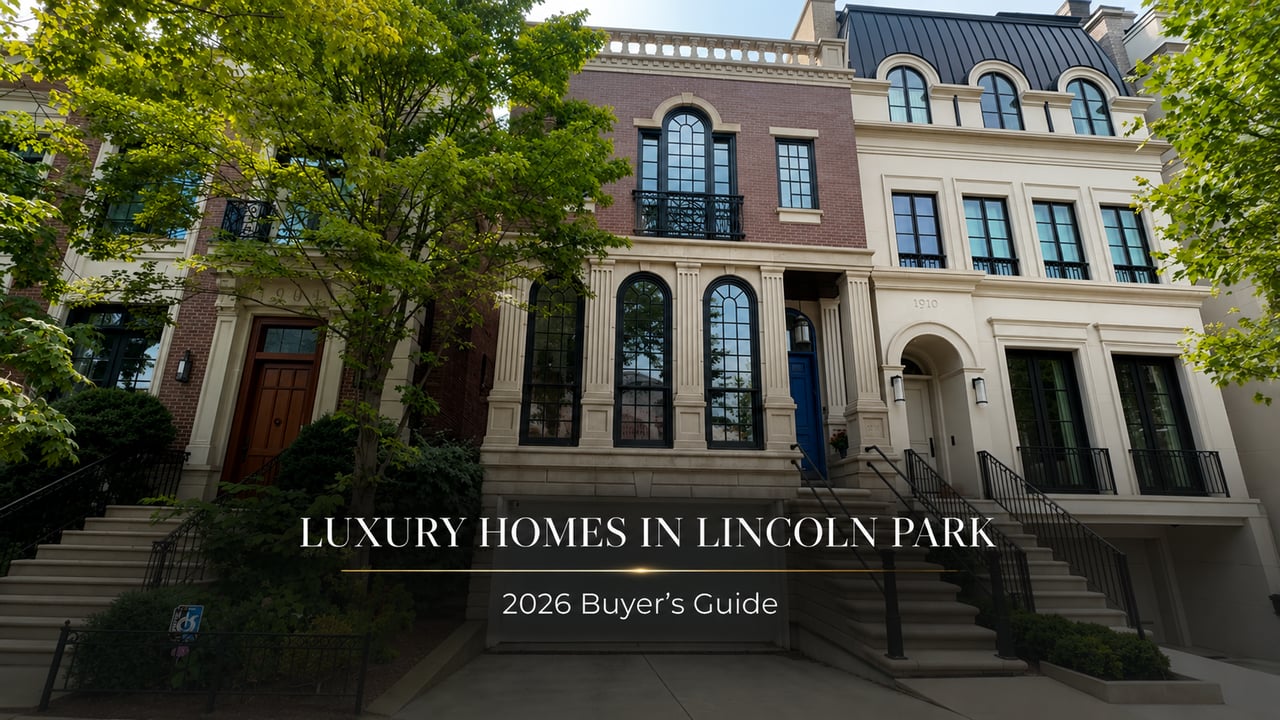
Buyer's Advice
Current inventory, pricing by budget tier, architecture, the streets and buildings buyers ask about most, and what serious buyers need to understand before they start … Read more

Neighborhood Guides
Six real pros, five real cons, real prices, and a hidden pocket called Graceland West that most buyers never hear about.
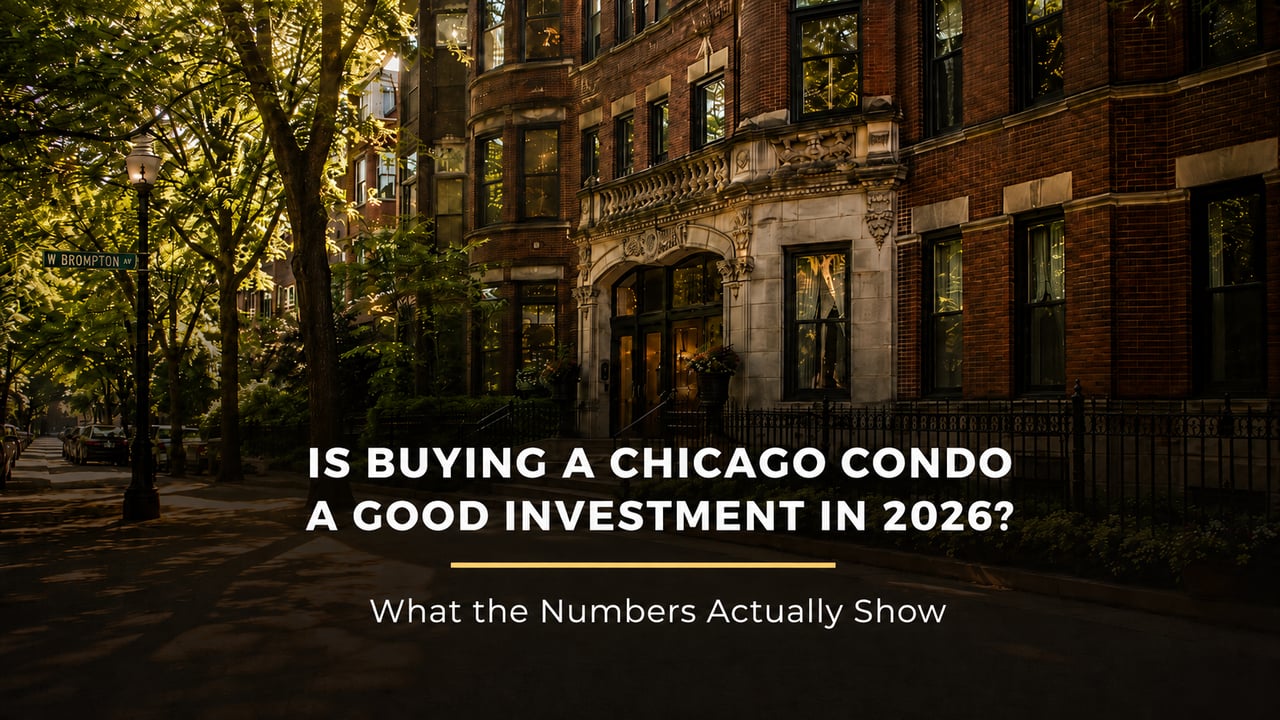
Buyers
The actual numbers on Chicago condo appreciation, HOA fees, reserve fund risk, rental yields, and what Fannie Mae's 2026 changes mean for buyers - so you can decide wh… Read more
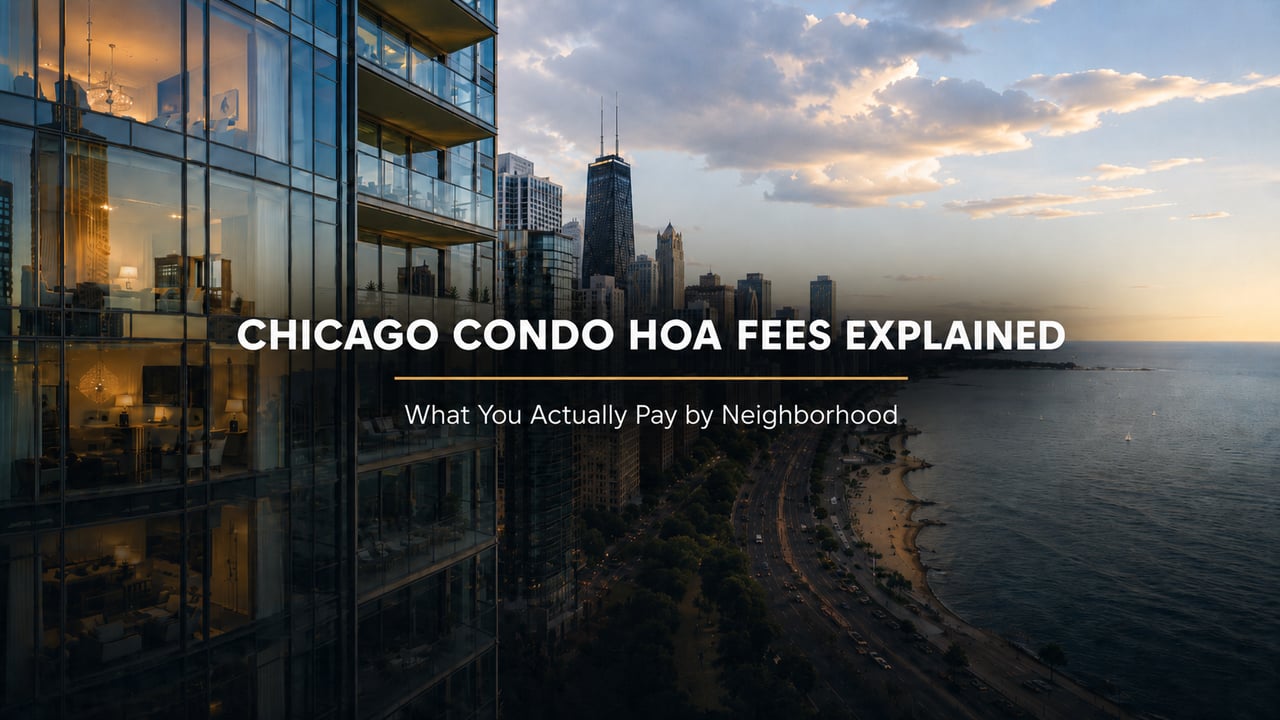
Buyer's Advice
A neighborhood-by-neighborhood breakdown of what Chicago condo HOA fees actually cover, what the ranges look like by building type, and how to know if a building's fee… Read more
I'm Dee Savic, your trusted Chicago real estate expert, and I'm here to guide you through your relocation journey. Discover why Chicago is the perfect city for you; from its diverse neighborhoods to its cultural vibrancy, Chicago offers an unmatched urban experience. Together, we'll find a community and home that fits your lifestyle and aspirations.