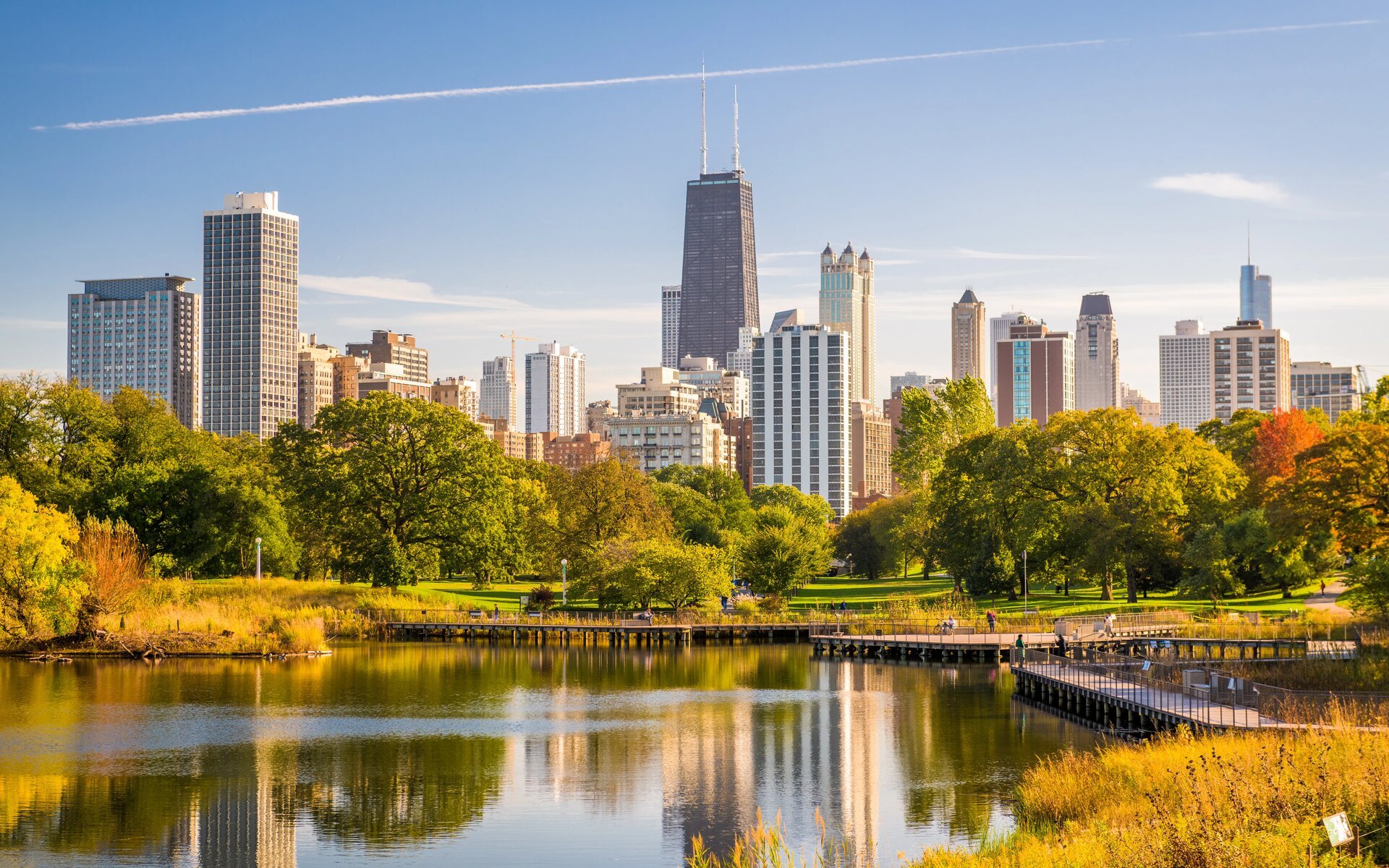
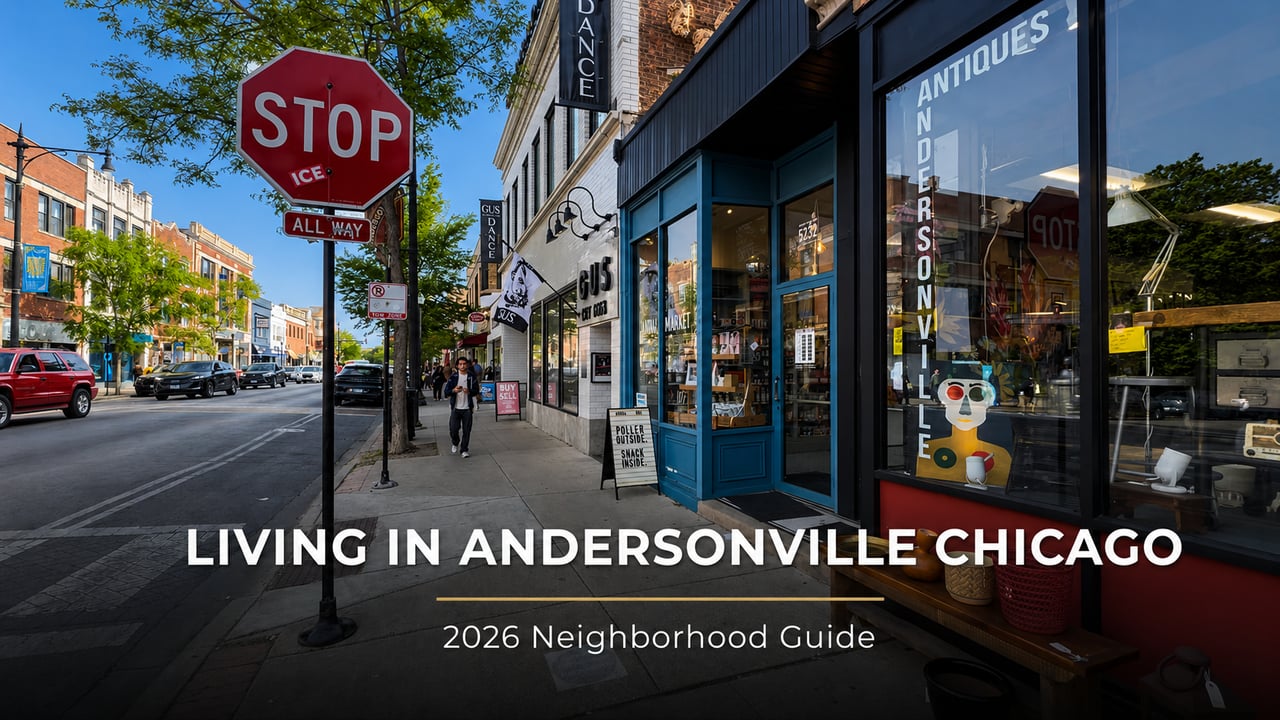
What is it like to live in Andersonville Chicago? Andersonville is one of Chicago's most beloved North Side neighborhoods, a place where Clark Street feels like a small town inside a big city. Independent boutiques, Swedish bakeries, the Swedish American Museum, neighborhood restaurants, historic homes, and a strong concentration of locally owned businesses give Andersonville a character that is hard to duplicate anywhere else in Chicago.
For buyers who discover it, Andersonville can feel like the neighborhood they did not know they were looking for. But it is not the affordable hidden gem it once was. Single-family homes in the most desirable pockets now often trade above $1 million, the neighborhood is not directly on the Red Line, and the vintage housing stock is beautiful but comes with vintage maintenance realities. This guide covers both sides.
I am Dee Savic, a Realtor with Baird & Warner with 24 years of experience selling real estate across Chicago's North Side. I have lived in Chicago for 27 years and have closed 300+ transactions, with extensive experience in Andersonville and surrounding neighborhoods. For the broader North Side picture see my complete Chicago neighborhoods guide and my Andersonville neighborhood page.
For buyers, this guide covers what daily life in Andersonville actually looks and feels like, including the commute reality, housing market, restaurants, schools, parks, and what has changed. For sellers, Andersonville's strong buyer demand rewards correct pricing and strong presentation.
Andersonville sits on Chicago's Far North Side, roughly centered on Clark Street between Foster Avenue and Bryn Mawr Avenue. It is bordered by Edgewater to the east, Ravenswood to the west, and Uptown to the south. The neighborhood is about 7 miles north of downtown, which is farther north than many of the North Side neighborhoods buyers tend to start with when they first begin searching.
That location is part of Andersonville's appeal and part of the trade-off. You get a quieter residential feel, a distinctive commercial corridor, and strong neighborhood identity - but you are not as close to downtown as Lakeview, Lincoln Park, or the Near North Side.
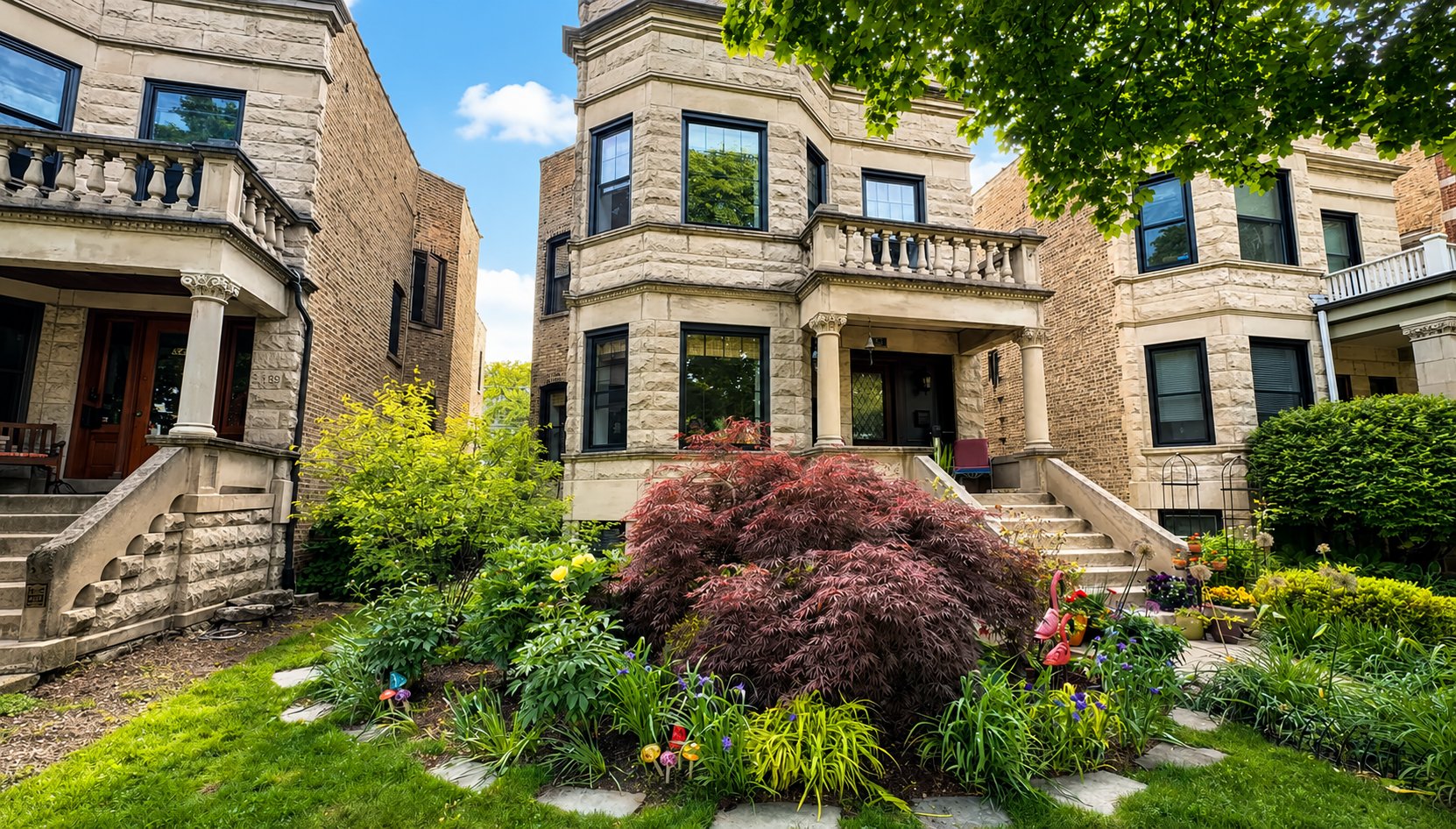
One of the most important things to know about Andersonville's residential character is the Lakewood Balmoral Historic District - a Chicago Landmark district covering some of the most architecturally significant residential blocks in the neighborhood. The district includes a concentrated stretch of late 19th and early 20th century homes, including greystones with ornate carved limestone facades, large single-family homes, two-flats, and three-flats in styles ranging from Romanesque Revival to Colonial to Prairie-influenced design.
Homes within and near the Lakewood Balmoral Historic District often command some of the highest prices in Andersonville. They are also difficult to find because inventory is limited, and buyers who discover these blocks tend to act quickly. If you are buying in Andersonville and historic architecture matters to you, this is one of the specific parts of the neighborhood to understand early in your search.
Andersonville is a strong fit for buyers who want a true neighborhood feel, independent businesses over chains, genuine community character, and a quieter residential base than Lakeview or Lincoln Park. It works especially well for buyers who are not primarily commuting to the Loop by train every day, or who are willing to plan their commute carefully around the transit options available.
It may not be the best fit if you need the Red Line within a few blocks, prefer mostly new construction, want direct lakefront living, or need the fastest possible downtown commute. Buyers who love Andersonville's character but need better train access, more lakefront proximity, or lower price points often compare it with Edgewater, Ravenswood, or Uptown.
Category | Andersonville Snapshot |
|---|---|
Housing Mix | Greystones, 2-flats, 3-flats, courtyard buildings, vintage condos, single-family homes, gut rehabs, and boutique new construction. |
Price Point | 1-bedrooms and smaller 2-bedrooms: $300,000-$500,000. Larger 2-bed/2-bath: $550,000-$650,000. 3-bedrooms: $550,000-$900,000+. Single-family homes in desirable pockets frequently trade above $1 million. |
Transit | Not directly on the Red Line. Most residents use the 22 Clark bus, walk or bus to the Bryn Mawr or Berwyn Red Line stops, bike, or drive. |
Commercial Core | Clark Street - independent shops, restaurants, cafes, bars, bookstores, bakeries, and cultural anchors. |
Schools | Peirce Elementary and Goudy Technology Academy serve parts of the area. School boundaries are block-specific. Always verify directly through CPS. |
Worth Knowing | Not directly on the Red Line. Vintage building stock is gorgeous but comes with vintage maintenance realities. The Lakewood Balmoral Historic District protects the neighborhood's most architecturally significant residential blocks. |
Not sure if Andersonville is the right fit?Schedule a private consultation and I will help you compare the neighborhood block by block based on your budget, commute, lifestyle, and long-term plans.
Andersonville has a daily rhythm that is unlike most Chicago neighborhoods. Clark Street generates foot traffic and neighborhood energy throughout the week, not just on weekends. The Swedish American Museum, Women & Children First bookstore, Hopleaf, Simon's Tavern, local cafes, independent shops, and neighborhood restaurants make the commercial corridor feel lived-in and specific rather than generic.
The residential blocks running east and west of Clark tell a different story. Quiet tree-lined streets, vintage greystones, two-flats, courtyard buildings, and single-family homes create a pace that feels distinctly residential. Walk two blocks off Clark on a Tuesday morning and Andersonville feels like a small neighborhood tucked away from the rest of the city.
That contrast is what draws so many buyers here: genuine urban energy on the main corridor, but real residential calm a block or two away. Andersonville is not trying to be Lakeview, Lincoln Park, or Logan Square. Its appeal is more specific, quieter, and more community-centered.
Andersonville used to be the more affordable alternative to Lakeview. That is no longer the case for single-family homes and larger, updated condos. In recent market activity, many Andersonville single-family homes are now trading above $1 million, especially in the most desirable pockets near the Lakewood Balmoral Historic District and close to Clark Street. When a well-priced property hits the market here, it can move quickly.
On the condo side, vintage one-bedrooms and smaller two-bedrooms typically run $300,000 to $500,000. Larger two-bedroom, two-bath condos generally fall in the $550,000 to $650,000 range. Three-bedroom condos start around $550,000 and can reach $900,000 or higher depending on size, age, condition, outdoor space, and parking. New construction and gut-rehab condos with modern amenities sit above those ranges.
Andersonville's housing stock is one of the most architecturally varied on Chicago's North Side. The neighborhood's character is defined by its vintage stock, but that vintage stock covers a wide range.
Greystones and two-flats are part of the signature North Side housing stock. Rusticated limestone facades, ornate carved stonework, bay windows, arched doorways, and pre-war craftsmanship are common throughout the most desirable residential pockets.
Single-family homes are more common here than many buyers expect. Large-lot colonials, Prairie-influenced homes, frame houses with deep front porches, and converted three-flats that buyers have transformed into spacious single-family homes with private gardens all exist in Andersonville. The residential streets east and west of Clark, particularly in the Lakewood Balmoral area, have some of the most architecturally distinctive and carefully maintained homes on Chicago's Far North Side.
Courtyard buildings and walk-ups from the 1920s offer ornate entry details, generous pre-war layouts, and more character than similarly priced newer construction. These buildings are especially attractive to buyers who want charm, square footage, and walkability.
New construction and gut rehabs have become more visible in Andersonville in recent years, offering modern finishes, central air, in-unit laundry, and elevator access that vintage buildings cannot always provide.
One note on vintage charm: it often comes with vintage maintenance realities. Older pipes, older electrical systems, limited central air in some buildings, smaller closets, and no elevators in most walk-ups are all part of the trade-off. Buyers coming from new construction should calibrate expectations before falling in love with the architecture.
This is not a neighborhood where you judge value by address alone. Building condition, HOA health, mechanical systems, parking, outdoor space, and proximity to Clark Street can all change the value conversation significantly. For current available homes see Andersonville homes for sale here.
This is the section most Andersonville neighborhood guides skip. Andersonville is not directly on the Red Line. The closest L stops, Bryn Mawr and Berwyn on the Red Line, are often a 15 to 20 minute walk from much of the residential core, depending on the exact address. The 22 Clark bus runs down the spine of the neighborhood and connects to the Red Line, but most residents are either walking to the L, taking the bus to it, biking, or driving.
Driving to the Loop in rush hour can run 30 to 45 minutes depending on your exact starting point, destination, and traffic. For buyers who commute to the Loop five days a week, this is a meaningful consideration. For buyers who work from home, commute less frequently, or work on the North Side, Andersonville's transit situation is much more manageable.
The practical advice: time your actual commute from the specific address you are considering, at the time you would actually make it, before you commit. See the CTA Train Map to plan your route.
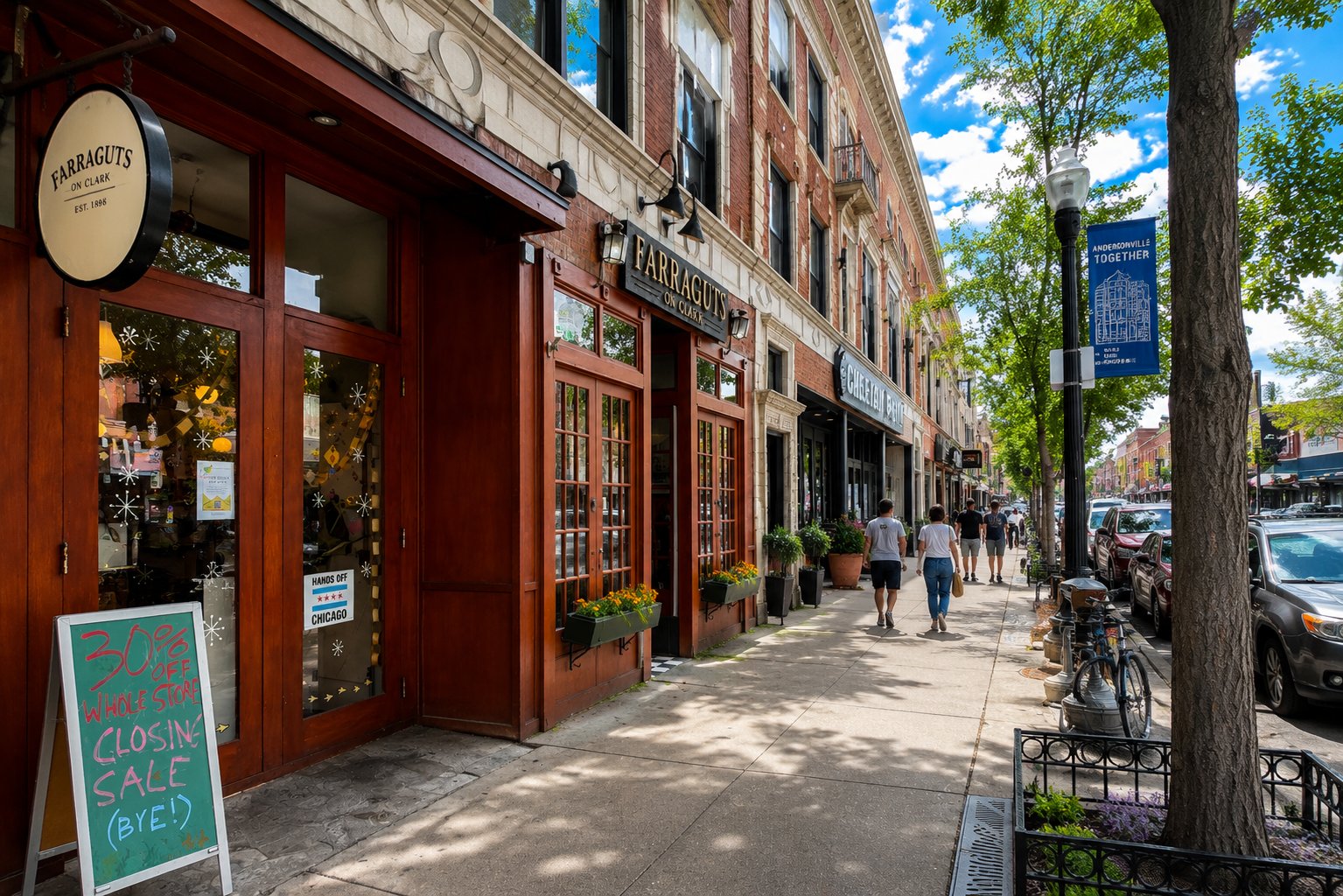
Andersonville's commercial corridor is one of its most distinctive assets. Clark Street has a rare mix of restaurants, bakeries, bars, bookstores, cafes, home stores, vintage shops, specialty boutiques, and everyday services that make the neighborhood feel complete without needing to drive everywhere.
Hopleaf - One of the most celebrated neighborhood bars in Chicago, known for its Belgian beer list, mussels, strong food program, and long-standing reputation as an Andersonville institution.
Svea Restaurant - A classic Swedish breakfast and lunch spot that has been on Clark Street for decades. One of the places that helps preserve Andersonville's Swedish heritage in day-to-day neighborhood life.
Big Jones - Southern cuisine with a serious commitment to heritage cooking and regional ingredients. One of the neighborhood's stronger dinner options.
Women & Children First - One of the largest feminist bookstores in the country and a Clark Street anchor for over 40 years, with regular author events and community programming.
The Swedish American Museum - A small, well-curated museum celebrating Andersonville's Swedish heritage and one of the neighborhood's most important cultural anchors.
The neighborhood also has strong everyday infrastructure: grocery stores, coffee shops, gyms, yoga studios, pet services, and the kind of daily conveniences that make life easier without requiring a car for every errand.
Andersonville has more going on than many buyers expect from a Far North Side neighborhood. Beyond the restaurants and shops, the neighborhood has year-round events, cultural anchors, and local spots that give it a real identity.
Chicago Magic Lounge - A speakeasy-style magic club tucked behind what looks like a laundromat entrance on Broadway, with close-up and stage magic in an intimate setting. One of the most distinctive entertainment experiences near Andersonville.
Andersonville Farmers Market - Runs seasonally on Wednesdays with local produce, prepared food, and neighborhood vendors. The kind of weekly market that residents actually use.
Midsommarfest - Andersonville's annual Swedish heritage street festival in June. One of the North Side's most beloved neighborhood festivals, with live music, food, vendors, and genuine community energy.
Simon's Tavern - A Clark Street institution dating back to the 1930s, known for its Swedish roots, winter glögg, jukebox, and old-school neighborhood bar feel.
Andersonville Galleria - An indoor arts, antiques, vintage, and handmade goods market on Clark Street with dozens of vendors. The kind of place locals browse on a Saturday and almost always find something unexpected.
The lakefront is one of Andersonville's underappreciated lifestyle advantages. Many residents bike or walk east toward the lake - Loyola Beach and the northern lakefront trail are accessible in roughly 10 to 15 minutes by bike from most of the neighborhood. From there, the lakefront trail connects south toward Montrose Beach, Belmont Harbor, and the broader 18.5-mile trail system.
The lakefront here is noticeably less crowded than the Lakeview and Lincoln Park stretches in summer - a real quality of life difference. You do not get the direct lakefront experience of Edgewater or East Lakeview, but you are close enough to use the lake regularly if biking or walking is part of your lifestyle.
Within the neighborhood, Winnemac Park provides athletic fields, a field house, a running track, and significant green space just west on Argyle Street. Senn Park adds additional neighborhood green space. See the Chicago Park District for hours and programming.
School assignment in Andersonville works the same way as elsewhere in Chicago - by attendance boundary, magnet application, and selective enrollment. The schools that primarily serve parts of Andersonville include Peirce Elementary and Goudy Technology Academy, though boundaries are block-specific and can change.
Because Andersonville sits near several neighborhood edges, two homes that look close together on a map can have different school assignments. Always verify which school serves a specific address using the CPS School Locator before making any purchase decision based on school access.
Andersonville vs. Edgewater: Edgewater is immediately east with better lakefront and Red Line access, more high-rise condos, and generally more accessible price points. If lakefront proximity and transit matter more than Clark Street character, Edgewater deserves a close look.
Andersonville vs. Ravenswood: Ravenswood is immediately west with stronger Metra and Brown Line access, a growing restaurant scene, and a similar residential character at slightly more accessible price points in some pockets. See my Lincoln Square and Ravenswood guide for the broader comparison.
Andersonville vs. Uptown: Uptown is directly south with better Red Line access, more price accessibility, and a more urban energy. Andersonville has a more defined neighborhood identity, while Uptown often offers better pricing and transit convenience.
Andersonville vs. Lincoln Square: Lincoln Square and Andersonville both appeal to buyers who want independent businesses, neighborhood character, and a residential feel. Lincoln Square has stronger Brown Line access and a slightly more central North Side location, while Andersonville has Clark Street, stronger Swedish heritage, and closer access to the northern lakefront. Buyers who love one often consider the other.
Yes. Andersonville is consistently one of Chicago's most beloved North Side neighborhoods for buyers who want genuine neighborhood character, independent businesses, walkable streets, and a residential feel. The main considerations before buying are the commute to downtown, the price point, and the vintage building stock.
Vintage one-bedrooms and smaller two-bedrooms typically run $300,000 to $500,000. Larger two-bedroom, two-bath condos generally fall in the $550,000 to $650,000 range. Three-bedroom condos start around $550,000 and can reach $900,000 or higher. Single-family homes in the most desirable pockets frequently trade above $1 million. For current listings see Andersonville homes for sale here.
Not directly. The closest Red Line stops, Bryn Mawr and Berwyn, are often a 15 to 20 minute walk from much of the Andersonville residential core. The 22 Clark bus connects to the Red Line. Buyers should time their specific commute from their target address before committing.
Andersonville is known for its Clark Street commercial corridor with independent boutiques, restaurants, bakeries, cafes, and bars, its Swedish heritage and the Swedish American Museum, its strong LGBTQ+ and locally owned business presence, and a small-town-in-a-big-city feel that is different from most Chicago neighborhoods.
Yes. Andersonville is highly walkable within the neighborhood. Clark Street provides excellent access to restaurants, shops, grocery stores, coffee shops, bookstores, bars, and daily services on foot. The commute to downtown requires more planning than neighborhoods directly on the Red Line.
The Lakewood Balmoral Historic District is a Chicago Landmark district in Andersonville covering some of the most architecturally significant residential blocks in the neighborhood. It includes a concentrated stretch of late 19th and early 20th century homes in styles ranging from Romanesque Revival to Colonial to Prairie-influenced design. Homes within and near the district often command the highest prices in Andersonville.
Yes. Andersonville has a meaningful number of single-family homes, larger vintage condos, two-flats, and three-flats that offer significantly more space than a typical one-bedroom condo. The residential streets east and west of Clark, particularly in the Lakewood Balmoral area, have some of the most spacious and architecturally distinctive homes on Chicago's Far North Side. School assignment is block-specific - always verify through the CPS School Locator for any specific address.
Andersonville is farther north, quieter, more residential in character, and more neighborhood-specific than Lakeview. Lakeview has stronger CTA access, more density, more lakefront proximity in East Lakeview, and a wider range of condo inventory. Andersonville has stronger independent commercial character and a calmer residential feel, but the commute requires more planning.
CTA Train Map - plan your commute from Andersonville to downtown.
Chicago Park District - find parks and recreational facilities near Andersonville.
CPS School Locator - verify which school serves any specific Andersonville address.
I have been selling homes in Andersonville and across Chicago's North Side for 24 years. Andersonville is one of those neighborhoods where the commute question and the building condition question are just as important as the list price. Two condos priced the same near Clark Street can have very different HOA health, mechanical systems, parking situations, and transit trade-offs depending on the building and the block.
I know which buildings in Andersonville tend to have stronger reserves, which properties may have deferred maintenance conversations coming, how the commute actually feels from different parts of the neighborhood, and how Andersonville's resale market compares to Edgewater, Ravenswood, Uptown, and Lincoln Square for buyers who are weighing all of them.
Buyers: search current Andersonville homes for sale here or start with my free Chicago Buyer's Course.
Sellers: start with a free home value review to see what your Andersonville home is worth in today's market.
Relocating to Chicago? Download my free Chicago Relocation Guide or schedule a complimentary and confidential consultation here.
Dee Savic is a Realtor with Baird & Warner, a 24+ year real estate professional, and a 27+ year Chicago resident with 300+ closed transactions and hundreds of five-star reviews. She specializes in helping buyers, sellers, and relocation clients across Chicago's North Side - including Andersonville, Lakeview, Lincoln Park, Lincoln Square, Ravenswood, North Center, Roscoe Village, and surrounding neighborhoods.

Dee Savic
Realtor® | Baird & Warner
4553 N. Lincoln Ave, Chicago, IL 60625
773.719.0989
[email protected]
deesavic.com

Buyers
How to write a stronger offer in Chicago without blindly overpaying

Seller Advice
The buyers who lost out in spring are still looking, and Chicago still has very few homes for sale.

Buyers
You can qualify as a buyer and still lose the condo if the building fails lender review. Here is what non-warrantable means, what changed in 2026, and what to check be… Read more
Neighborhood Guides
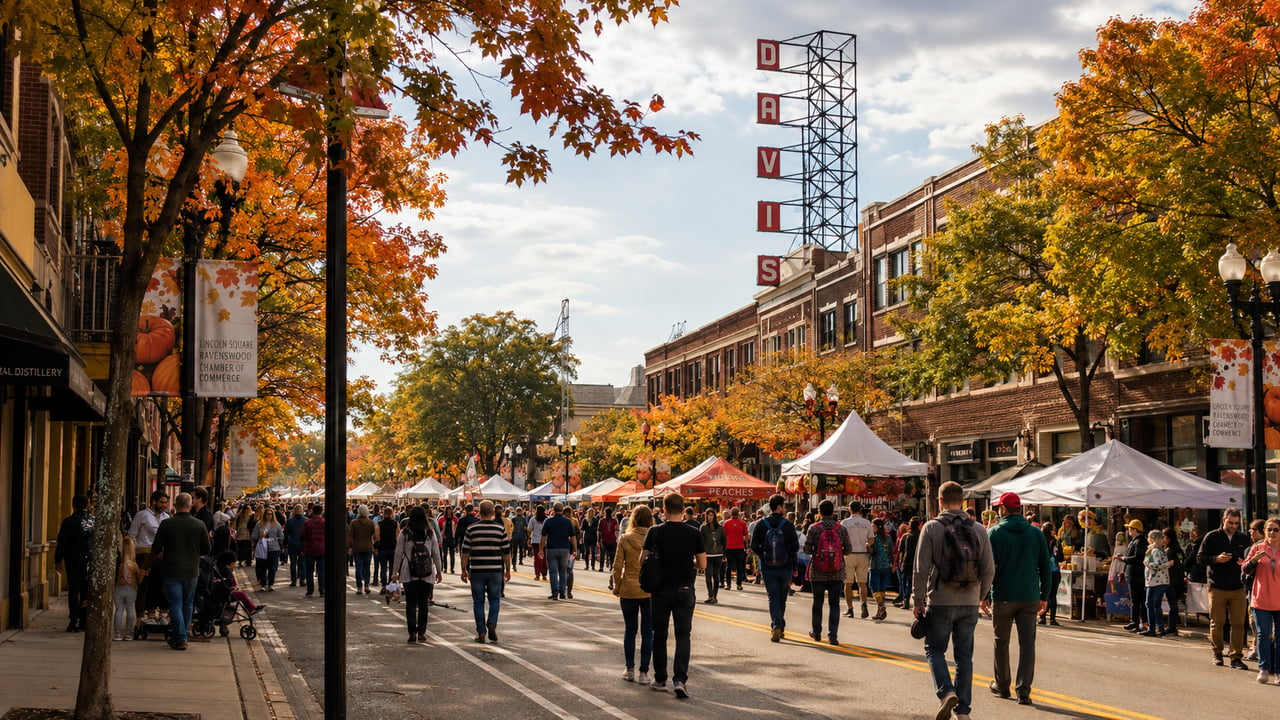
Five weeks of fall festivals across Lincoln Square, Ravenswood, Roscoe Village, and Andersonville - with exact dates, hours, locations, and what to know before you go.

Seller Advice
The hardest part of downsizing is usually not the market or the money. It is the house, the stuff, the timing, and not knowing where you would go next.

Market Updates
The North Side is Chicago. The North Shore is suburbs north of Chicago. The difference matters for schools, taxes, commute, housing style, and daily life.

Neighborhood Guides
A walking tour of Chicago's most misunderstood neighborhood - real MLS prices, the one-block rule, and which version of Wicker Park actually fits you.
Market Updates
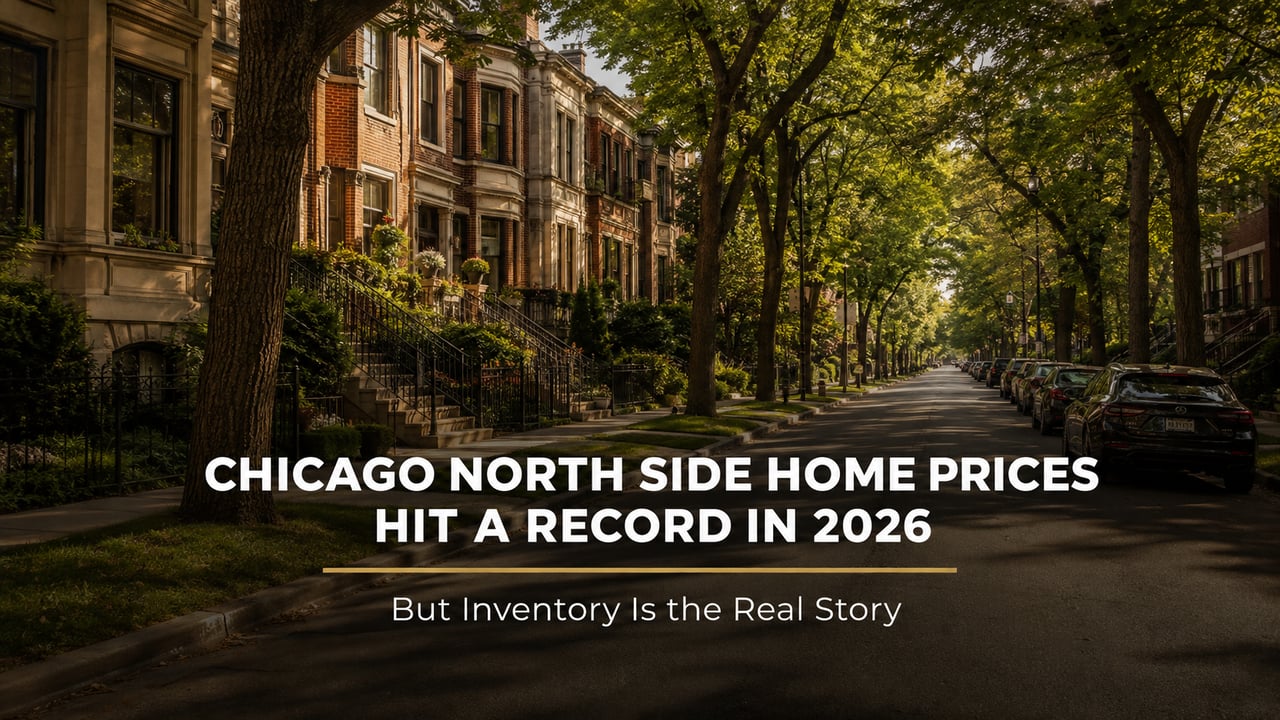
North Side Chicago home prices hit a record $500,000 in Q2 2026 while inventory fell 22.8%. Here is what the numbers mean for buyers and sellers.

Market Updates
Chicago has grown three years in a row - but growth is slowing, and the housing market is doing something the headlines cannot explain.
I'm Dee Savic, your trusted Chicago real estate expert, and I'm here to guide you through your relocation journey. Discover why Chicago is the perfect city for you; from its diverse neighborhoods to its cultural vibrancy, Chicago offers an unmatched urban experience. Together, we'll find a community and home that fits your lifestyle and aspirations.